

'%3e%3cpath%20d='M21.0949%203.79395L13.9961%209.82854H21.0949V3.79395Z'%20stroke='black'%20stroke-width='1.38'%20stroke-miterlimit='10'/%3e%3cpath%20d='M13.998%209.82854L7.44531%203.79395V9.82854H13.998Z'%20stroke='black'%20stroke-width='1.38'%20stroke-miterlimit='10'/%3e%3cpath%20d='M13.9961%202.69922V25.1919'%20stroke='black'%20stroke-width='1.38'%20stroke-miterlimit='10'/%3e%3cpath%20d='M20.5488%2016.4113L13.9961%209.82812V18.2217L20.5488%2024.0918V16.4113Z'%20stroke='black'%20stroke-width='1.38'%20stroke-miterlimit='10'/%3e%3cpath%20d='M7.44531%2016.4113L13.998%209.82812V18.0526L7.44531%2024.0918V16.4113Z'%20stroke='black'%20stroke-width='1.38'%20stroke-miterlimit='10'/%3e%3cpath%20d='M4.71094%209.82812V18.6057H7.44125V16.4113L13.9941%209.82812H4.71094Z'%20stroke='black'%20stroke-width='1.38'%20stroke-miterlimit='10'/%3e%3cpath%20d='M13.9961%209.82812L20.5488%2016.4113V18.6057H23.2792V9.82812H13.9961Z'%20stroke='black'%20stroke-width='1.38'%20stroke-miterlimit='10'/%3e%3c/g%3e%3c/svg%3e)

'%3e%3cmask%20id='mask0_21456_29260'%20style='mask-type:luminance'%20maskUnits='userSpaceOnUse'%20x='0'%20y='0'%20width='28'%20height='28'%3e%3cpath%20d='M27.5%200.5H0.5V27.5H27.5V0.5Z'%20fill='white'/%3e%3c/mask%3e%3cg%20mask='url(%23mask0_21456_29260)'%3e%3cpath%20d='M14%2027.5C13.4854%2024.1035%2011.8974%2020.9608%209.46828%2018.5317C7.03922%2016.1026%203.89651%2014.5146%200.5%2014C3.89651%2013.4854%207.03922%2011.8974%209.46828%209.46828C11.8974%207.03922%2013.4854%203.89651%2014%200.5C14.5147%203.89644%2016.1028%207.03905%2018.5318%209.46816C20.9609%2011.8972%2024.1035%2013.4853%2027.5%2014C24.1035%2014.5147%2020.9609%2016.1028%2018.5318%2018.5318C16.1028%2020.9609%2014.5147%2024.1035%2014%2027.5Z'%20fill='url(%23paint0_linear_21456_29260)'/%3e%3c/g%3e%3c/g%3e%3cdefs%3e%3clinearGradient%20id='paint0_linear_21456_29260'%20x1='9.5'%20y1='9.5'%20x2='20.75'%20y2='21.875'%20gradientUnits='userSpaceOnUse'%3e%3cstop%20stop-color='%23F0DCD6'/%3e%3cstop%20offset='0.914506'%20stop-color='%231D6DFF'/%3e%3c/linearGradient%3e%3cclipPath%20id='clip0_21456_29260'%3e%3crect%20width='28'%20height='28'%20fill='white'/%3e%3c/clipPath%3e%3c/defs%3e%3c/svg%3e)
'%3e%3cpath%20d='M22.8019%2011.2412L23.5234%2011.6807V12.0103L23.3172%2012.7796L14.5579%2014.9771L13.7344%2012.7951L22.8019%2011.2412Z'%20fill='%23D97757'/%3e%3cpath%20d='M19.5236%204.77832L20.5322%205.00396L20.8%205.35575L21.0552%206.19876L20.9494%206.73644L15.0712%2015.3068L13.1133%2013.2191L18.5338%205.63471L19.5236%204.77832Z'%20fill='%23D97757'/%3e%3cpath%20d='M14.4577%203.43951L15.0761%203L15.5912%203.21976L16.1065%203.9889L14.6949%2013.0345L13.7364%2012.3397L13.3242%2011.131L14.0456%204.31853L14.4577%203.43951Z'%20fill='%23D97757'/%3e%3cpath%20d='M7.84766%203.5851L8.48285%202.7199L8.89716%202.61914L9.71923%202.74717L10.125%203.08581L13.0815%2010.0748L14.1509%2013.3954L12.8997%2014.1372L8.13117%204.91019L7.84766%203.5851Z'%20fill='%23D97757'/%3e%3cpath%20d='M4.77232%208.38688L4.56641%207.50742L5.18478%206.73828L5.90613%206.84816H6.11223L10.4403%2010.2544L11.78%2011.3531L13.6349%2012.8914L12.6044%2014.7594L11.6769%2013.9903L11.0586%2013.331L5.08168%208.82593L4.77232%208.38688Z'%20fill='%23D97757'/%3e%3cpath%20d='M3.53288%2014.0982L3.06641%2013.5489L3.06647%2013.0601L3.53288%2012.8896L8.78833%2013.2193L13.9408%2013.6588L13.7736%2014.7528L3.94502%2014.2082L3.53288%2014.0982Z'%20fill='%23D97757'/%3e%3cpath%20d='M6.62378%2019.8178H5.59334L5.18359%2019.3146V18.7132L6.93299%2017.3946L14.045%2012.5674L14.7648%2013.8785L6.62378%2019.8178Z'%20fill='%23D97757'/%3e%3cpath%20d='M8.57739%2022.8884L8.16518%2022.9984L7.54688%2022.6687L7.64995%2022.1193L13.7299%2013.5488L14.5543%2014.7574L10.0201%2021.1305L8.57739%2022.8884Z'%20fill='%23D97757'/%3e%3cpath%20d='M13.7361%2023.9861L13.4271%2024.4257L12.8088%2024.6454L12.2935%2024.2058L11.9844%2023.5466L13.5301%2014.6465L14.4576%2014.7563L13.7361%2023.9861Z'%20fill='%23D97757'/%3e%3cpath%20d='M18.9869%2021.5713V22.4503L18.8838%2022.7799L18.4716%2022.9997L17.7503%2022.8974L12.7969%2015.0367L14.7617%2013.4404L16.4104%2016.6269L16.5652%2017.7805L18.9869%2021.5713Z'%20fill='%23D97757'/%3e%3cpath%20d='M21.3629%2020.2507L21.4659%2020.8L21.1568%2021.2396L20.8476%2021.1297L19.0958%2019.8112L16.4165%2017.284L14.3555%2015.7457L14.9736%2013.6582L16.0041%2014.3175L16.6226%2015.5259L21.3629%2020.2507Z'%20fill='%23D97757'/%3e%3cpath%20d='M20.0232%2014.6482L22.5995%2014.8679L23.2178%2015.3074L23.6299%2015.9667V16.441L22.4964%2016.9556L16.7256%2015.4173L14.3555%2015.3074L14.9737%2013L16.6226%2014.3185L20.0232%2014.6482Z'%20fill='%23D97757'/%3e%3c/g%3e%3c/svg%3e)
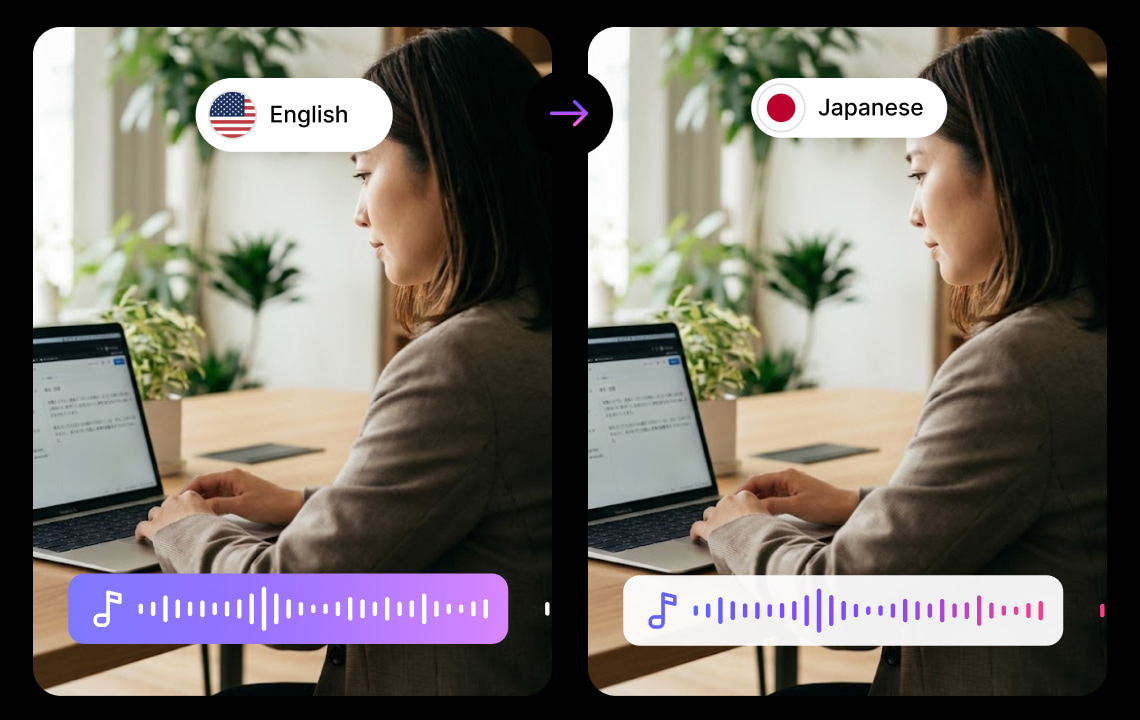
According to Fortune Business Insights (2025), Japan’s language services market is projected to reach USD 2.64 billion by 2026. As cross-border trade and tourism continue to grow across the Asia-Pacific region, demand for professional translation and localization services is expected to rise, enabling brands to communicate effectively with global customers.
Given this growth, choosing the right English-to-Japanese translation solution is essential for clear and effective communication. In this post, we will explore several translation tools to support translation and localization efforts.
Key Takeaways
- Some of the English-to-Japanese translators include VMEG AI, DeepL, Google Translate, Naver Papago, Microsoft Translator, and ChatGPT.
- Demand for English–Japanese translation is growing fast, driven by Japan’s expanding language services market, global trade, tourism, and digital content.
- English-to-Japanese translation is inherently complex due to major linguistic and cultural differences, including sentence structure, omitted subjects, and indirect communication styles.
- Top translation tools excel in specific areas: VMEG AI for video localization, DeepL for professional accuracy, Google Translate for everyday use, Papago for casual conversation, and Microsoft Translator for enterprise needs.
- Choosing the right translator depends on context and purpose, with key factors including accuracy, natural tone, formality handling, context awareness, speed, pricing, and platform support.
Why English-to-Japanese Translation Is Harder Than It Looks?
According to Globalization Partners International, Japanese is considered one of the more challenging languages to master. Translating from English adds complexity due to the differences between the two languages.
Here are some factors that make English-to-Japanese translation harder:
- Sentence Structure. English uses SVO (subject, verb, object) sentence structure, while Japanese uses SOV (subject, object, verb). This is one of the factors that makes English-to-Japanese translation more challenging.
- Subject and object. In Japanese, subjects and often objects are frequently omitted, so including them in translations is correct but can sound unnatural.
- Singular and Plural. Japanese does not distinguish between singular and plural, so subjects and objects are often ambiguous, requiring context to determine number and who is involved in a translation.
- Indirect Communication. Japanese prefer indirect, polite communication, often using vague expressions to avoid sounding too strong or offensive.
Who Needs English to Japanese Translation?
English-to-Japanese translation is needed by individuals and businesses for various purposes, including working with international teams, studying Japanese, travelling to Japan, and more.
Students & Language Learners
Students and language learners need an English-to-Japanese translator to make learning the language easier. This is ideal for those who are studying in Japan or learning more about the Japanese language.
Travelers & Expats in Japan
If you are traveling to Japan or an expat in Japan, a translation app is essential, as it will help you connect with people, learn the language and culture more easily, shop and dine out conveniently, and more.
Content Creators & YouTubers
Content creators and YouTubers also need an English-to-Japanese translator to communicate and engage with their audience, create and localiZe content that resonates with them, and reach a wider audience.
Businesses & Startups Expanding to Japan
Businesses and startups that plan to expand into Japan also need translation tools to communicate effectively with stakeholders, clients, and customers. Those who also want to open a business, such as Japanese restaurants, may need translation tools.
Localization & Translation Teams
Localization and translation are essential if you want to reach a wider audience. It will help the audience resonate more easily, leading to greater engagement and longer time on your content.
Marketers & E-commerce Sellers
Marketers and e-commerce sellers also need translation tools so that when someone inquires about products or services or engages with their posts, they can communicate easily.
Researchers, Journalists & Academics
Translation apps are also needed by researchers, journalists, and academics to quickly learn the language, understand and write research content, and share their messages.
Anime, Manga & Pop-Culture Fans
Japan is known for its anime, manga, and pop culture, so fans often use translation apps to better understand and stay engaged.
Best English to Japanese Translators
Here is a quick overview of the best English-to-Japanese translators to try.
App Name | Best For | Offline Mode | Camera Translation | Voice Conversation | Pricing |
VMEG AI | Best English to Japanese Translator for Video & Subtitles | No | No, but it supports multiple inputs and file types, such as links, audio, video, and more. | No, but it supports audio and other file types. | Offers free credits and a subscription plan. |
DeepL | Best for Formal & Professional Japanese | No | Yes - camera and photo translation | Supports dictation and text-to-speech | Free & Subscription plan. |
Google Translate | Best for Travel & Everyday Use | Yes - selected languages | Yes - camera and photos translation | Yes - selected languages | Free |
Papago | Best for Casual & Conversational Japanese | Yes | Yes - image translation | Yes - voice and conversation translation | Free |
Microsoft Translator | Best for Teams & Enterprise Use | Yes - selected languages | Yes - images | Supports voice and conversations | Free |
ChatGPT | Best for Long texts, conversational Japanese, explanations | No | Yes | Yes, but it may have some limitations and may depend on your plan or version. | Free, In-App Purchases, Subscription |
Notes on Features:
Features such as camera translation, offline mode, voice translation, and conversation translation may vary by app, languages, device, and subscription plan. Visit the Google Play Store or the app’s official website to learn more and find the option that best fits your goals.
Best English to Japanese Translator Tools
Here are the best English-to-Japanese translation tools to break language barriers and ensure effective communication.
VMEG AI – Best English to Japanese Translator for Video & Subtitles
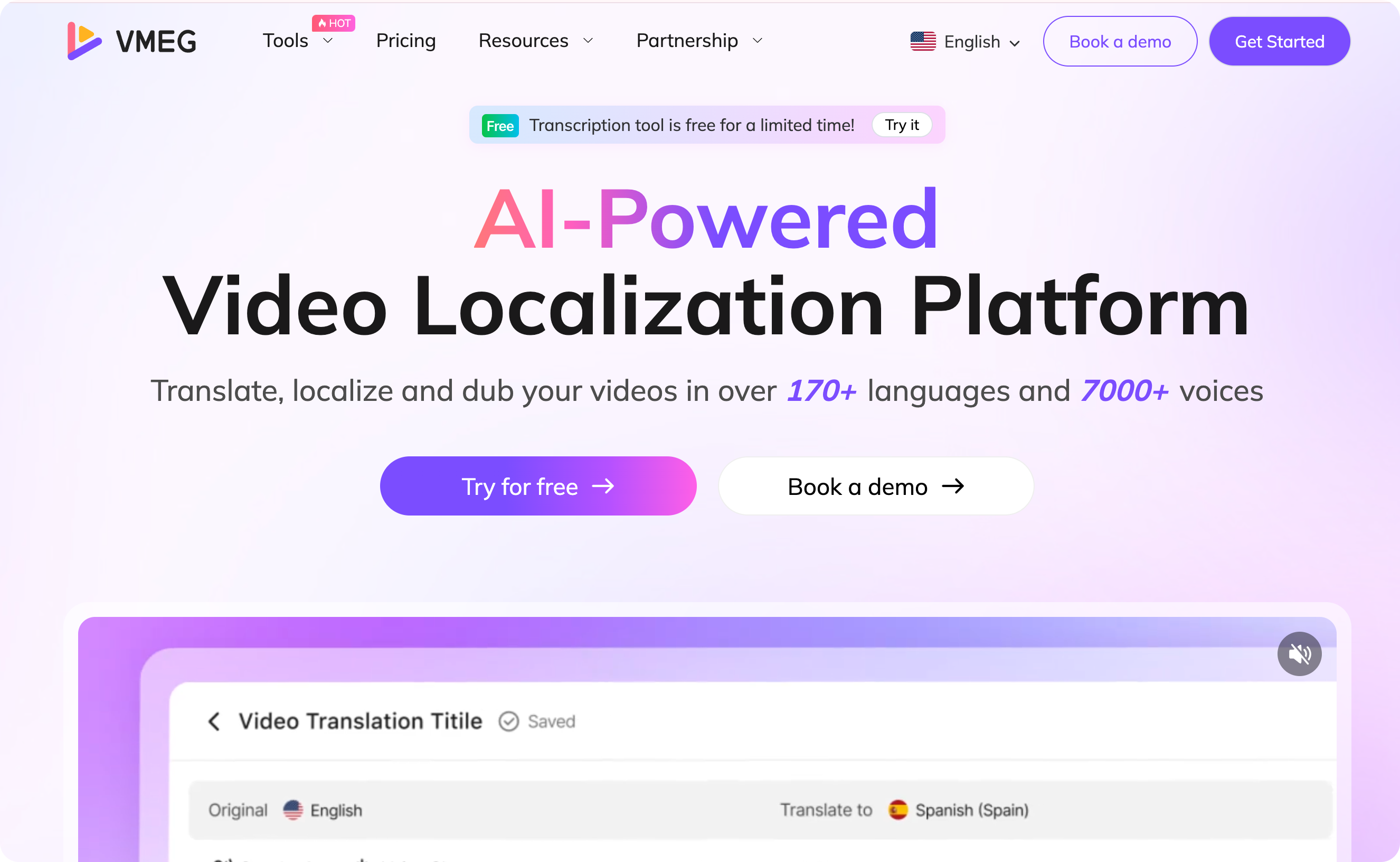
VMEG AI is the best English-to-Japanese video and subtitle translator. This is an ideal tool for content creators, businesses, and individuals seeking to localize content and reach a wider audience easily.
Key Features of Why VMEG AI stands out:
- Easy to use, making it perfect for beginners.
- Takes only a few minutes to translate the output.
- Support multiple file types, depending on the content you want to translate.
- Supports more than 170 languages.
- Supports more than 7,000 AI lifelike voices, allowing users to easily select a voice that suits the brand and content.
- Has multiple translation tools, such as video, audio, MP3, and movie translators.
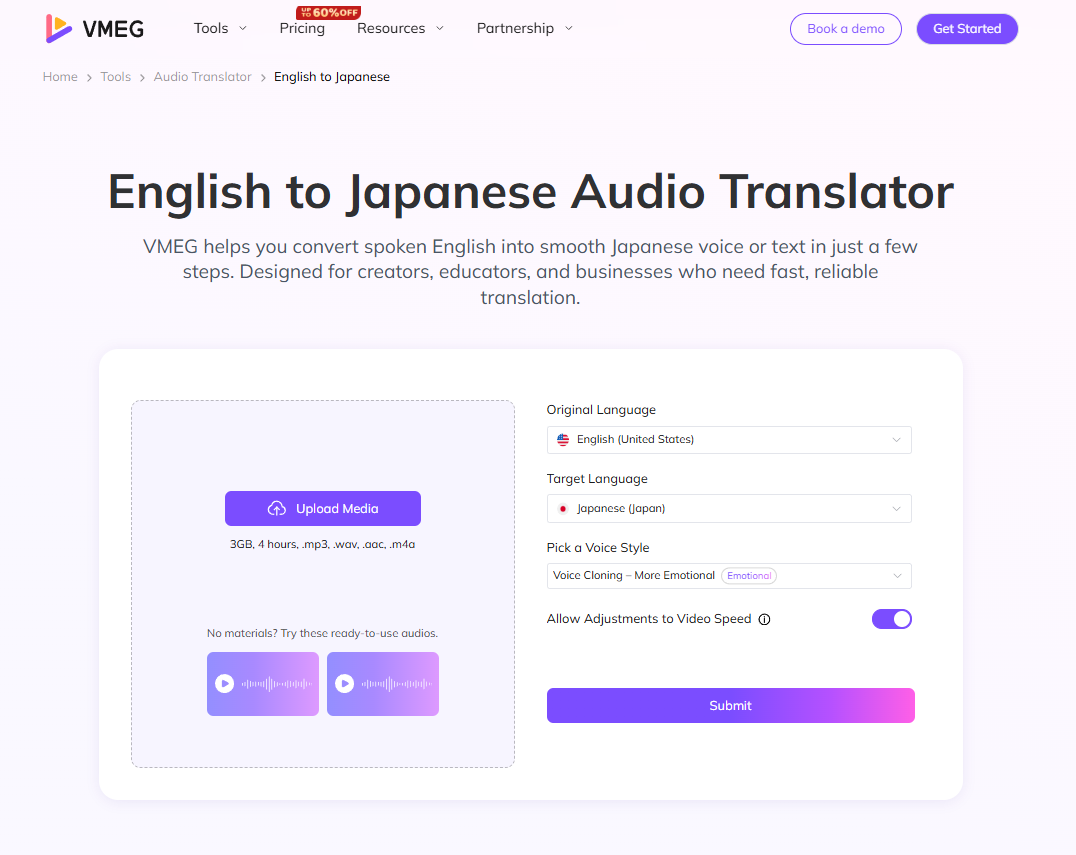
Best Use Cases
- Global Video Localization. Translate and localize videos while preserving the emotional tone, delivery, and pacing.
- Multilingual Content Creation. Create multilingual content, including explainer videos, interviews, and more, for Japanese and international audiences.
- E-learning Videos and Courses. Easily create learning content in learners’ native languages, so they can easily understand the topics.
- Corporate Training & Internal Communication. This helps create a range of documents, including compliance, product, onboarding, and HR materials, for international teams.
- Marketing & Advertising Campaigns. Localize ads and promotional content using tools that let you clone your voice or select a human-like voice to ensure consistency.
DeepL Translate – Best for Formal & Professional Japanese
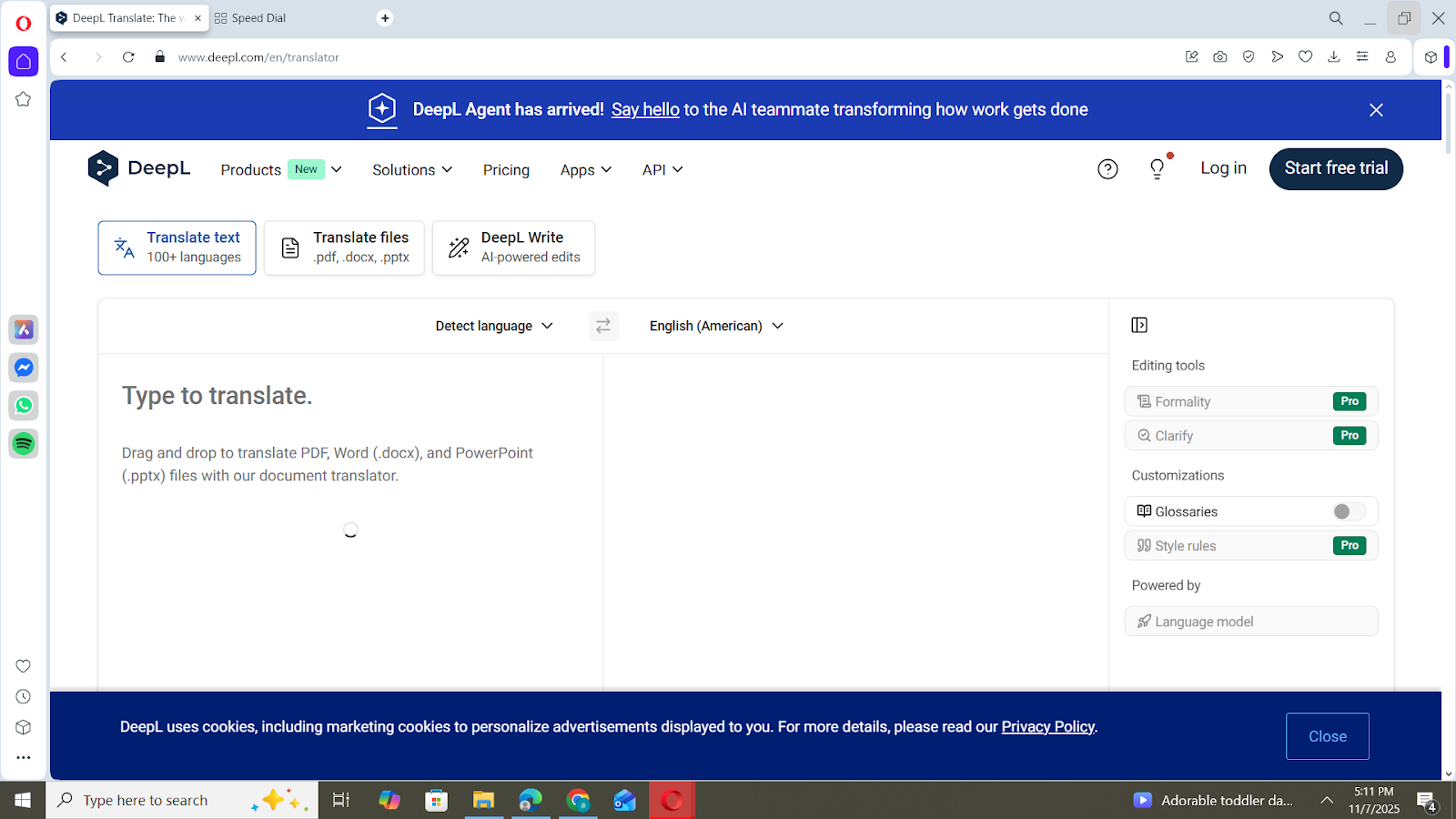
Image Credits: Screenshot from DeepL Translate website accessed in January 2026 for illustrative purposes only.
DeepL is known for producing highly accurate, natural-sounding translations, especially for formal or professional text.
Key Features:
- Supports camera, file, and photo translation.
- Supports dictation and text-to-speech.
- Provides writing suggestions for clearer output.
- Choose the tone you prefer, whether formal or informal (paid plan).
- Select the perfect words or phrases with their alternative translations.
Google Translate – Best for Travel & Everyday Use
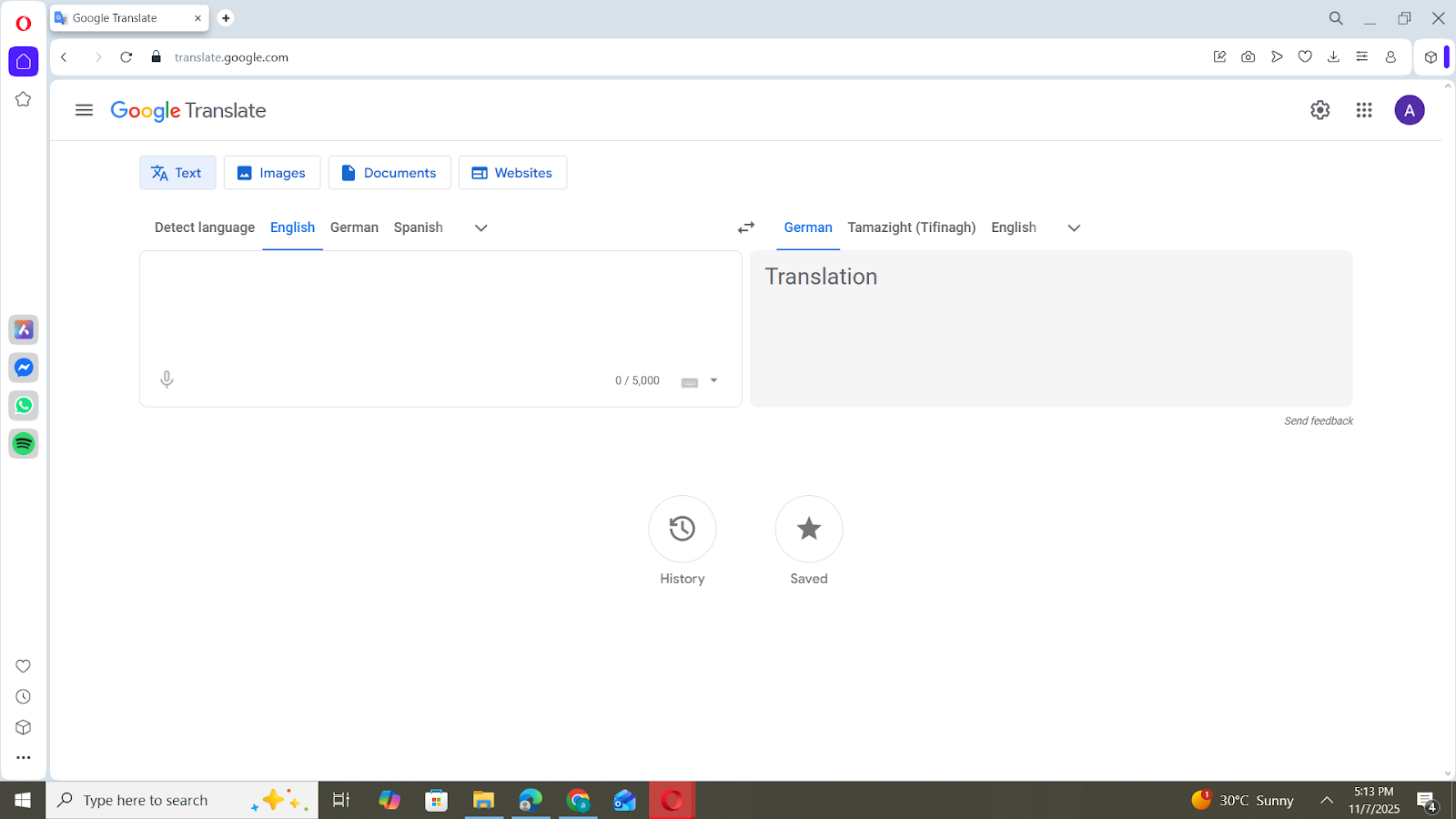
Image Credits: Screenshot from Google Translate website accessed in January 2026 for illustrative purposes only.
Google Translate is a versatile, easy-to-use translator great for basic communication during travel or daily life.
Key Features:
- Works offline with selected and downloadable languages
- Supports text, photos, conversation, and camera translation.
- Tap the Google Translate icon to translate copied text from apps.
- Supports handwriting, so you can just write instead of typing.
- Easily access saved translated words with its phrasebook.
Microsoft Translator – Best for Teams & Enterprise Use
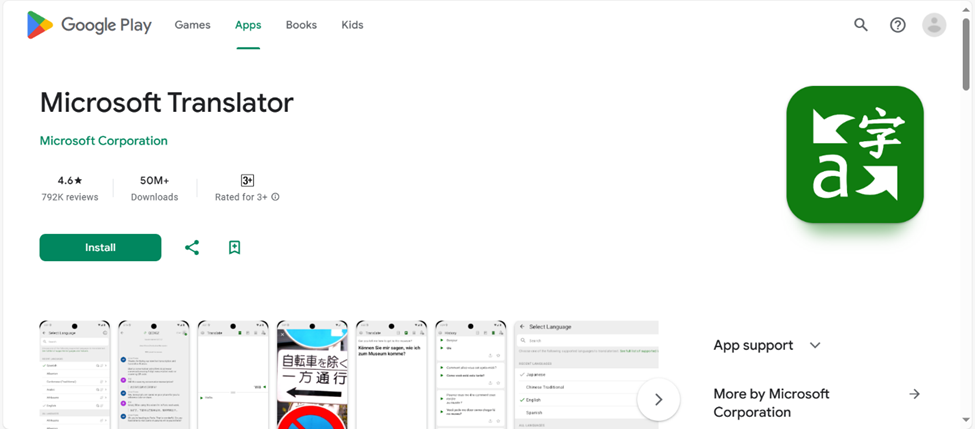
Image Credits: Screenshot from Google Play Store accessed in January 2026 for illustrative purposes only.
Microsoft Translator is well-suited for personal, business, and educational use. With Microsoft Translator, you can communicate effectively in Japanese and other languages.
Key Features:
- Supports text, images, voice, and conversation translations.
- Supports more than 100 languages.
- Has an intuitive interface that makes it easy to use.
- Real-time, accurate translations.
ChatGPT - Long texts, conversational Japanese, explanations
Image Credits: Screenshot from ChatGPT website accessed in January 2026 for illustrative purposes only.
ChatGPT is great for deep, contextual understanding of Japanese text, including long passages, nuanced conversation, and detailed explanations.
Key Features:
- Handles long or complex texts
- Explains grammar and cultural nuances
- Can generate and revise content interactively
- Ideal for learning and detailed queries
How To Choose The Best English to Japanese Translator
With many English-to-Japanese translators available for various purposes, it can be challenging to choose the right one. Here are some factors to consider when selecting the best English-to-Japanese translator.
Translation accuracy & naturalness
Accuracy and natural tone are important to ensure that the message is clear and avoids any misunderstandings. Try different tools first, then compare their accuracy and see if the translation has a natural tone.
Handling of formality, slang, and idioms
Formality, as well as the meaning of slang and idioms, must be preserved to ensure the original message is not altered, as this helps build trust and authority.
Context awareness (long text & conversations)
Choose a translation tool that accounts for context and supports long text and conversations. This is important to ensure that the translated output is aligned with the source language and its meaning.
Use cases: casual, academic, business, media
Identify why you need a translator, whether you will use it for casual conversations, quick lookups, studying, travel, academic, business, media, or localization. For example, you need a translation tool to localize your videos; VMEG AI is the best option, as localization is its speciality.
Speed, UI, pricing, and platform support
Try the translation tool you prefer and translate text, images, audio, conversations, or videos to see how long it takes. Another important factor to consider is pricing, as some features are available only on paid or subscription plans. Check the inclusions of each plan to see if the features you need are included. Also, check the platform's support to see if it is reliable.
FAQs
What is the most accurate English-to-Japanese translator?
Some of the most accurate English-to-Japanese translators are DeepL and VMEG AI, but accuracy still depends on the source context and your specific needs.
What is the best translator to use in Japan?
The best translator to use in Japan depends on use case, such as VMEG AI for video localization, and Google Translate for quick lookups.
Is ChatGPT good at translating Japanese?
ChatGPT is effective at translating Japanese, but results still depend on the prompt, content, and other factors.
Is DeepL Japanese accurate?
DeepL is known for its accuracy. You can use DeepL to translate and assess its accuracy if determine whether it meets your expectations.
Is Papago or Google Translate better for Japanese?
Papago and Google Translate are good Japanese translators. You can try them to see which one best suits your needs.
Conclusion
The best English-to-Japanese translators to try are VMEG AI, DeepL, Google Translate, Naver Papago, Microsoft Translator, and ChatGPT, but your choice depends on your needs and preferences. The best way to choose the right tool for your needs is to try several options first to see which works best.
For example, if you are a content creator or an individual looking to localize content, you need a localization tool. When it comes to localization, VMEG AI is the best choice because it is easy to use and well-suited to a range of use cases. Make your localization workflow easier and faster with VMEG AI to save time and effort and increase productivity.


The VMEG Team
Behind VMEG stands a passionate team of creatives, engineers, and language lovers. At the crossroads of AI and storytelling, they craft tools that bridge languages and cultures.