

'%3e%3cpath%20d='M21.0949%203.79395L13.9961%209.82854H21.0949V3.79395Z'%20stroke='black'%20stroke-width='1.38'%20stroke-miterlimit='10'/%3e%3cpath%20d='M13.998%209.82854L7.44531%203.79395V9.82854H13.998Z'%20stroke='black'%20stroke-width='1.38'%20stroke-miterlimit='10'/%3e%3cpath%20d='M13.9961%202.69922V25.1919'%20stroke='black'%20stroke-width='1.38'%20stroke-miterlimit='10'/%3e%3cpath%20d='M20.5488%2016.4113L13.9961%209.82812V18.2217L20.5488%2024.0918V16.4113Z'%20stroke='black'%20stroke-width='1.38'%20stroke-miterlimit='10'/%3e%3cpath%20d='M7.44531%2016.4113L13.998%209.82812V18.0526L7.44531%2024.0918V16.4113Z'%20stroke='black'%20stroke-width='1.38'%20stroke-miterlimit='10'/%3e%3cpath%20d='M4.71094%209.82812V18.6057H7.44125V16.4113L13.9941%209.82812H4.71094Z'%20stroke='black'%20stroke-width='1.38'%20stroke-miterlimit='10'/%3e%3cpath%20d='M13.9961%209.82812L20.5488%2016.4113V18.6057H23.2792V9.82812H13.9961Z'%20stroke='black'%20stroke-width='1.38'%20stroke-miterlimit='10'/%3e%3c/g%3e%3c/svg%3e)

'%3e%3cmask%20id='mask0_21456_29260'%20style='mask-type:luminance'%20maskUnits='userSpaceOnUse'%20x='0'%20y='0'%20width='28'%20height='28'%3e%3cpath%20d='M27.5%200.5H0.5V27.5H27.5V0.5Z'%20fill='white'/%3e%3c/mask%3e%3cg%20mask='url(%23mask0_21456_29260)'%3e%3cpath%20d='M14%2027.5C13.4854%2024.1035%2011.8974%2020.9608%209.46828%2018.5317C7.03922%2016.1026%203.89651%2014.5146%200.5%2014C3.89651%2013.4854%207.03922%2011.8974%209.46828%209.46828C11.8974%207.03922%2013.4854%203.89651%2014%200.5C14.5147%203.89644%2016.1028%207.03905%2018.5318%209.46816C20.9609%2011.8972%2024.1035%2013.4853%2027.5%2014C24.1035%2014.5147%2020.9609%2016.1028%2018.5318%2018.5318C16.1028%2020.9609%2014.5147%2024.1035%2014%2027.5Z'%20fill='url(%23paint0_linear_21456_29260)'/%3e%3c/g%3e%3c/g%3e%3cdefs%3e%3clinearGradient%20id='paint0_linear_21456_29260'%20x1='9.5'%20y1='9.5'%20x2='20.75'%20y2='21.875'%20gradientUnits='userSpaceOnUse'%3e%3cstop%20stop-color='%23F0DCD6'/%3e%3cstop%20offset='0.914506'%20stop-color='%231D6DFF'/%3e%3c/linearGradient%3e%3cclipPath%20id='clip0_21456_29260'%3e%3crect%20width='28'%20height='28'%20fill='white'/%3e%3c/clipPath%3e%3c/defs%3e%3c/svg%3e)
'%3e%3cpath%20d='M22.8019%2011.2412L23.5234%2011.6807V12.0103L23.3172%2012.7796L14.5579%2014.9771L13.7344%2012.7951L22.8019%2011.2412Z'%20fill='%23D97757'/%3e%3cpath%20d='M19.5236%204.77832L20.5322%205.00396L20.8%205.35575L21.0552%206.19876L20.9494%206.73644L15.0712%2015.3068L13.1133%2013.2191L18.5338%205.63471L19.5236%204.77832Z'%20fill='%23D97757'/%3e%3cpath%20d='M14.4577%203.43951L15.0761%203L15.5912%203.21976L16.1065%203.9889L14.6949%2013.0345L13.7364%2012.3397L13.3242%2011.131L14.0456%204.31853L14.4577%203.43951Z'%20fill='%23D97757'/%3e%3cpath%20d='M7.84766%203.5851L8.48285%202.7199L8.89716%202.61914L9.71923%202.74717L10.125%203.08581L13.0815%2010.0748L14.1509%2013.3954L12.8997%2014.1372L8.13117%204.91019L7.84766%203.5851Z'%20fill='%23D97757'/%3e%3cpath%20d='M4.77232%208.38688L4.56641%207.50742L5.18478%206.73828L5.90613%206.84816H6.11223L10.4403%2010.2544L11.78%2011.3531L13.6349%2012.8914L12.6044%2014.7594L11.6769%2013.9903L11.0586%2013.331L5.08168%208.82593L4.77232%208.38688Z'%20fill='%23D97757'/%3e%3cpath%20d='M3.53288%2014.0982L3.06641%2013.5489L3.06647%2013.0601L3.53288%2012.8896L8.78833%2013.2193L13.9408%2013.6588L13.7736%2014.7528L3.94502%2014.2082L3.53288%2014.0982Z'%20fill='%23D97757'/%3e%3cpath%20d='M6.62378%2019.8178H5.59334L5.18359%2019.3146V18.7132L6.93299%2017.3946L14.045%2012.5674L14.7648%2013.8785L6.62378%2019.8178Z'%20fill='%23D97757'/%3e%3cpath%20d='M8.57739%2022.8884L8.16518%2022.9984L7.54688%2022.6687L7.64995%2022.1193L13.7299%2013.5488L14.5543%2014.7574L10.0201%2021.1305L8.57739%2022.8884Z'%20fill='%23D97757'/%3e%3cpath%20d='M13.7361%2023.9861L13.4271%2024.4257L12.8088%2024.6454L12.2935%2024.2058L11.9844%2023.5466L13.5301%2014.6465L14.4576%2014.7563L13.7361%2023.9861Z'%20fill='%23D97757'/%3e%3cpath%20d='M18.9869%2021.5713V22.4503L18.8838%2022.7799L18.4716%2022.9997L17.7503%2022.8974L12.7969%2015.0367L14.7617%2013.4404L16.4104%2016.6269L16.5652%2017.7805L18.9869%2021.5713Z'%20fill='%23D97757'/%3e%3cpath%20d='M21.3629%2020.2507L21.4659%2020.8L21.1568%2021.2396L20.8476%2021.1297L19.0958%2019.8112L16.4165%2017.284L14.3555%2015.7457L14.9736%2013.6582L16.0041%2014.3175L16.6226%2015.5259L21.3629%2020.2507Z'%20fill='%23D97757'/%3e%3cpath%20d='M20.0232%2014.6482L22.5995%2014.8679L23.2178%2015.3074L23.6299%2015.9667V16.441L22.4964%2016.9556L16.7256%2015.4173L14.3555%2015.3074L14.9737%2013L16.6226%2014.3185L20.0232%2014.6482Z'%20fill='%23D97757'/%3e%3c/g%3e%3c/svg%3e)
Key Points
- An experiment by Preply showed Google Translate achieved 96.35% accuracy on literary text, 94.43% on business websites, but dropped to 72.29% on colloquial phrases.
- Methods for evaluating Google Translate's accuracy include: examining tone/context, checking terminology consistency, using back-translation, having bilingual reviewers check, and combining AI + human editors.
Google Translate is reasonably accurate for simple text, but can be unreliable for slang, nuance, or context-heavy language. It is one of the most well-known translation tools, and many people use it for different purposes. It provides convenience as it is easy to use.
However, despite the convenience, it is essential not to rely on it mindlessly, as factors such as context and language pair can influence its accuracy. It can be a helpful tool for various purposes, but its accuracy is not guaranteed, so it is best to check its output.
That raises the key question: Is Google Translate Accurate?
However, despite the convenience, it is essential not to rely on it mindlessly, as factors such as context and language pair can influence its accuracy. It can be a helpful tool for various purposes, but its accuracy is not guaranteed, so it is best to check its output.
That raises the key question: Is Google Translate Accurate?
Quick answer: Google Translate is fairly accurate for straightforward content, but its reliability drops when language becomes informal or context-dependent.
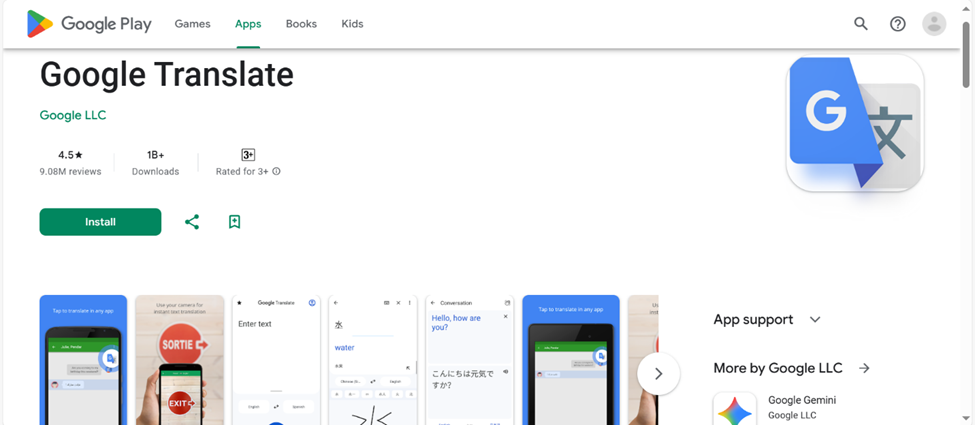
*Screenshot from Google Translate accessed November 2025 for illustrative purposes only.
What Is Google Translate & What Does “Accuracy” Really Mean in Localization?
Google Translate is one of the go-to translation tools for cross-language communication. It helps in breaking the language barrier, making people more connected. Google's Neural Machine Translation system produces better translation output, but it may still be far from perfect.
In localization, accuracy can refer to the translation output, taking into account context, culture, tone, and other factors. So, it is essential to check the output, as localization has unique demands, including dialogue, pacing, and emotion. When it comes to localization and other types of translation, it is essential to review the results to ensure the content you publish is accurate and professional.
Google Translate and other tools are mostly text-focused and are limited in video-specific capabilities. For individuals such as content creators who produce video content, this gap can be a little challenging, as it requires more time and effort. That is why specialized platforms like VMEG AI, built to support video translation and other translation outputs, are emerging.
Why Does Google Translate Struggle with Certain Languages & Content Types?
Google Translate may struggle with specific languages due to limitations in machine translation and disparities in language resources. It also depends on the innovations and updates they are making in their system to deliver satisfactory results. Other factors that make Google Translate struggle are culture, idioms, slang, humor, and other technical terms or jargon.
Currently, Google Translate only supports text output, making it suitable for written projects. So, if you want video-type content, it may take time to edit, review, and manually incorporate the translation into the video.
The translation may not adapt well to video formats, as videos are more complex and involve timing, subtitles, and other factors to be considered. If you want video content translated, you need tools like VMEG AI to do so with the video output.
The translation may not adapt well to video formats, as videos are more complex and involve timing, subtitles, and other factors to be considered. If you want video content translated, you need tools like VMEG AI to do so with the video output.
Who Should (and Shouldn’t) Rely on Google Translate for Localization?
Not everyone should rely on Google Translate for localization or translation, as its output can vary and be inconsistent, especially if you are doing it for your brand and aiming for global reach.
Who Should Rely on Google Translate for Localization | Who Shouldn’t Rely on Google Translate for Localization |
Individuals needing quick, informal translations | Businesses localizing marketing or brand-sensitive content. |
Travelers seeking basic communication help | Legal, medical, or compliance-related material |
Users handling non-critical content | Technical documentation requiring precision |
Small tasks with low accuracy requirements | Products targeting diverse cultural markets |
Early-stage drafts or rough content outlines | Creative content (ads, slogans, storytelling) |
Best for
Casual users. Google Translate is great for casual users having simple conversations. This includes simple greetings, instructions, and other easy-to-translate words or sentences, such as common words or general statements.
Quick personal understanding. It is excellent if you want to understand something quickly. For example, if you are conversing with someone in another language, and they messaged you using their language, you can use Google Translate. Another example is when you are travelling and want to translate some simple terms, it can also be used.
Non-professional content. If the content is mainly for personal use and it's not related to any professional content, Google Translate is a helpful tool. It should not be used in professional content, such as essential documents, as it may bring miscommunication.
Not ideal for
Brands, educators, and technical fields. Google Translate is not ideal for brands, educators, or technical fields, as it may struggle with jargon and complex sentences. There may be instances when it does not convey the exact meaning, leading to confusion among the audience. The brand's authority and professionalism might be affected if people see that the translation isn’t very accurate.
Creators who need culturally accurate, tone-matched subtitles. Culture has its own language, and the words you use when creating content should resonate with your brand and audience. The emotions and the deeper meaning of words must remain, so the message will not be altered.
Teams producing high-stakes or global video content. Google Translate is a good tool for text output, but it doesn’t yet provide video output. Using a text-focused tool for video content may create a quality gap that affects how the audience perceives the video. It can be time- and effort-consuming when done manually, so it is important to use dedicated video solutions like VMEG AI to remain relevant.
How Accurate Is Google Translate—Really?
In a Reddit discussion, someone asked, “How accurate is Google Translate?” There were various responses. Some of the responses are fairly accurate but not perfect, pretty accurate but not in-depth, and other responses.
An experiment conducted by Preply showed that Google Translate achieved 96.35% accuracy on literary text, 94.43% on business websites, and 72.29% on colloquial phrases.
On the Google Translate Support Community Thread, a user shares challenges, including incorrect language detection, loss of contextual nuance, translation inaccuracies, and difficulties with language recognition. The user asked about ways to improve language identification and accuracy, and someone responded by suggesting the user provide a correct translation.
With continued innovation and development, Google Translate’s output may improve, and accuracy will increase over time. However, it is always best to check the output to ensure that it is professional and conveys the original message.
How to Evaluate Google Translate’s Accuracy
Evaluating Google Translate’s accuracy for your content is essential to ensure that the output matches the original message you want to convey. Here are some guidelines to evaluate Google Translate’s accuracy.
1. Define your content goals.
Identifying your content goal is one of the most important first steps in deciding whether to use Google Translate. If it is for personal and straightforward purposes only, you can use Google Translate.
2. Examine tone/context.
Check if the tone or context of the output is aligned with the message you want to say. Machine translations may alter intent, miss cultural nuances, and change formality levels, leading to words or phrases that feel off-brand or inappropriate for the audience.
3. Check terminology consistency.
Check if terminology was used consistently, and there are no gaps, and its meaning is not altered. Sometimes, terminologies, such as jargon, may be mistranslated, oversimplified, or replaced with other terms, leading to a loss of context.
4. Test multiple MT tools.
Try using different tools to see which one gives the most accurate results. You can try DeepL, VMEG AI, and other tools, and compare their results with Google Translate.
5. Use back-translation.
Translate the output back to the original language to see if the context, tone, and intent match well. In this way, you will see how accurate it is and the significant differences it reveals.
6. Have bilingual reviewers check output.
If you know bilingual reviewers, you can politely ask them to check and verify the output. Make sure the person you ask is knowledgeable and has expertise, so you’ll receive good feedback.
7. Combine AI + human editors.
Check the output by using AI and human editors to see its accuracy. It will help you identify which part of the translation is not accurate, so you can simplify it or use other tools to achieve better translation results.
8. Evaluate cultural relevance.
Cultural sensitivity is one factor to consider, including social norms, idioms, slang, and symbols. Ensure the translation is appropriate for the target culture. If the culture is not appropriately adapted, the content may be misunderstood or ineffective.
9. Test on target audiences.
Share the output with your target audience to confirm that the message is clear, natural, and culturally appropriate. Their feedback can indicate whether there were any unclear phrases, misunderstandings, or other issues that automated tools might miss.
Bonus: Alternatives to Google Translate for Professional Video Localization
VMEG - Professional Video Localization
Translate, localize and dub your videos in over 170+ languages and 7000+ voices
Video is one of the most popular forms of content people use today. And translation helps the content reach a global audience. Here are some alternatives to Google Translate for Professional Video Localization.
Professional human translators.
Complex and essential content may require professional human translators to ensure accuracy and professionalism.
Localization agencies.
If you know localization agencies that offer high-quality translations, you can have your content translated by them.
Hybrid human + AI workflows.
Another option is a combination of human and AI workflows. Try some AI tools first to find the best one.
Video-centric AI translation tools.
There are many available tools now, such as VMEG AI, that produce different translation outputs, making the workflow easier and faster.
Translation tools like Google Translate primarily focus on text translation. If you need a tool for other types of content, such as video translation, try VMEG AI. It is a platform designed to support video translation, providing high-accuracy results. With tools like VMEG AI, you can translate content in various languages in just a few clicks.
Final Verdict
Google Translate is accurate enough for simple text, though factors such as language pairings and context can affect its output. It is best to check the output to ensure it is accurate, as the output must match the original context, cultural adaptation, and tone.
Since Google Translate currently supports only text-based output, it may not be sufficient for video localization, as factors can affect video output. If you are a video content creator, you can try VMEG AI. It supports different translation services, making it a one-stop tool for your various translation projects.
Frequently Asked Questions and Answers
How Accurate is Google Translate?
| Content Type Focus | Accuracy Assessment |
| Simple Text | Generally considered reasonably accurate. |
| Literary Text | Achieved 96.35% accuracy in a Preply experiment. |
| Business Websites | Achieved 94.43% accuracy in a Preply experiment. |
| Colloquial Phrases | Showed lower accuracy at 72.29% in a Preply experiment. |
| Complex/Specialized Content | Unreliable, as it often struggles with slang, nuance, context, culture, and professional jargon (e.g., legal, medical, technical). |
What Does "Accuracy" Truly Mean in Localization?
In localization, accuracy goes beyond mere linguistic correctness; it must take into account context, culture, tone, and emotion. It ensures the translated content is appropriate, professional, and effectively conveys the original message to the target culture.
Who or What Content Types Should NOT Rely on Google Translate?
Google Translate currently only supports text-based output. It lacks video-specific capabilities, meaning it cannot handle the complexities required for video localization, such as timing synchronization, subtitle formatting, and incorporating the translation into the video output.
What Are the Alternatives to Google Translate for Professional Video Localization?
For projects requiring high accuracy and professional video output, the following alternatives are recommended:
- Professional Human Translators
- Localization Agencies
- Hybrid Human + AI Workflows (combining AI tools with human editors)
- Video-Centric AI Translation Tools (such as VMEG AI, which is designed specifically to support video translation)


The VMEG Team
Behind VMEG stands a passionate team of creatives, engineers, and language lovers. At the crossroads of AI and storytelling, they craft tools that bridge languages and cultures.