

'%3e%3cpath%20d='M21.0949%203.79395L13.9961%209.82854H21.0949V3.79395Z'%20stroke='black'%20stroke-width='1.38'%20stroke-miterlimit='10'/%3e%3cpath%20d='M13.998%209.82854L7.44531%203.79395V9.82854H13.998Z'%20stroke='black'%20stroke-width='1.38'%20stroke-miterlimit='10'/%3e%3cpath%20d='M13.9961%202.69922V25.1919'%20stroke='black'%20stroke-width='1.38'%20stroke-miterlimit='10'/%3e%3cpath%20d='M20.5488%2016.4113L13.9961%209.82812V18.2217L20.5488%2024.0918V16.4113Z'%20stroke='black'%20stroke-width='1.38'%20stroke-miterlimit='10'/%3e%3cpath%20d='M7.44531%2016.4113L13.998%209.82812V18.0526L7.44531%2024.0918V16.4113Z'%20stroke='black'%20stroke-width='1.38'%20stroke-miterlimit='10'/%3e%3cpath%20d='M4.71094%209.82812V18.6057H7.44125V16.4113L13.9941%209.82812H4.71094Z'%20stroke='black'%20stroke-width='1.38'%20stroke-miterlimit='10'/%3e%3cpath%20d='M13.9961%209.82812L20.5488%2016.4113V18.6057H23.2792V9.82812H13.9961Z'%20stroke='black'%20stroke-width='1.38'%20stroke-miterlimit='10'/%3e%3c/g%3e%3c/svg%3e)

'%3e%3cmask%20id='mask0_21456_29260'%20style='mask-type:luminance'%20maskUnits='userSpaceOnUse'%20x='0'%20y='0'%20width='28'%20height='28'%3e%3cpath%20d='M27.5%200.5H0.5V27.5H27.5V0.5Z'%20fill='white'/%3e%3c/mask%3e%3cg%20mask='url(%23mask0_21456_29260)'%3e%3cpath%20d='M14%2027.5C13.4854%2024.1035%2011.8974%2020.9608%209.46828%2018.5317C7.03922%2016.1026%203.89651%2014.5146%200.5%2014C3.89651%2013.4854%207.03922%2011.8974%209.46828%209.46828C11.8974%207.03922%2013.4854%203.89651%2014%200.5C14.5147%203.89644%2016.1028%207.03905%2018.5318%209.46816C20.9609%2011.8972%2024.1035%2013.4853%2027.5%2014C24.1035%2014.5147%2020.9609%2016.1028%2018.5318%2018.5318C16.1028%2020.9609%2014.5147%2024.1035%2014%2027.5Z'%20fill='url(%23paint0_linear_21456_29260)'/%3e%3c/g%3e%3c/g%3e%3cdefs%3e%3clinearGradient%20id='paint0_linear_21456_29260'%20x1='9.5'%20y1='9.5'%20x2='20.75'%20y2='21.875'%20gradientUnits='userSpaceOnUse'%3e%3cstop%20stop-color='%23F0DCD6'/%3e%3cstop%20offset='0.914506'%20stop-color='%231D6DFF'/%3e%3c/linearGradient%3e%3cclipPath%20id='clip0_21456_29260'%3e%3crect%20width='28'%20height='28'%20fill='white'/%3e%3c/clipPath%3e%3c/defs%3e%3c/svg%3e)
'%3e%3cpath%20d='M22.8019%2011.2412L23.5234%2011.6807V12.0103L23.3172%2012.7796L14.5579%2014.9771L13.7344%2012.7951L22.8019%2011.2412Z'%20fill='%23D97757'/%3e%3cpath%20d='M19.5236%204.77832L20.5322%205.00396L20.8%205.35575L21.0552%206.19876L20.9494%206.73644L15.0712%2015.3068L13.1133%2013.2191L18.5338%205.63471L19.5236%204.77832Z'%20fill='%23D97757'/%3e%3cpath%20d='M14.4577%203.43951L15.0761%203L15.5912%203.21976L16.1065%203.9889L14.6949%2013.0345L13.7364%2012.3397L13.3242%2011.131L14.0456%204.31853L14.4577%203.43951Z'%20fill='%23D97757'/%3e%3cpath%20d='M7.84766%203.5851L8.48285%202.7199L8.89716%202.61914L9.71923%202.74717L10.125%203.08581L13.0815%2010.0748L14.1509%2013.3954L12.8997%2014.1372L8.13117%204.91019L7.84766%203.5851Z'%20fill='%23D97757'/%3e%3cpath%20d='M4.77232%208.38688L4.56641%207.50742L5.18478%206.73828L5.90613%206.84816H6.11223L10.4403%2010.2544L11.78%2011.3531L13.6349%2012.8914L12.6044%2014.7594L11.6769%2013.9903L11.0586%2013.331L5.08168%208.82593L4.77232%208.38688Z'%20fill='%23D97757'/%3e%3cpath%20d='M3.53288%2014.0982L3.06641%2013.5489L3.06647%2013.0601L3.53288%2012.8896L8.78833%2013.2193L13.9408%2013.6588L13.7736%2014.7528L3.94502%2014.2082L3.53288%2014.0982Z'%20fill='%23D97757'/%3e%3cpath%20d='M6.62378%2019.8178H5.59334L5.18359%2019.3146V18.7132L6.93299%2017.3946L14.045%2012.5674L14.7648%2013.8785L6.62378%2019.8178Z'%20fill='%23D97757'/%3e%3cpath%20d='M8.57739%2022.8884L8.16518%2022.9984L7.54688%2022.6687L7.64995%2022.1193L13.7299%2013.5488L14.5543%2014.7574L10.0201%2021.1305L8.57739%2022.8884Z'%20fill='%23D97757'/%3e%3cpath%20d='M13.7361%2023.9861L13.4271%2024.4257L12.8088%2024.6454L12.2935%2024.2058L11.9844%2023.5466L13.5301%2014.6465L14.4576%2014.7563L13.7361%2023.9861Z'%20fill='%23D97757'/%3e%3cpath%20d='M18.9869%2021.5713V22.4503L18.8838%2022.7799L18.4716%2022.9997L17.7503%2022.8974L12.7969%2015.0367L14.7617%2013.4404L16.4104%2016.6269L16.5652%2017.7805L18.9869%2021.5713Z'%20fill='%23D97757'/%3e%3cpath%20d='M21.3629%2020.2507L21.4659%2020.8L21.1568%2021.2396L20.8476%2021.1297L19.0958%2019.8112L16.4165%2017.284L14.3555%2015.7457L14.9736%2013.6582L16.0041%2014.3175L16.6226%2015.5259L21.3629%2020.2507Z'%20fill='%23D97757'/%3e%3cpath%20d='M20.0232%2014.6482L22.5995%2014.8679L23.2178%2015.3074L23.6299%2015.9667V16.441L22.4964%2016.9556L16.7256%2015.4173L14.3555%2015.3074L14.9737%2013L16.6226%2014.3185L20.0232%2014.6482Z'%20fill='%23D97757'/%3e%3c/g%3e%3c/svg%3e)
Key Takeaways
- DeepL generally offers superior accuracy, excelling at context, tone, and idiom handling compared to alternatives, but human review is still necessary for critical content.
- Use DeepL for text and documents. Use tools like VMEG AI for comprehensive video localization (dubbing, lip-sync) as DeepL lacks video support.
- Improve results by providing clear source text, ensuring proper context (translating in chunks), and utilizing reverse translation to verify consistency.
Machine translation has advanced rapidly in recent years, giving users a wide range of tools to choose from. Among them, DeepL has become a major player, with more than 10 million downloads on Google Play Store, and a reputation for producing context-aware translations.
Naturally, this leads to a common question: “Is DeepL accurate?”
Naturally, this leads to a common question: “Is DeepL accurate?”
Quick answer: DeepL is generally more accurate than many other machine translation tools, particularly when handling nuanced or context-heavy text. It manages tone, grammar, and idiomatic phrasing better than most alternatives, though it still isn’t perfect and may require human review for high-precision tasks.
While DeepL and similar tools—such as Google Translate—are designed primarily for text-based translation, platforms like VMEG AI focus on video localization, offering capabilities such as video translation, dubbing, lip-sync, and multi-format editing. The right choice ultimately depends on whether you’re translating text or fully localizing multimedia content.
What is DeepL?
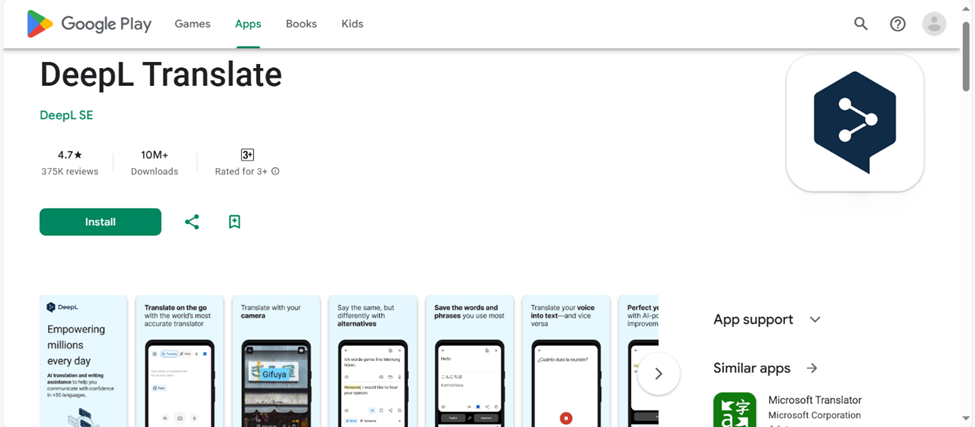
*Screenshot from DeepL Translate accessed in November 2025 for illustrative purposes only.
Translation and localization have become essential parts of communication, especially now that we are more connected than ever. DeepL is a translation tool that lets you translate text, PDFs, Word, and PowerPoint files into different languages.
Its features include text translation, document translation, glossary, image translation, formality, dictionary, and other pro and smart features that can bring your business or project to the next level.
Its features include text translation, document translation, glossary, image translation, formality, dictionary, and other pro and smart features that can bring your business or project to the next level.
DeepL and other tools like Google Translate focus on text translation, and those tools don’t support video translation directly. It can be used for video translation, but it will take time as you will do it manually. A video transcript must be ready as text, an image, or a file to translate with DeepL.
Then, the transcription can be used as a subtitle in the video, and this will be done manually.
Then, the transcription can be used as a subtitle in the video, and this will be done manually.
DeepL does not yet support video input or output, so if you want a tool that supports this feature, try VMEG AI and other online tools to easily localize and translate your videos in different formats for easy content repurposing.
Why Accuracy Matters in Translation and Video Localization
Accuracy is an important factor to consider when choosing a translation and video localization tool. Accurate content shows professionalism and builds authority, particularly if it will be used in important agendas, such as in business or brand. Creators and businesses are likely to build strong credibility if their translated content resonates well with their audience.
Video is one of the most popular content types used by creators today. Video Localization has been a trend, and we also see that some platforms that support video content, integrate AI and auto-generated transcripts. But sometimes those translations are not highly accurate, as various factors affect them.
When it comes to translation and localization, especially in video content, subtitles, captions, and dubbing must be precise. It helps the content appear authoritative and clearly convey messages to the audience. Inaccurate translations can lead to miscommunication, cultural issues, and a loss of engagement, which is detrimental to the content and brand.
Tools like DeepL and VMEG AI are some of the tools that provide accurate results. DeepL is perfect for text-focused output, while VMEG AI is ideal for video localization and supports multiple languages and outputs.
Who Uses DeepL?
According to Forbes, millions of people have used DeepL's free basic services. DeepL also claims that more than 200,000 businesses trust their Language AI. These figures show that many people worldwide use DeepL for various purposes. It also offers multiple solutions for different industries, such as enterprise, government, healthcare, and more.
According to DeepL, the Association of Language Companies’ 2024 Industry Survey found that 82% of Language Service Companies use DeepL.
Here are some of the 2024 survey results:
Machine Translation Providers | 2024 (% Share) |
DeepL | 82% |
Google Translate | 46% |
Microsoft | 32% |
Amazon AWS | 17% |
There are still factors, such as innovations and updates, that might affect the future survey results. Every update can affect the users’ overall experience. So, it is best to stay updated and keep exploring different tools to see if DeepL is best for you.
If you are wondering whether you can use DeepL, of course, you can, as it offers free features. Whether it is for personal use, your brand, or your business, you can rely on it. But, there are still some factors to consider, such as:
Language. Translating with DeepL only works with its supported languages. If you are using an app, make sure it is up to date to see if the language you need is already supported; if not, try other tools.
File Type. DeepL supports text, images, and documents. If you want to translate videos and other file types, try VMEG AI and other tools that support your input and give you your preferred output file.
Features. DeepL offers many features, but some may not be available yet or require a paid subscription. Explore different tools to find the one that supports the feature you are looking for.
Purpose. The reason why you want to use DeepL is essential. It is a good tool for studying and translating text for various purposes. But if your purpose is to create a translated video directly, you need other tools like VMEG AI.
How Accurate is DeepL? And How Do Others Perceive It?
In a study conducted by Kamaluddin et al. (2024), titled Accuracy Analysis of DeepL: Breakthroughs in Machine Translation Technology, they found that based on human evaluations and BLEU scores, DeepL consistently performs better than other tools. It was also revealed that it excels in multiple linguistic features, such as idiomatic expressions, handling context, and specialized terminology.
In a 2024 study conducted by Forester, commissioned by DeepL, some key findings include 90% faster translation, a 345% return on investment for global companies, and a 50% reduction in translation workload.
Let’s take a look at what others say about DeepL.
In a Reddit Discussion, someone asked whether DeepL is more reliable than Google Translate and asked for suggestions if it isn't. Some of the responses say it is more accurate, living up to some expectations, and is amazing in some languages like Russian and German. Others shared some tools like Neurooo and ChatGPT. Some users also say to use good judgment and be careful when using tools.
In the TranslatePress accuracy review, accuracy assessment may be challenging if DeepL doesn’t support your language yet. However, they shared that DeepL has a good reputation and is one of the best options.
In a Quora discussion, someone asks if DeepL is better than translators. Some responses say it is better than other machine translations, but it still depends on factors such as the language pair, required output, and domain.
With these studies and feedback from other users, DeepL is accurate, but there are still factors that affect its accuracy. It is best to test it out first on the language you know to see for yourself if it is accurate, or try some tools to see which one gives the best result.
How to Improve Translation Accuracy on DeepL and Other Localization Tools
Some factors can improve the translation accuracy of DeepL and other localization tools, such as VMEG AI. Here are some tips on how to improve translation accuracy.
1. Write a clear source text or upload/attach a high-quality file.
The source text or file is the basis of the output. If it is well-written and high-quality, translation tools can easily translate it. It is best to be specific and ensure the message is clear to avoid miscommunication, especially when cultural context is involved. Ensure that there are no typos and the terminology is consistent. When it comes to a video file or link, ensure it is high-quality so it can be easily transcribed and translated.
2. Use features that improve translation.
Check the tool's available features and use them to improve the output. If you are subscribed to a plan, maximize the available features for the best output. Check the settings, if applicable, so you can turn on and off the features that will help you.
3. Improve context.
If applicable, you can add a note to provide context so the tool can easily understand it. Also, ensure proper formatting to keep the translation consistent in the output. It is also better to translate in chunks or paragraphs than line by line, so the tool can easily understand the context. Preserve main jargon by marking or wrapping a word or phrase in quotes.
4. Use some techniques.
Use techniques such as reverse translation, where the translated output is translated back into the original language to see if the meaning remains consistent or changes. Check the alternative translation options to compare and evaluate them. Do not forget to edit it manually before publishing or sharing it to ensure that the content is polished. Follow the developer tips, if available, to get better, more accurate translations.
BONUS TIP: Use VMEG AI For Video Localization
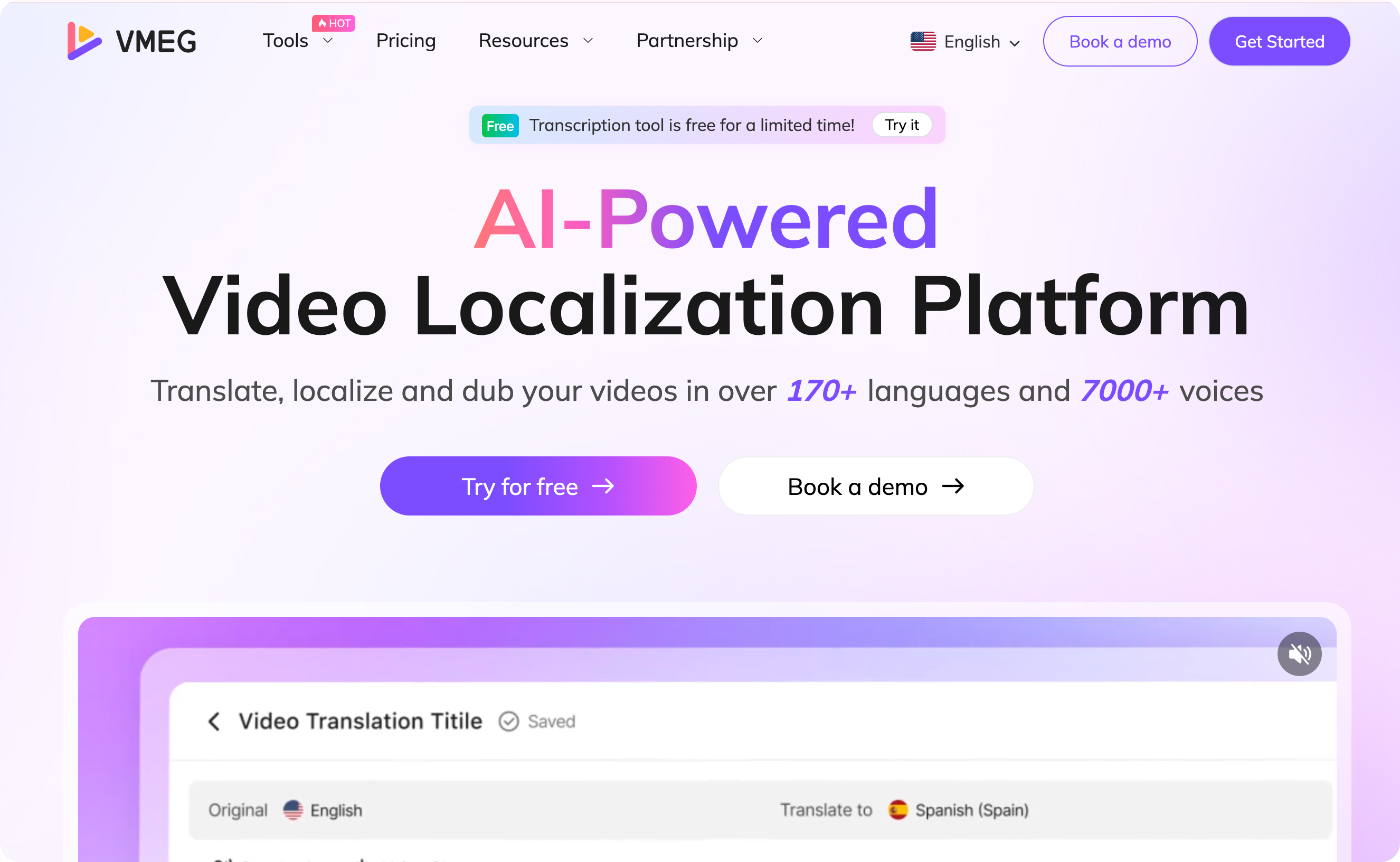
Are you a creator crafting video content and looking for a platform that supports video input and output?
VMEG AI is an excellent tool to try. It is easy to use and offers features that help you localize video content faster. With more than 170 languages and 7,000 voices to choose from, you can easily transform your content into different formats to break language barriers and reach audiences across the world.
VMEG AI is an excellent tool to try. It is easy to use and offers features that help you localize video content faster. With more than 170 languages and 7,000 voices to choose from, you can easily transform your content into different formats to break language barriers and reach audiences across the world.
Final Thoughts
Translation and localization have become essential parts of communication, especially now that we are more connected than ever, so it is best to choose an accurate tool for better content presentation and professionalism. DeepL is one of the tools that deliver better results, according to user feedback and studies.
However, DeepL primarily focuses on text translation, and if you are a creator, social media manager, or brand that creates video content, you need another tool like VMEG AI. It is an AI-powered video localization tool ideal for translation, dubbing, and localization, supporting multiple languages and voices.
However, DeepL primarily focuses on text translation, and if you are a creator, social media manager, or brand that creates video content, you need another tool like VMEG AI. It is an AI-powered video localization tool ideal for translation, dubbing, and localization, supporting multiple languages and voices.
Keywords
- DeepL
- DeepL translation
- machine translation
- DeepL vs Google Translate
- AI translation tool
FAQs
Is DeepL better than Google Translate in terms of accuracy?
Based on human evaluations and studies (like Kamaluddin et al., 2024), DeepL is generally considered more accurate than Google Translate. DeepL particularly excels at capturing nuanced meaning, context, and idiomatic expressions across various language pairs.
What are the best ways to ensure high translation accuracy when using DeepL?
To improve accuracy:
- Use High-Quality Source Text: Ensure the original text is clear, specific, and free of typos.
- Provide Context: Translate in chunks/paragraphs instead of line-by-line, and use features like glossaries or context notes if available.
- Use Reverse Translation: Translate the output back to the original language to check for consistent meaning before publishing.
Can DeepL be used for video translation and dubbing?
DeepL does not currently support direct video input or output. It focuses on text, document, and image translation. If you need full video localization, including automated dubbing, lip-sync, and multi-format output, specialized tools like VMEG AI are required.
What types of files can DeepL translate?
DeepL supports the translation of text input, as well as several common document files, including PDF, Word (.docx), and PowerPoint (.pptx) files. It also supports image translation in its app.


The VMEG Team
Behind VMEG stands a passionate team of creatives, engineers, and language lovers. At the crossroads of AI and storytelling, they craft tools that bridge languages and cultures.