


'%3e%3cpath%20d='M21.0949%203.79395L13.9961%209.82854H21.0949V3.79395Z'%20stroke='black'%20stroke-width='1.38'%20stroke-miterlimit='10'/%3e%3cpath%20d='M13.998%209.82854L7.44531%203.79395V9.82854H13.998Z'%20stroke='black'%20stroke-width='1.38'%20stroke-miterlimit='10'/%3e%3cpath%20d='M13.9961%202.69922V25.1919'%20stroke='black'%20stroke-width='1.38'%20stroke-miterlimit='10'/%3e%3cpath%20d='M20.5488%2016.4113L13.9961%209.82812V18.2217L20.5488%2024.0918V16.4113Z'%20stroke='black'%20stroke-width='1.38'%20stroke-miterlimit='10'/%3e%3cpath%20d='M7.44531%2016.4113L13.998%209.82812V18.0526L7.44531%2024.0918V16.4113Z'%20stroke='black'%20stroke-width='1.38'%20stroke-miterlimit='10'/%3e%3cpath%20d='M4.71094%209.82812V18.6057H7.44125V16.4113L13.9941%209.82812H4.71094Z'%20stroke='black'%20stroke-width='1.38'%20stroke-miterlimit='10'/%3e%3cpath%20d='M13.9961%209.82812L20.5488%2016.4113V18.6057H23.2792V9.82812H13.9961Z'%20stroke='black'%20stroke-width='1.38'%20stroke-miterlimit='10'/%3e%3c/g%3e%3c/svg%3e)

'%3e%3cmask%20id='mask0_21456_29260'%20style='mask-type:luminance'%20maskUnits='userSpaceOnUse'%20x='0'%20y='0'%20width='28'%20height='28'%3e%3cpath%20d='M27.5%200.5H0.5V27.5H27.5V0.5Z'%20fill='white'/%3e%3c/mask%3e%3cg%20mask='url(%23mask0_21456_29260)'%3e%3cpath%20d='M14%2027.5C13.4854%2024.1035%2011.8974%2020.9608%209.46828%2018.5317C7.03922%2016.1026%203.89651%2014.5146%200.5%2014C3.89651%2013.4854%207.03922%2011.8974%209.46828%209.46828C11.8974%207.03922%2013.4854%203.89651%2014%200.5C14.5147%203.89644%2016.1028%207.03905%2018.5318%209.46816C20.9609%2011.8972%2024.1035%2013.4853%2027.5%2014C24.1035%2014.5147%2020.9609%2016.1028%2018.5318%2018.5318C16.1028%2020.9609%2014.5147%2024.1035%2014%2027.5Z'%20fill='url(%23paint0_linear_21456_29260)'/%3e%3c/g%3e%3c/g%3e%3cdefs%3e%3clinearGradient%20id='paint0_linear_21456_29260'%20x1='9.5'%20y1='9.5'%20x2='20.75'%20y2='21.875'%20gradientUnits='userSpaceOnUse'%3e%3cstop%20stop-color='%23F0DCD6'/%3e%3cstop%20offset='0.914506'%20stop-color='%231D6DFF'/%3e%3c/linearGradient%3e%3cclipPath%20id='clip0_21456_29260'%3e%3crect%20width='28'%20height='28'%20fill='white'/%3e%3c/clipPath%3e%3c/defs%3e%3c/svg%3e)
'%3e%3cpath%20d='M22.8019%2011.2412L23.5234%2011.6807V12.0103L23.3172%2012.7796L14.5579%2014.9771L13.7344%2012.7951L22.8019%2011.2412Z'%20fill='%23D97757'/%3e%3cpath%20d='M19.5236%204.77832L20.5322%205.00396L20.8%205.35575L21.0552%206.19876L20.9494%206.73644L15.0712%2015.3068L13.1133%2013.2191L18.5338%205.63471L19.5236%204.77832Z'%20fill='%23D97757'/%3e%3cpath%20d='M14.4577%203.43951L15.0761%203L15.5912%203.21976L16.1065%203.9889L14.6949%2013.0345L13.7364%2012.3397L13.3242%2011.131L14.0456%204.31853L14.4577%203.43951Z'%20fill='%23D97757'/%3e%3cpath%20d='M7.84766%203.5851L8.48285%202.7199L8.89716%202.61914L9.71923%202.74717L10.125%203.08581L13.0815%2010.0748L14.1509%2013.3954L12.8997%2014.1372L8.13117%204.91019L7.84766%203.5851Z'%20fill='%23D97757'/%3e%3cpath%20d='M4.77232%208.38688L4.56641%207.50742L5.18478%206.73828L5.90613%206.84816H6.11223L10.4403%2010.2544L11.78%2011.3531L13.6349%2012.8914L12.6044%2014.7594L11.6769%2013.9903L11.0586%2013.331L5.08168%208.82593L4.77232%208.38688Z'%20fill='%23D97757'/%3e%3cpath%20d='M3.53288%2014.0982L3.06641%2013.5489L3.06647%2013.0601L3.53288%2012.8896L8.78833%2013.2193L13.9408%2013.6588L13.7736%2014.7528L3.94502%2014.2082L3.53288%2014.0982Z'%20fill='%23D97757'/%3e%3cpath%20d='M6.62378%2019.8178H5.59334L5.18359%2019.3146V18.7132L6.93299%2017.3946L14.045%2012.5674L14.7648%2013.8785L6.62378%2019.8178Z'%20fill='%23D97757'/%3e%3cpath%20d='M8.57739%2022.8884L8.16518%2022.9984L7.54688%2022.6687L7.64995%2022.1193L13.7299%2013.5488L14.5543%2014.7574L10.0201%2021.1305L8.57739%2022.8884Z'%20fill='%23D97757'/%3e%3cpath%20d='M13.7361%2023.9861L13.4271%2024.4257L12.8088%2024.6454L12.2935%2024.2058L11.9844%2023.5466L13.5301%2014.6465L14.4576%2014.7563L13.7361%2023.9861Z'%20fill='%23D97757'/%3e%3cpath%20d='M18.9869%2021.5713V22.4503L18.8838%2022.7799L18.4716%2022.9997L17.7503%2022.8974L12.7969%2015.0367L14.7617%2013.4404L16.4104%2016.6269L16.5652%2017.7805L18.9869%2021.5713Z'%20fill='%23D97757'/%3e%3cpath%20d='M21.3629%2020.2507L21.4659%2020.8L21.1568%2021.2396L20.8476%2021.1297L19.0958%2019.8112L16.4165%2017.284L14.3555%2015.7457L14.9736%2013.6582L16.0041%2014.3175L16.6226%2015.5259L21.3629%2020.2507Z'%20fill='%23D97757'/%3e%3cpath%20d='M20.0232%2014.6482L22.5995%2014.8679L23.2178%2015.3074L23.6299%2015.9667V16.441L22.4964%2016.9556L16.7256%2015.4173L14.3555%2015.3074L14.9737%2013L16.6226%2014.3185L20.0232%2014.6482Z'%20fill='%23D97757'/%3e%3c/g%3e%3c/svg%3e)
In 2026, audio translation will be a key element of video localization. With digital content going global as quickly as ever, creators, educators, marketers, and businesses are starting to deal with Spanish audio that must be translated into English. Other podcasts and interviews for marketing videos and online courses, the translation of the Spanish audio to the English one opens opportunities to reach global audiences and be more accessible.
Audio translation is a multi-layered translation as opposed to a basic text translation. You have to properly record what is spoken, retain the tone and the meaning and then present to translate Spanish to English audio in a clear and natural manner. Video localization has a significant role to play here. In this tutorial, you will get to know the step-by-step process of translating Spanish to English audio, the reason why it is important, and how AI tools such as VMEG AI can make the whole process of transcription to final output much easier.
Why Translate Spanish into English Audio in 2026
Spanish language is ranked among the most spoken in the world whereas English language is the dominant business, education, and media language globally. English translation of audio in Spanish enables information to move across regional borders and reach the global audiences.
Among the significant reasons why audio translation is important, there is accessibility. There are numerous valuable audio and video materials that are only available in Spanish, so their audience is rather small. When such are translated to English, it becomes accessible to the learners, professionals and the viewers who would not otherwise have accessed the information.
Content monetization is another key attribute. Companies and producers can reuse the Spanish audio in the English one, reaching more people and earning more income. A single audio can be converted to several different local assets, including English videos, subtitles, podcasts, or training materials.
Lastly, proper audio translation enhances credibility. Bad translations or wrong subtitles may hurt credibility. Qualified and accurate translation will help in retaining the original message, tone and intent of the message so that the message does not make it sound unnatural and robot-like.
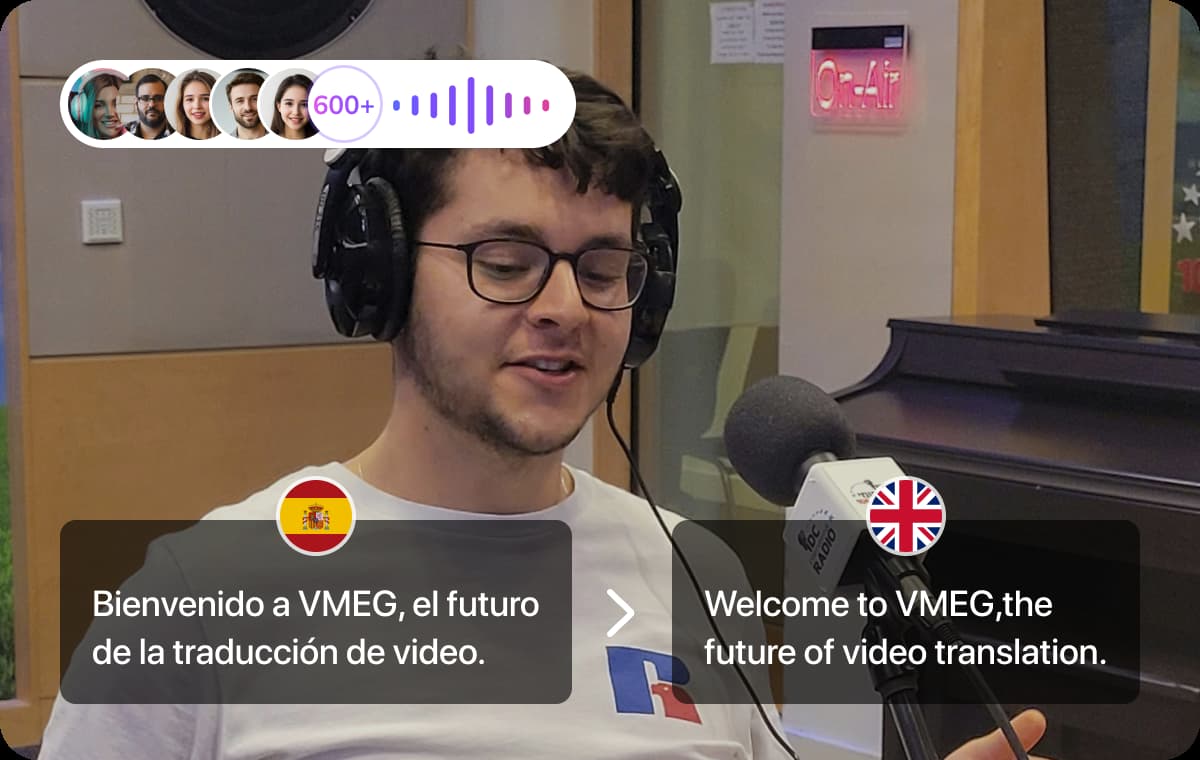
What Spanish to English Audio Translation Incorporates?
Audio translation does not simply involve the replacement of words in one language to words in another language. It entails an organized process of localization which brings about clarity, accuracy and cultural relevancy.
The initial step is transcription. This is the transformation of audio speech in Spanish to written language. Accurate translation is based on a clear transcript. In the absence of an appropriate transcript, translation mistakes are much more probable.
The second one is translation. The Spanish text has been translated to English without any loss of meaning, tone and context. Literal translations rarely work, thus good localization is intent-based and not word-based.
The last stage is sound production. This may be in the form of English subtitles, voice over or complete dubbing. The creators can use captions to stay more accessible or voice translation to experience in a more immersive way depending on the purpose.
The accents, pacing and cultural niceties are also taken into account in true localization. A localized English audio must give the impression of being written in English though beginning in Spanish.
How to Translate Spanish to English Audio: Step-by-Step
You should know how to translate Spanish to English audio. Here are the steps:
Step 1: Prepare Your Audio File
Begin with the good quality Spanish audio. Accent free speech, less background noise and constant volume greatly enhance the accuracy of transcript and translation. No matter what is the origin of the audio either the video, podcast, interview, or voice recording, make sure it is supported like MP3, WAV, or MP4.
Step 2: Transcription of the Spanish Audio
The second step is transcription. Transcription software powered by AI improves the process of converting spoken Spanish into written language in a fast and efficient manner. This saves time over manual transcription and is also consistent over long recordings.
VMEG AI provides a workflow of translating Spanish to English audio that starts with the correct transcription. The site will automatically identify spoken Spanish and convert it into a text even in various accents and varying speech speeds.
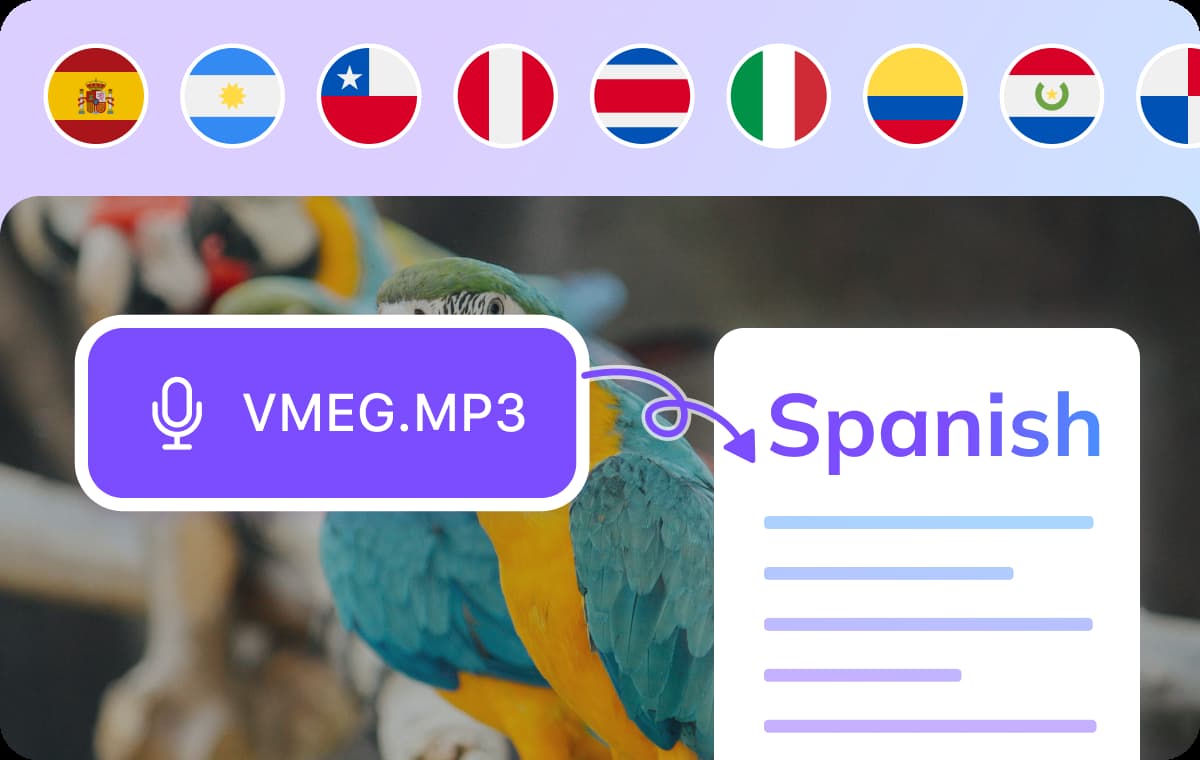
Step 3: Read and Revise the Transcript
Transcription based on AI is very precise, yet it is necessary to revise the text. Wrong names, technical terms, slangs or vague phrases. This is necessary since any error made in the transcript will be transferred to the translation.
Transcript editing would mean that the end product, which is the English version, portrays the real meaning of the original audio in Spanish.
Step 4: Spanish Text to be Translated to English
After the transcript has been completed in its final copy, translate it into English. This is a move that is centered on the meaning and not the wording. Language or phrases and intonation must be modified in a way that the English listeners can understand the message completely.
This translation can be easily done with the help of advanced AI tools, which cause the English language to seem natural and still convey the original meaning.
Step 5: Select the Output Format
Choose how you would like to present the audio content that is translated. They can be English subtitles, English voice-over or complete dubbing. The use of subtitles is ideal in terms of accessibility and silent watching, whereas voice translation is best used in presentations, videos, and podcasts.
The Simplicity of VMEG AI in Spanish to English Audio Translation
VMEG AI was created to allow the Spanish-English audio translation process to be done in a single location. VMEG AI has a single workflow, unlike individual tools of transcription, translation, and audio production.
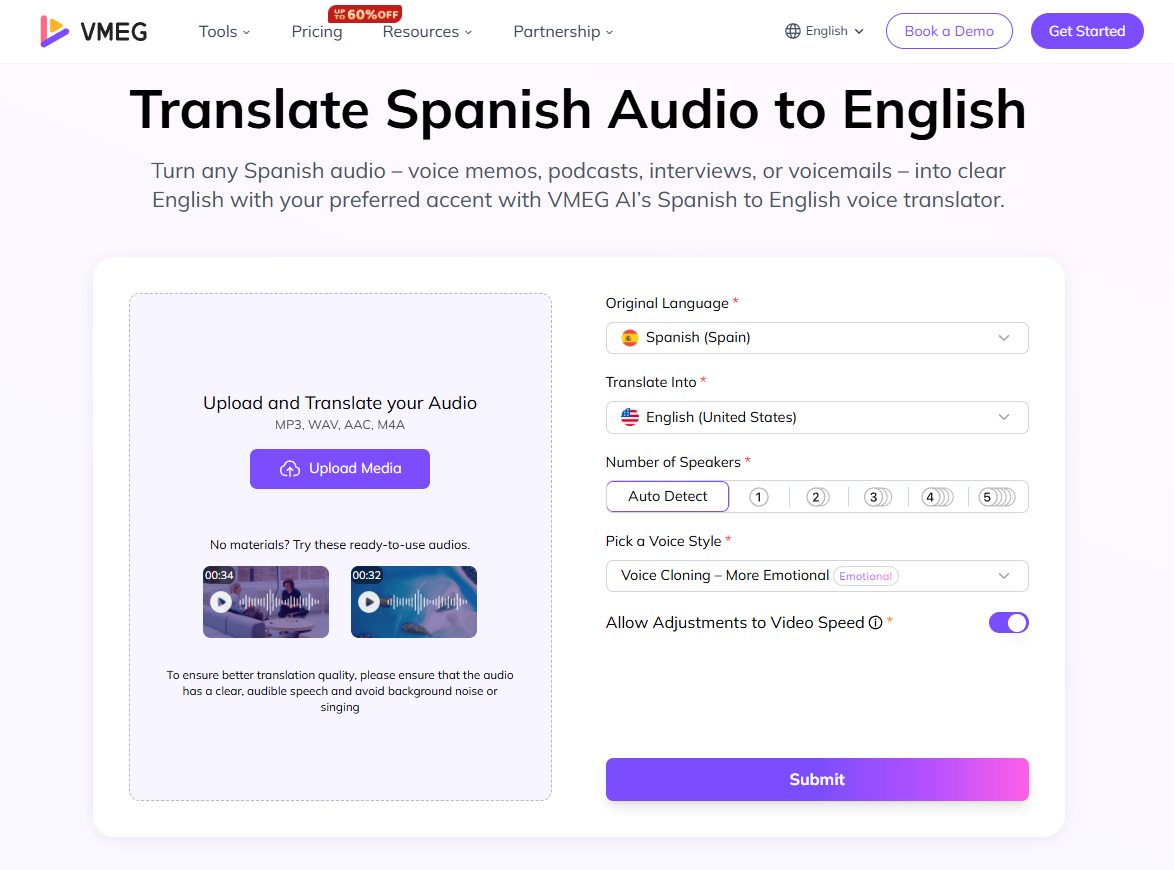
The media automatically translates and transcribes Spanish audio to English and gives users the ability to create subtitles or English voice output. This saves time and eliminates errors related to the changing of tools.
VMEG AI is also able to endorse high accuracy in the assortment of Spanish accents, thus it is apt for the content of Spain, Latin America or bilingual speakers. This efficiency is a significant benefit to the creators and businesses that apply it to large audio volumes.
VMEG AI can streamline the time-intensive process of localization by automating it and thus allow people to concentrate on reflective content instead of the technical side of operation.
Applications of Spanish to English Audio Translation
Audio translation into Spanish and English is applied in most industries. In teaching, it can be used to enable English speaking students to hear Spanish lectures or training materials. This increases the learning opportunities without creating materials afresh.
Companies can use Spanish ads, webinars, product demos, translated into English in order to attract customers worldwide in marketing and business. This comes in handy most particularly with the brands that are venturing into the international market.
The people making their media and content employ audio translation to localize podcasts, interviews, YouTube video and documentaries. An individual Spanish audio may be converted to English contents to be distributed across a broad market.
Medical, law and business industries also need precise audio translation of a meeting, presentation or informational tape where clarity and precision are the key factors.
Best Practices of Accurate Audio Translation
In order to get quality translation of audio Spanish to English, one should always begin with clear audio. The quality of sounds is low and results in transcription mistakes and insufficient translations.
Transcription should always be examined prior to translation. Even minor errors may alter the meaning hugely. The combination of human and AI speed results in the greatest results.
Select the appropriate output format of the audience. Social media and accessibility are well supported by the use of subtitles, whereas voice translation is effective when it comes to presentations and long texts.
Lastly, be consistent in tone and terms. This is particularly relevant in the case of educational, technical, or branded content where clarity and trust is important.
Difficulties in Spanish to English Audio Translation
Regional accents and slang are one of the pitfalls. Spanish is diverse and literal translation cannot represent the intended meaning in different regions. The process of localization has to adjust phrases so that they sound natural in English.
One more difficulty is keeping an emotional tone. Spanish talk should be transferred to English humor, stressed or emotional without sounding as one-dimensional and robotic.
There is also timing consideration, which is important in the case of developing subtitles or dubbed audio. The translation of English text could be of more or less length than the original Spanish and have to be thoroughly synchronized.
With the assistance of an AI-powered platform, such as VMEG AI, it is possible to address such issues, as it integrates transcription quality and accuracy, contextual translation and flexible output.
Wrapping Up
The audio component of video localization in 2025, translating Spanish into English, is a potent one. It enables information to break language boundaries, touch the global community members, and be more reachable and useful. Audio translations help you to get the most out of your work, regardless of whether you are a creator, educator, marketer or a business owner. Hope so, now you know how to translate spanish to english audio.
The quality of the results can be guaranteed by following the systematic procedure transcription, review, translation, and output. The latter is simplified with the help of such tools as VMEG AI and allows professional audio translation of Spanish to English faster, more accurate, and at a scale.
Through the appropriate strategy and technology, a single Spanish audio file can be turned into a global asset, creating new avenues of interaction, development and global expansion.
FAQs
1. What is the best way to translate Spanish audio into English?
The best way to do it is to start by transcribing the audio of the Spanish, go through the transcript and check it and then translate it to English. Manual review and AI tools are the best combination to offer a balance between speed and quality.
2. Can AI accurately translate Spanish to English audio?
Yes, the AI tools of these days can correctly transcribe and translate the Spanish audio, provided that the quality of the initial audio is clear. Checking the output is a way to make sure that the translation will not lose meaning and tone.
3. Should I use subtitles or voice translation for English output?
It depends on your audience. Subtitles are better in terms of accessibility and social media, whereas voice translation or dubbing is more suitable in the case of presentations, videos, and podcasts where listeners need audio.


Fay
Behind VMEG stands a passionate team of creatives, engineers, and language lovers. At the crossroads of AI and storytelling, they craft tools that bridge languages and cultures.