




'%3e%3cpath%20d='M21.0949%203.79395L13.9961%209.82854H21.0949V3.79395Z'%20stroke='black'%20stroke-width='1.38'%20stroke-miterlimit='10'/%3e%3cpath%20d='M13.998%209.82854L7.44531%203.79395V9.82854H13.998Z'%20stroke='black'%20stroke-width='1.38'%20stroke-miterlimit='10'/%3e%3cpath%20d='M13.9961%202.69922V25.1919'%20stroke='black'%20stroke-width='1.38'%20stroke-miterlimit='10'/%3e%3cpath%20d='M20.5488%2016.4113L13.9961%209.82812V18.2217L20.5488%2024.0918V16.4113Z'%20stroke='black'%20stroke-width='1.38'%20stroke-miterlimit='10'/%3e%3cpath%20d='M7.44531%2016.4113L13.998%209.82812V18.0526L7.44531%2024.0918V16.4113Z'%20stroke='black'%20stroke-width='1.38'%20stroke-miterlimit='10'/%3e%3cpath%20d='M4.71094%209.82812V18.6057H7.44125V16.4113L13.9941%209.82812H4.71094Z'%20stroke='black'%20stroke-width='1.38'%20stroke-miterlimit='10'/%3e%3cpath%20d='M13.9961%209.82812L20.5488%2016.4113V18.6057H23.2792V9.82812H13.9961Z'%20stroke='black'%20stroke-width='1.38'%20stroke-miterlimit='10'/%3e%3c/g%3e%3c/svg%3e)

'%3e%3cmask%20id='mask0_21456_29260'%20style='mask-type:luminance'%20maskUnits='userSpaceOnUse'%20x='0'%20y='0'%20width='28'%20height='28'%3e%3cpath%20d='M27.5%200.5H0.5V27.5H27.5V0.5Z'%20fill='white'/%3e%3c/mask%3e%3cg%20mask='url(%23mask0_21456_29260)'%3e%3cpath%20d='M14%2027.5C13.4854%2024.1035%2011.8974%2020.9608%209.46828%2018.5317C7.03922%2016.1026%203.89651%2014.5146%200.5%2014C3.89651%2013.4854%207.03922%2011.8974%209.46828%209.46828C11.8974%207.03922%2013.4854%203.89651%2014%200.5C14.5147%203.89644%2016.1028%207.03905%2018.5318%209.46816C20.9609%2011.8972%2024.1035%2013.4853%2027.5%2014C24.1035%2014.5147%2020.9609%2016.1028%2018.5318%2018.5318C16.1028%2020.9609%2014.5147%2024.1035%2014%2027.5Z'%20fill='url(%23paint0_linear_21456_29260)'/%3e%3c/g%3e%3c/g%3e%3cdefs%3e%3clinearGradient%20id='paint0_linear_21456_29260'%20x1='9.5'%20y1='9.5'%20x2='20.75'%20y2='21.875'%20gradientUnits='userSpaceOnUse'%3e%3cstop%20stop-color='%23F0DCD6'/%3e%3cstop%20offset='0.914506'%20stop-color='%231D6DFF'/%3e%3c/linearGradient%3e%3cclipPath%20id='clip0_21456_29260'%3e%3crect%20width='28'%20height='28'%20fill='white'/%3e%3c/clipPath%3e%3c/defs%3e%3c/svg%3e)
'%3e%3cpath%20d='M22.8019%2011.2412L23.5234%2011.6807V12.0103L23.3172%2012.7796L14.5579%2014.9771L13.7344%2012.7951L22.8019%2011.2412Z'%20fill='%23D97757'/%3e%3cpath%20d='M19.5236%204.77832L20.5322%205.00396L20.8%205.35575L21.0552%206.19876L20.9494%206.73644L15.0712%2015.3068L13.1133%2013.2191L18.5338%205.63471L19.5236%204.77832Z'%20fill='%23D97757'/%3e%3cpath%20d='M14.4577%203.43951L15.0761%203L15.5912%203.21976L16.1065%203.9889L14.6949%2013.0345L13.7364%2012.3397L13.3242%2011.131L14.0456%204.31853L14.4577%203.43951Z'%20fill='%23D97757'/%3e%3cpath%20d='M7.84766%203.5851L8.48285%202.7199L8.89716%202.61914L9.71923%202.74717L10.125%203.08581L13.0815%2010.0748L14.1509%2013.3954L12.8997%2014.1372L8.13117%204.91019L7.84766%203.5851Z'%20fill='%23D97757'/%3e%3cpath%20d='M4.77232%208.38688L4.56641%207.50742L5.18478%206.73828L5.90613%206.84816H6.11223L10.4403%2010.2544L11.78%2011.3531L13.6349%2012.8914L12.6044%2014.7594L11.6769%2013.9903L11.0586%2013.331L5.08168%208.82593L4.77232%208.38688Z'%20fill='%23D97757'/%3e%3cpath%20d='M3.53288%2014.0982L3.06641%2013.5489L3.06647%2013.0601L3.53288%2012.8896L8.78833%2013.2193L13.9408%2013.6588L13.7736%2014.7528L3.94502%2014.2082L3.53288%2014.0982Z'%20fill='%23D97757'/%3e%3cpath%20d='M6.62378%2019.8178H5.59334L5.18359%2019.3146V18.7132L6.93299%2017.3946L14.045%2012.5674L14.7648%2013.8785L6.62378%2019.8178Z'%20fill='%23D97757'/%3e%3cpath%20d='M8.57739%2022.8884L8.16518%2022.9984L7.54688%2022.6687L7.64995%2022.1193L13.7299%2013.5488L14.5543%2014.7574L10.0201%2021.1305L8.57739%2022.8884Z'%20fill='%23D97757'/%3e%3cpath%20d='M13.7361%2023.9861L13.4271%2024.4257L12.8088%2024.6454L12.2935%2024.2058L11.9844%2023.5466L13.5301%2014.6465L14.4576%2014.7563L13.7361%2023.9861Z'%20fill='%23D97757'/%3e%3cpath%20d='M18.9869%2021.5713V22.4503L18.8838%2022.7799L18.4716%2022.9997L17.7503%2022.8974L12.7969%2015.0367L14.7617%2013.4404L16.4104%2016.6269L16.5652%2017.7805L18.9869%2021.5713Z'%20fill='%23D97757'/%3e%3cpath%20d='M21.3629%2020.2507L21.4659%2020.8L21.1568%2021.2396L20.8476%2021.1297L19.0958%2019.8112L16.4165%2017.284L14.3555%2015.7457L14.9736%2013.6582L16.0041%2014.3175L16.6226%2015.5259L21.3629%2020.2507Z'%20fill='%23D97757'/%3e%3cpath%20d='M20.0232%2014.6482L22.5995%2014.8679L23.2178%2015.3074L23.6299%2015.9667V16.441L22.4964%2016.9556L16.7256%2015.4173L14.3555%2015.3074L14.9737%2013L16.6226%2014.3185L20.0232%2014.6482Z'%20fill='%23D97757'/%3e%3c/g%3e%3c/svg%3e)
Key Points
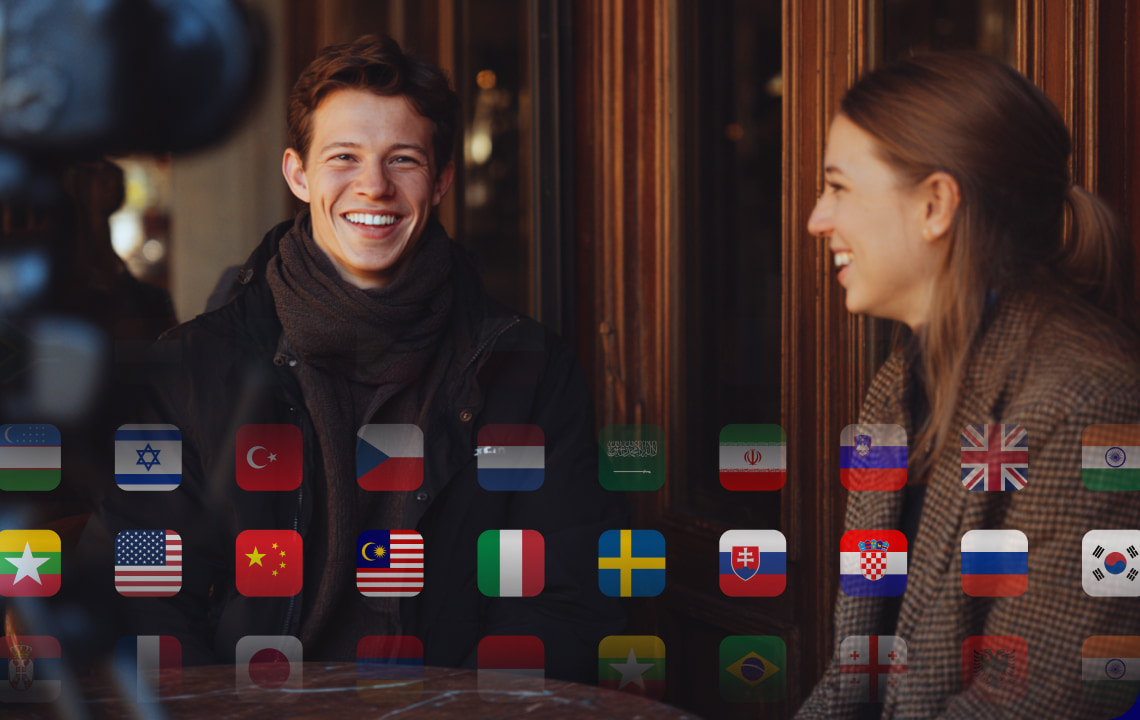
Language barriers are communication gaps that stop audiences from understanding video content. They are caused by differences in language, culture, accents, or terminology, leading to lower comprehension and engagement.
Language barriers limit global reach, engagement, and ROI. Single-language videos struggle to attract international viewers, reducing watch time, conversions, and market expansion.
AI video localization is the most effective way to overcome language barriers. Tools like VMEG.AI translate, subtitle, dub, and lip-sync videos at scale, making content globally accessible and monetizable.
The Global Challenge: Why Your Video Reach Stops
In today's digital economy, video is the most powerful medium for education, marketing, and brand promotion. Yet, even the best content hits a wall when it's limited to one language. This immediate drop in global reach and engagement brings us to the core issue: What Are Language Barriers?
Quick Answer: Language barriers are communication gaps that occur when individuals or groups cannot share meaning due to differences in language, dialect, or specialized terminology.
The good news is that the solution is now highly scalable. AI-powered tools are shattering these barriers, making multilingual content production faster and more affordable than ever before. In this article, we'll explain the nature of these obstacles and detail how modern video localization strategies are essential for success in 2025.
What Are Language Barriers? A Deeper Look
Language barriers arise from fundamental differences that prevent effective communication, hindering understanding, interaction, and information exchange—especially in critical video content (education, marketing, business).
Main Categories of Language Obstacles
- Different Languages or Dialects: The most obvious barrier, where content in one language (e.g., English) is inaccessible to the majority of the world. (Note: There are roughly 7,100 languages spoken across the globe).
- Cultural Differences (Context): Idioms, expressions, or visual references that cannot be translated literally or may be offensive in another culture (e.g., color symbolism or specific gestures).
- Technical Jargon (Terminology): The use of specialized terms (in medicine, law, or engineering) that confuse non-specialist or lay audiences, even if the primary language is shared.
- Accent and Proficiency: A strong accent or varying levels of fluency in a shared language can cause severe misunderstandings and listener frustration.
These barriers directly reduce global accessibility, decrease viewer interaction, and limit the usefulness of your content.
The Function and Impact of Video Localization
Video localization is the strategic adaptation of video content to the specific linguistic and cultural preferences of a target audience. It goes far beyond simple translation, adapting tone, context, visuals, and audio to ensure brand consistency and cultural alignment.
Video Localization Advantages (Backed by Data)
- Improved Comprehension: Content becomes crystal clear to non-native speakers, increasing viewer retention.
- Higher Engagement: 80%+ of viewers prefer content consumed in their native language, leading to higher engagement.
- International Market Access: The global Video Localization Market, valued at USD 3.75 billion in 2025, is projected to grow to USD 6.97 billion by 2034, driven by demand for multilingual content.
- Increased Conversions: Multilingual content directly leads to higher leads, sales, and overall ROI.
AI solutions like VMEG AI streamline this entire process, automatically handling translation, subtitle creation, and realistic voiceovers.
The Best AI Solutions for Breaking Language Barriers in 2025
The modern solution for overcoming language barriers is AI-driven multimedia localization. This ensures speed, scale, and professional quality previously only achievable with huge budgets.
| Tool Name | Specialization | Output Focus |
| VMEG AI | Ultimate Localization Engine | Translation, AI Voice Replication, Perfect Lip-Sync (170+ Languages). |
| HeyGen / Synthesia | AI Avatar & Visual Generation | Visual content and avatar dubbing. |
| Deepdub | Emotionally Rich Dubbing | High-quality, emotionally nuanced voice dubbing for Film & TV. |
Of these, VMEG AI is the most specialized for fully automated, multilingual scaling of existing video content with professional-quality output.
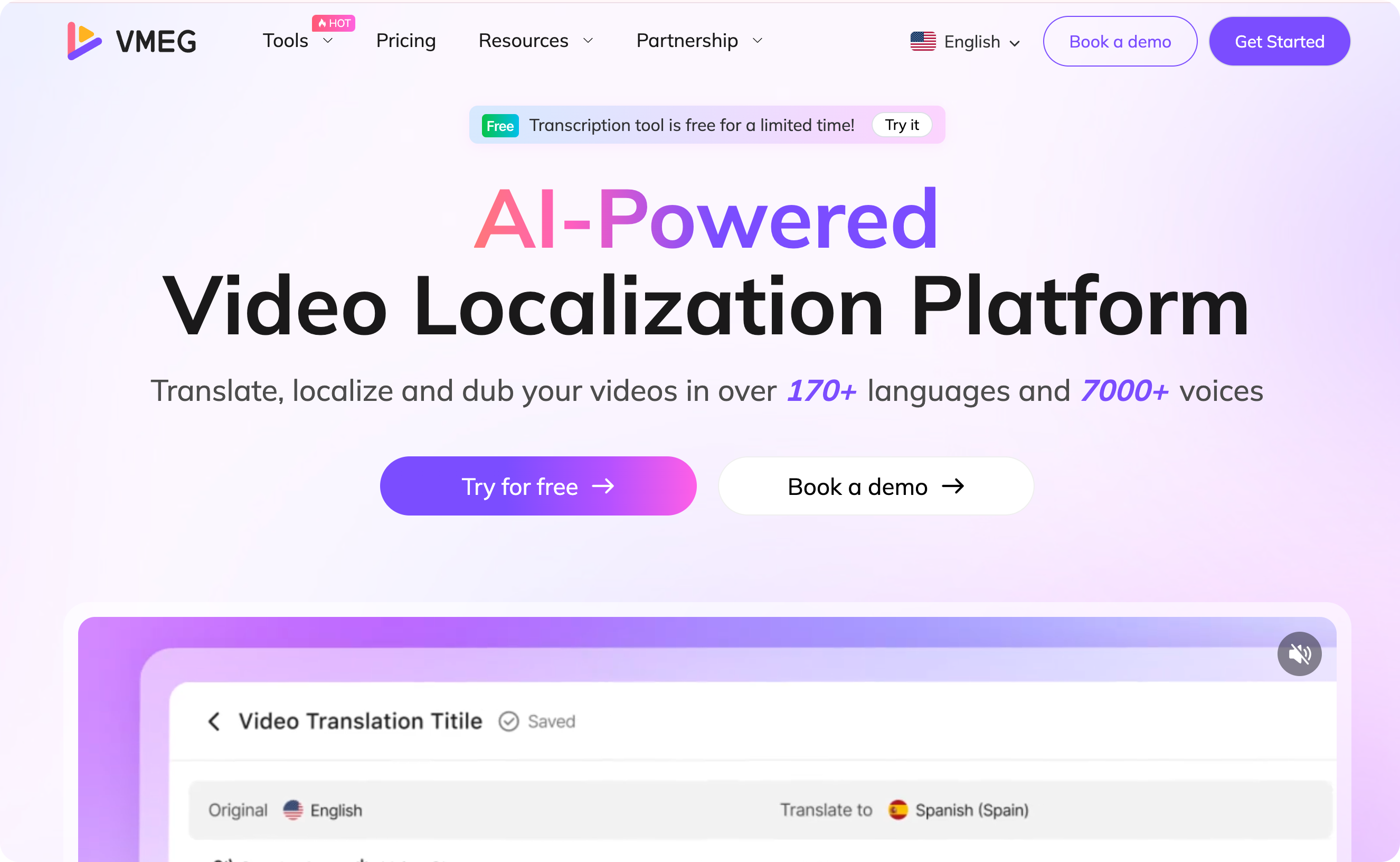
How VMEG AI is Breaking Language Barriers
VMEG AI leads the charge in automating the most complex aspects of video localization, ensuring not just translation, but true cultural transfer.
- Automatic Translation (170+ Languages): Rapidly translates subtitles and scripts.
- AI Voice Replication: Generates natural-sounding voiceovers that match the original speaker's tone and emotion, preserving brand voice.
- Lip-Sync Alignment: Critically ensures the dubbed audio perfectly synchronizes with the on-screen mouth movements, eliminating the distracting "dubbed look."
- Contextual Accuracy: AI is tuned to maintain cultural elements and idiomatic phrases, surpassing simple machine translation.
By automating what traditionally required dozens of translators and studio time, VMEG AI makes global communication quicker, simpler, and drastically less expensive.
Why Language Barriers Are a Critical Problem for ROI
Understanding whatlanguage barriers are is key to recognizing their impact on your bottom line:
- Reduced Audience & Market Loss: Videos limited to one language fail to capture huge non-native-speaking markets, limiting market share expansion.
- Less Viewer Engagement: Viewers abandon content they do not fully comprehend. Localized audio and subtitles directly increase viewer retention.
- Risk of Misinterpretation: An improperly translated message, especially in educational or instructional content, can lead to serious errors or confusion, compromising the content's core purpose.
- Brand Reputation Damage: Poorly translated or culturally insensitive content harms credibility, trust, and global brand image.
- Reduced ROI: Non-localized content severely constrains conversions, lead generation, and overall return on investment for video production efforts.
The Solution: Defeating Language Barriers with AI
The most effective strategy combines human-level accuracy with AI speed:
- Use Subtitles and Captions (Accessibility): Subtitles are vital for accessibility and comprehension. VMEG AI generates and translates these across multiple languages instantly.
- Cultural Adaptation: Localization is not just translation; it's adapting cultural references and tone. AI is increasingly used to flag and adjust culturally sensitive aspects.
- Maximize Visuals: Graphs, charts, and clear visuals help bridge language differences. When combined with AI-translated subtitles, the message becomes universally clear.
What Are Language Barriers: FAQs
1. What Are Language Barriers?
Language barriers are communication gaps that occur when people lack a common language, hindering mutual understanding and information exchange.
2. What are the main types of language barriers in video content?
They include differences in language/dialect, culturally specific idioms or references, and the use of technical, confusing jargon.
3. How do language barriers impact businesses and creators globally?
They limit audience reach, reduce engagement rates, increase the risk of misinterpretation, and restrict market expansion into non-native speaking territories.
4. What is the most effective solution to overcome language barriers in videos today?
Video localization, which uses AI tools (like VMEG AI) to automatically translate, subtitle, and dub content with accurate lip-syncing into multiple languages.
5. Why is simple text translation often not enough to break language barriers?
Simple translation ignores cultural context, idioms, and tone, often leading to awkward or offensive messaging that localization addresses.
Final Thoughts: The Global Imperative
Language barriers, though persistent, are no longer unbreakable. Video localization is the key to global communication, and AI tools like VMEG AI are making the process simplified, instantaneous, and cost-effective.
For creators, educators, and businesses, reaching international audiences with automatic subtitles, high-quality AI voiceovers, and accurate lip-syncing is no longer a strategic option—it is a necessity in 2025. Breaking these barriers with AI ensures your content is more accessible, more engaging, and fully ready for the global stage.
Would you like to explore a case study detailing the ROI of AI video localization using VMEG AI?


Fay
Behind VMEG stands a passionate team of creatives, engineers, and language lovers. At the crossroads of AI and storytelling, they craft tools that bridge languages and cultures.