

'%3e%3cpath%20d='M21.0949%203.79395L13.9961%209.82854H21.0949V3.79395Z'%20stroke='black'%20stroke-width='1.38'%20stroke-miterlimit='10'/%3e%3cpath%20d='M13.998%209.82854L7.44531%203.79395V9.82854H13.998Z'%20stroke='black'%20stroke-width='1.38'%20stroke-miterlimit='10'/%3e%3cpath%20d='M13.9961%202.69922V25.1919'%20stroke='black'%20stroke-width='1.38'%20stroke-miterlimit='10'/%3e%3cpath%20d='M20.5488%2016.4113L13.9961%209.82812V18.2217L20.5488%2024.0918V16.4113Z'%20stroke='black'%20stroke-width='1.38'%20stroke-miterlimit='10'/%3e%3cpath%20d='M7.44531%2016.4113L13.998%209.82812V18.0526L7.44531%2024.0918V16.4113Z'%20stroke='black'%20stroke-width='1.38'%20stroke-miterlimit='10'/%3e%3cpath%20d='M4.71094%209.82812V18.6057H7.44125V16.4113L13.9941%209.82812H4.71094Z'%20stroke='black'%20stroke-width='1.38'%20stroke-miterlimit='10'/%3e%3cpath%20d='M13.9961%209.82812L20.5488%2016.4113V18.6057H23.2792V9.82812H13.9961Z'%20stroke='black'%20stroke-width='1.38'%20stroke-miterlimit='10'/%3e%3c/g%3e%3c/svg%3e)

'%3e%3cmask%20id='mask0_21456_29260'%20style='mask-type:luminance'%20maskUnits='userSpaceOnUse'%20x='0'%20y='0'%20width='28'%20height='28'%3e%3cpath%20d='M27.5%200.5H0.5V27.5H27.5V0.5Z'%20fill='white'/%3e%3c/mask%3e%3cg%20mask='url(%23mask0_21456_29260)'%3e%3cpath%20d='M14%2027.5C13.4854%2024.1035%2011.8974%2020.9608%209.46828%2018.5317C7.03922%2016.1026%203.89651%2014.5146%200.5%2014C3.89651%2013.4854%207.03922%2011.8974%209.46828%209.46828C11.8974%207.03922%2013.4854%203.89651%2014%200.5C14.5147%203.89644%2016.1028%207.03905%2018.5318%209.46816C20.9609%2011.8972%2024.1035%2013.4853%2027.5%2014C24.1035%2014.5147%2020.9609%2016.1028%2018.5318%2018.5318C16.1028%2020.9609%2014.5147%2024.1035%2014%2027.5Z'%20fill='url(%23paint0_linear_21456_29260)'/%3e%3c/g%3e%3c/g%3e%3cdefs%3e%3clinearGradient%20id='paint0_linear_21456_29260'%20x1='9.5'%20y1='9.5'%20x2='20.75'%20y2='21.875'%20gradientUnits='userSpaceOnUse'%3e%3cstop%20stop-color='%23F0DCD6'/%3e%3cstop%20offset='0.914506'%20stop-color='%231D6DFF'/%3e%3c/linearGradient%3e%3cclipPath%20id='clip0_21456_29260'%3e%3crect%20width='28'%20height='28'%20fill='white'/%3e%3c/clipPath%3e%3c/defs%3e%3c/svg%3e)
'%3e%3cpath%20d='M22.8019%2011.2412L23.5234%2011.6807V12.0103L23.3172%2012.7796L14.5579%2014.9771L13.7344%2012.7951L22.8019%2011.2412Z'%20fill='%23D97757'/%3e%3cpath%20d='M19.5236%204.77832L20.5322%205.00396L20.8%205.35575L21.0552%206.19876L20.9494%206.73644L15.0712%2015.3068L13.1133%2013.2191L18.5338%205.63471L19.5236%204.77832Z'%20fill='%23D97757'/%3e%3cpath%20d='M14.4577%203.43951L15.0761%203L15.5912%203.21976L16.1065%203.9889L14.6949%2013.0345L13.7364%2012.3397L13.3242%2011.131L14.0456%204.31853L14.4577%203.43951Z'%20fill='%23D97757'/%3e%3cpath%20d='M7.84766%203.5851L8.48285%202.7199L8.89716%202.61914L9.71923%202.74717L10.125%203.08581L13.0815%2010.0748L14.1509%2013.3954L12.8997%2014.1372L8.13117%204.91019L7.84766%203.5851Z'%20fill='%23D97757'/%3e%3cpath%20d='M4.77232%208.38688L4.56641%207.50742L5.18478%206.73828L5.90613%206.84816H6.11223L10.4403%2010.2544L11.78%2011.3531L13.6349%2012.8914L12.6044%2014.7594L11.6769%2013.9903L11.0586%2013.331L5.08168%208.82593L4.77232%208.38688Z'%20fill='%23D97757'/%3e%3cpath%20d='M3.53288%2014.0982L3.06641%2013.5489L3.06647%2013.0601L3.53288%2012.8896L8.78833%2013.2193L13.9408%2013.6588L13.7736%2014.7528L3.94502%2014.2082L3.53288%2014.0982Z'%20fill='%23D97757'/%3e%3cpath%20d='M6.62378%2019.8178H5.59334L5.18359%2019.3146V18.7132L6.93299%2017.3946L14.045%2012.5674L14.7648%2013.8785L6.62378%2019.8178Z'%20fill='%23D97757'/%3e%3cpath%20d='M8.57739%2022.8884L8.16518%2022.9984L7.54688%2022.6687L7.64995%2022.1193L13.7299%2013.5488L14.5543%2014.7574L10.0201%2021.1305L8.57739%2022.8884Z'%20fill='%23D97757'/%3e%3cpath%20d='M13.7361%2023.9861L13.4271%2024.4257L12.8088%2024.6454L12.2935%2024.2058L11.9844%2023.5466L13.5301%2014.6465L14.4576%2014.7563L13.7361%2023.9861Z'%20fill='%23D97757'/%3e%3cpath%20d='M18.9869%2021.5713V22.4503L18.8838%2022.7799L18.4716%2022.9997L17.7503%2022.8974L12.7969%2015.0367L14.7617%2013.4404L16.4104%2016.6269L16.5652%2017.7805L18.9869%2021.5713Z'%20fill='%23D97757'/%3e%3cpath%20d='M21.3629%2020.2507L21.4659%2020.8L21.1568%2021.2396L20.8476%2021.1297L19.0958%2019.8112L16.4165%2017.284L14.3555%2015.7457L14.9736%2013.6582L16.0041%2014.3175L16.6226%2015.5259L21.3629%2020.2507Z'%20fill='%23D97757'/%3e%3cpath%20d='M20.0232%2014.6482L22.5995%2014.8679L23.2178%2015.3074L23.6299%2015.9667V16.441L22.4964%2016.9556L16.7256%2015.4173L14.3555%2015.3074L14.9737%2013L16.6226%2014.3185L20.0232%2014.6482Z'%20fill='%23D97757'/%3e%3c/g%3e%3c/svg%3e)
Going beyond borders is now easier thanks to technology, which is a great advantage for individuals and businesses.
According to Fortune Business Insights (2026), multilingual customer service is important for businesses, especially for those seeking to build stronger traction in existing markets and unlock new market opportunities.
One way to reach a global audience is through localization. To make the process easier and more convenient, you need to look for the best AI localization tool.
What is Localization
Meaning of Localization
In marketing, localization is the process of adapting a product or service to make it relevant to a particular location.
Localization is the process of making content relevant to a local audience. It is not just about translating words; it is also about ensuring that the meaning and context are preserved and it is appropriate to the local culture.
Translation vs Localization
Translation is the process of converting text, images, files, or videos from one language to another. The meaning must be consistent across languages, and it should not be a direct word-to-word translation.
Localization consists of localization, dubbing, lip-sync, and transcription to reach a global audience. It aims to localize content so that it resonates with the local audience. Aside from meaning, localized content must still align with the original context and be culturally relevant.
Examples of Localization
Here are some examples of localization:
- Software/Apps. Aside from translation, the words must be rewritten so they make cultural sense. The user interface, payments, features, languages, and other elements must be localized.
- Marketing/Advertising. The languages in promotional materials must be localized, including the meaning, humor, slang, tone, visuals, holiday promotions, and other elements, to make them relatable and help the audience understand the message.
- Education. The math word problems use local names, foods, and currencies. It must align with the curriculum, learning styles, and school calendars.
- Media (Movies, Books, Entertainment). The movie title can be changed to make it more appealing to the local audience. The dialogue is dubbed to fit the cultural humor. The language is translated to make it easier to understand and make it relatable.
- Websites & E-commerce. For websites and e-commerce, the homepage layout, local trust signals, customer support, local terms and spellings, must be localized.
What Makes a Great AI Localization Tool?
Here are some factors that make a great AI localization tool
Language coverage & accuracy
Check the number of supported languages to make translation more convenient; the more languages, the better. Also, check the accuracy to ensure the generated text captures the context, culture, and other important factors that give words meaning.
Context-aware translation
The translated output must be aligned with the content so that the original message will not be altered. The tone, intent, and culture must fit to make the context easier to understand.
Multimedia support (video, audio, subtitles)
It must support multiple media types, such as video, audio, subtitles, dubbing, transcription, and links, to simplify your workflow so you don't need to use another tool.
Automation & AI agents
Another factor to consider is the automation process, to see if it is easy to use and fits your workflow. Check the features to see whether AI agents are available to help with your localization.
Integrations
Another helpful factor is integrations, which let you connect it with other platforms you use to simplify the workflow.
Human-in-the-loop options
Choose a tool that supports hybrid localization, which allows humans to edit the AI-generated text before exporting. It ensures that the generated output is accurate and relevant to local culture.
Pricing & scalability
Check the plans offered to see if they fit your budget. Also, consider your long-term projects and needs to see whether the localization tool you plan to use will be reliable and advantageous.
Best AI Localization Tools
Tool Name | Best For | Supported Content | Key Features | Pricing |
VMEG AI | Best for Advanced AI Video Localization & Voice Cloning | Video, Audio, Text to Speech, Subtitles, Dubbing, Lip-sync | AI Dubbing. Lip-Sync, Voice Cloning | Free and Paid |
Lokalise | Best for Global Growth With Scalable Localization | Mobile Apps, Games, Website, Document, Marketing | Multiple Localization platforms, integrations, and file types | Free and Paid |
Smartling | Best for Enterprise-Grade, End-to-End Localization at Scale | Website, Marketing, Learning & development, and software & mobile apps | Translation management system, AI translation, AI Hub, Professional Translation | Free Trial and Paid |
Maestra | Best for Team-Based Video Localization With Seamless Platform Integrations | Transcripts, Subtitles, Voiceovers | Live Voice Translator, Subtitle Translator, Video Dubber | Free Trial, and Paid |
Phrase | Best for AI-Powered, End-to-End Localization Automation | Apps, Games, Machines, Websites, Digital Products, Video, Audio | Multiple Translation and Localization Solutions, Products, and Integrations | Free Trial, Paid |
Note: The features of these tools may vary by plan and updates. Check the official website or platform to see the latest updates.
Best AI Localization Tools:
Here are some of the best AI Localization tools to try:
VMEG AI - Best for Advanced AI Video Localization & Voice Cloning
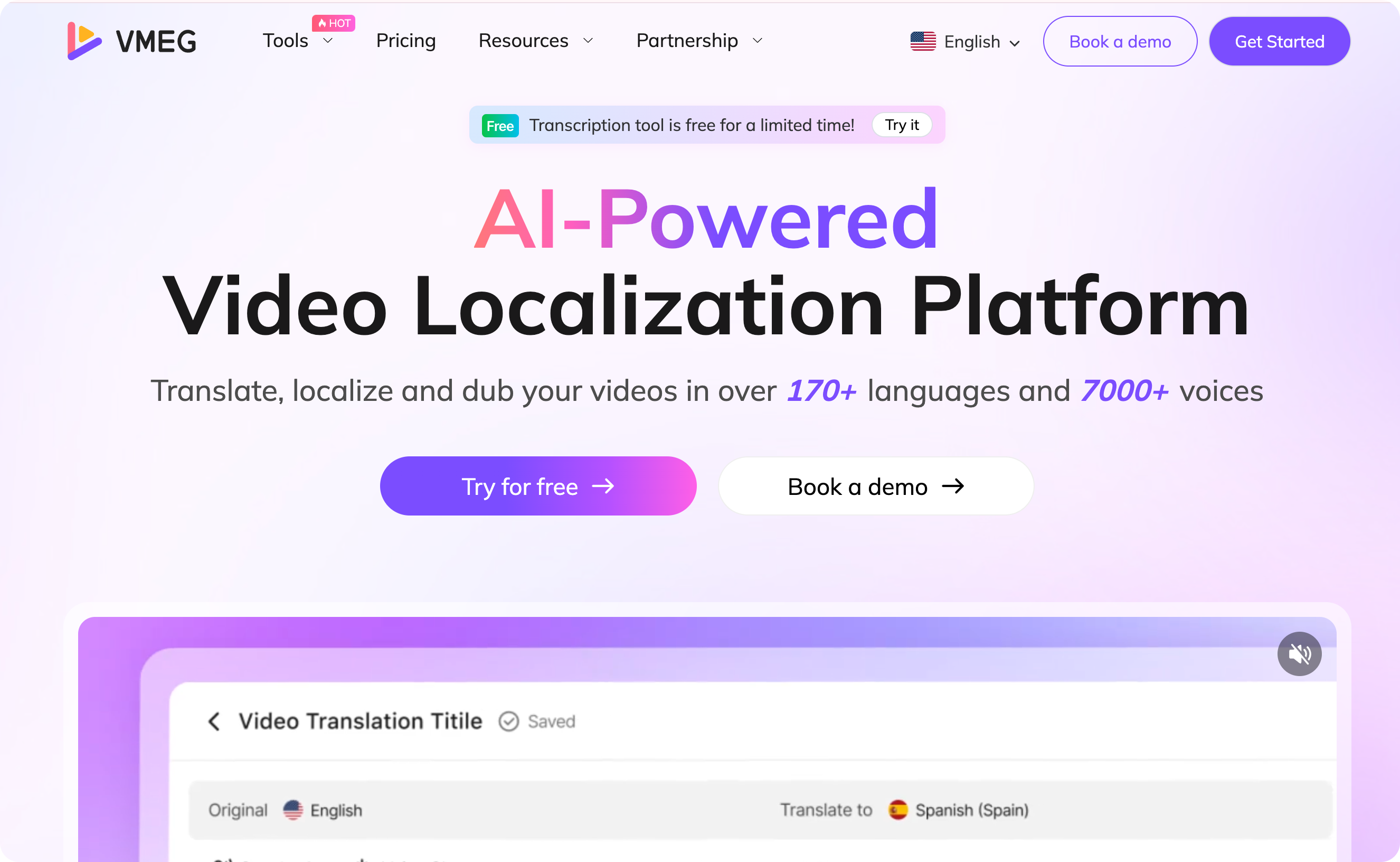
VMEG AI is one of the best AI localization tools to reach a global audience. It is ideal for all skill levels, whether you are a beginner or a localization expert, as it is easy to use.
Why Choose VMEG AI
- Multiple Languages. VMEG AI supports more than 170 languages and 7,000 AI lifelike voices, so you can localize in various languages using just one tool.
- High Accuracy. It has high accuracy, reducing editing time and speeding up the localization workflow.
- Multiple Localization Tools. It offers various localization tools, including translation, subtitles, transcription, and text-to-speech. With VMEG AI, you can dub, translate, and localize content for various projects.
- Lip Sync, Dubbing, and Voice Cloning. It offers lip-syncing that matches lip movements, making it look natural. Its dubbing tool captures emotions so the audience can easily feel the message you want to convey. This platform also offers a voice cloning feature that is ideal if you want a personalized tone that suits your brand or personality.
- Ideal for various individuals and businesses. Whether you are a content creator or a business owner, you can use VMEG AI localized content and reach a wider audience.
Lokalise - Best for Global Growth With Scalable Localization
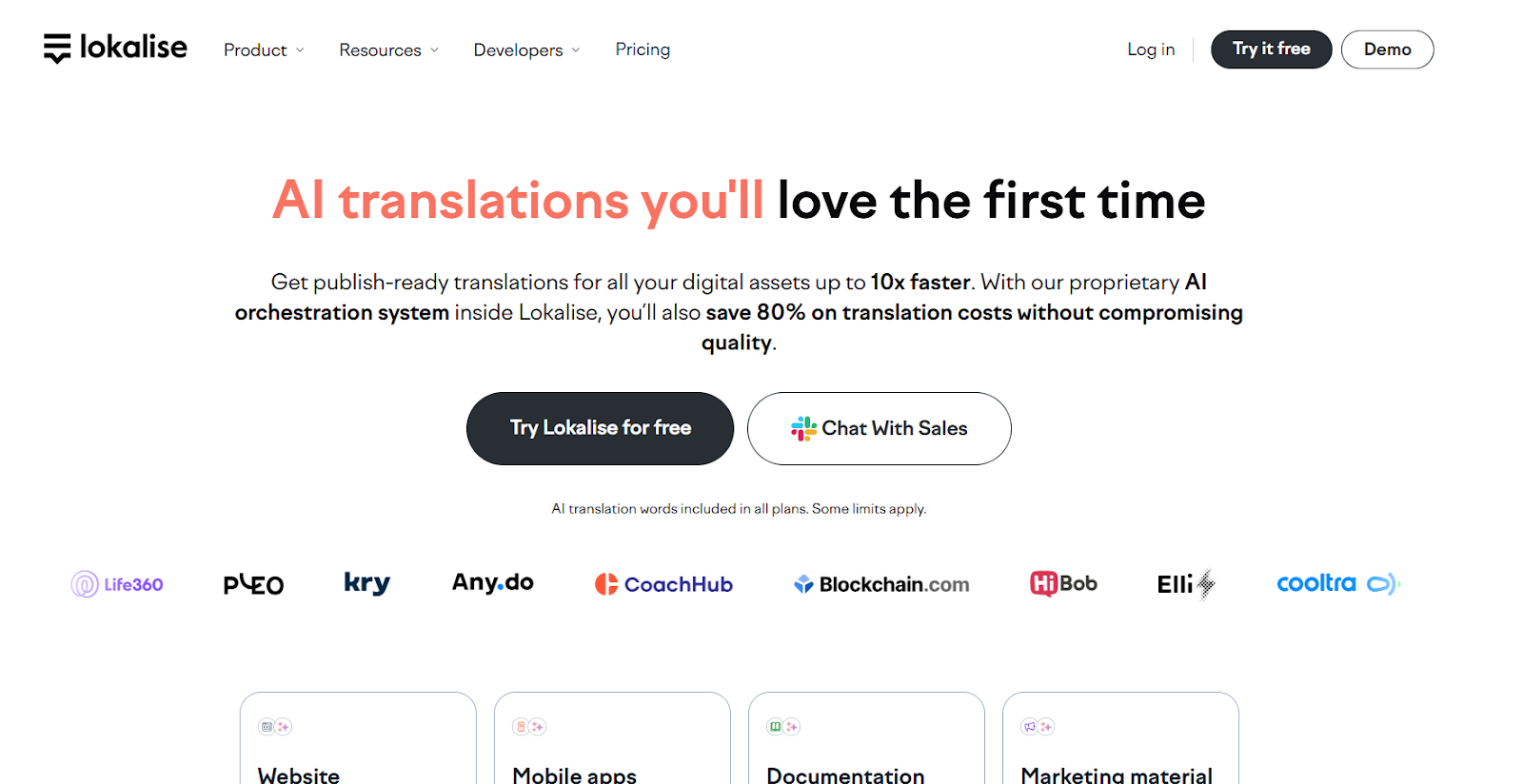
Image credit: Screenshot from Lokalise website accessed February 2026 for illustrative purposes only.
Lokalise is an ideal tool for a wide range of localization needs. With this tool, you can be more productive because it provides a continuous workflow that saves time. It also offers accurate translation, delivering high-quality results.
Why Choose Lokalise
- Supports multiple content. It supports website marketing content, mobile apps, software, games, and live chat translations.
- AI and human translation. It offers AI and human translation services, giving you options for a translation workflow that works best for you.
- Multiple localization platforms. It offers various localization platforms, including automated workflows, context management, real-time collaboration, advanced translation tools, and more.
Smartling - Best for Enterprise-Grade, End-to-End Localization at Scale
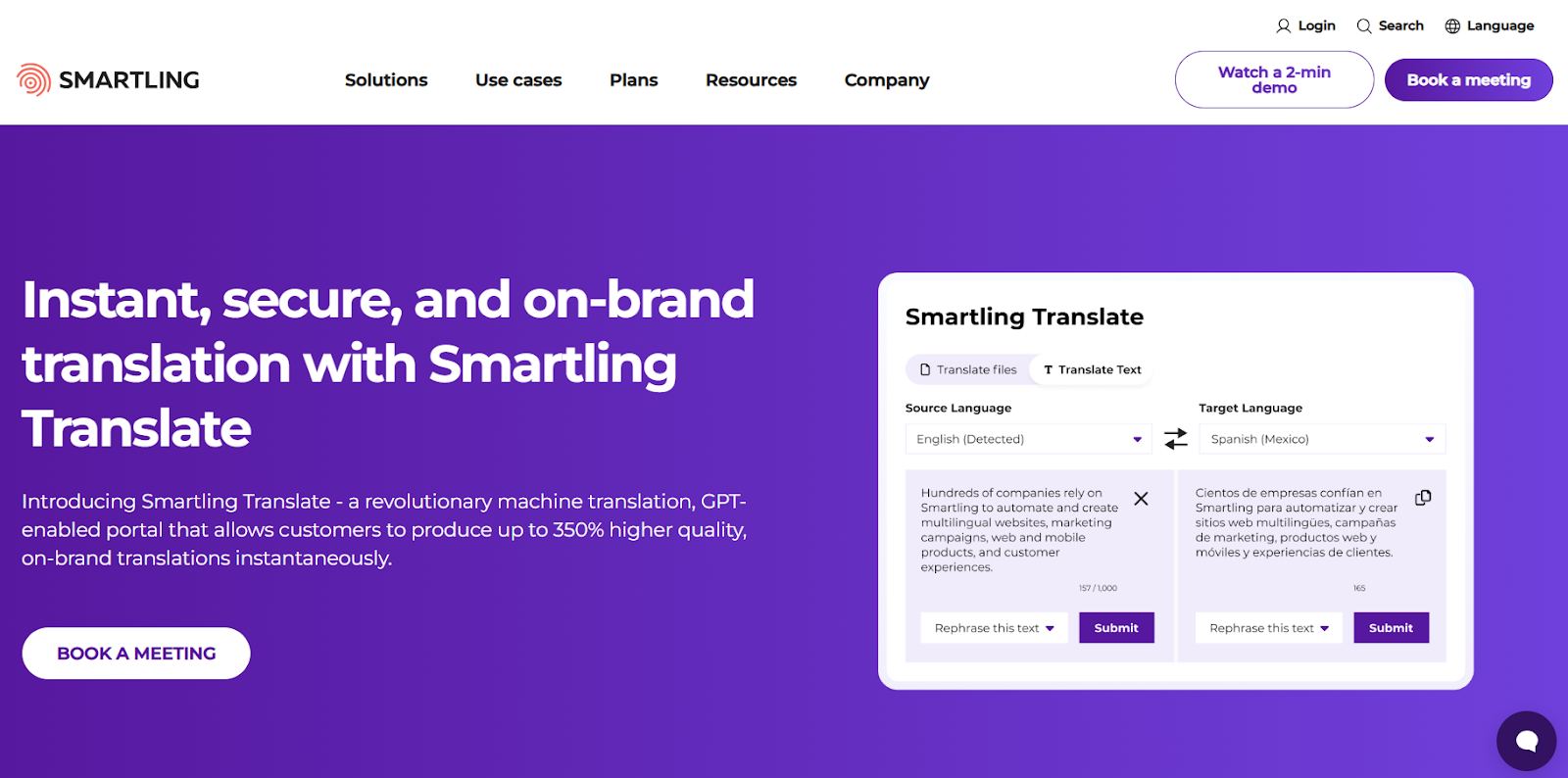
Image Credits: Screenshot from Smartling website, accessed February 2026, for illustrative purposes only.
Grow globally and reach a wider audience with Smartling. It offers a translation management platform and flexible workflows to streamline localization.
Why Choose Smartling
- Offers multiple tools. It provides tools ideal for various content types, making it suitable for a wide range of projects.
- Translation management system. Smartling offers various translation systems, which include translator tools, integrations, analytics, and more.
- Multiple Translation Options. It offers AI translation, giving users various options that suit their workflow.
Maestra - Best for Team-Based Video Localization With Seamless Platform Integrations
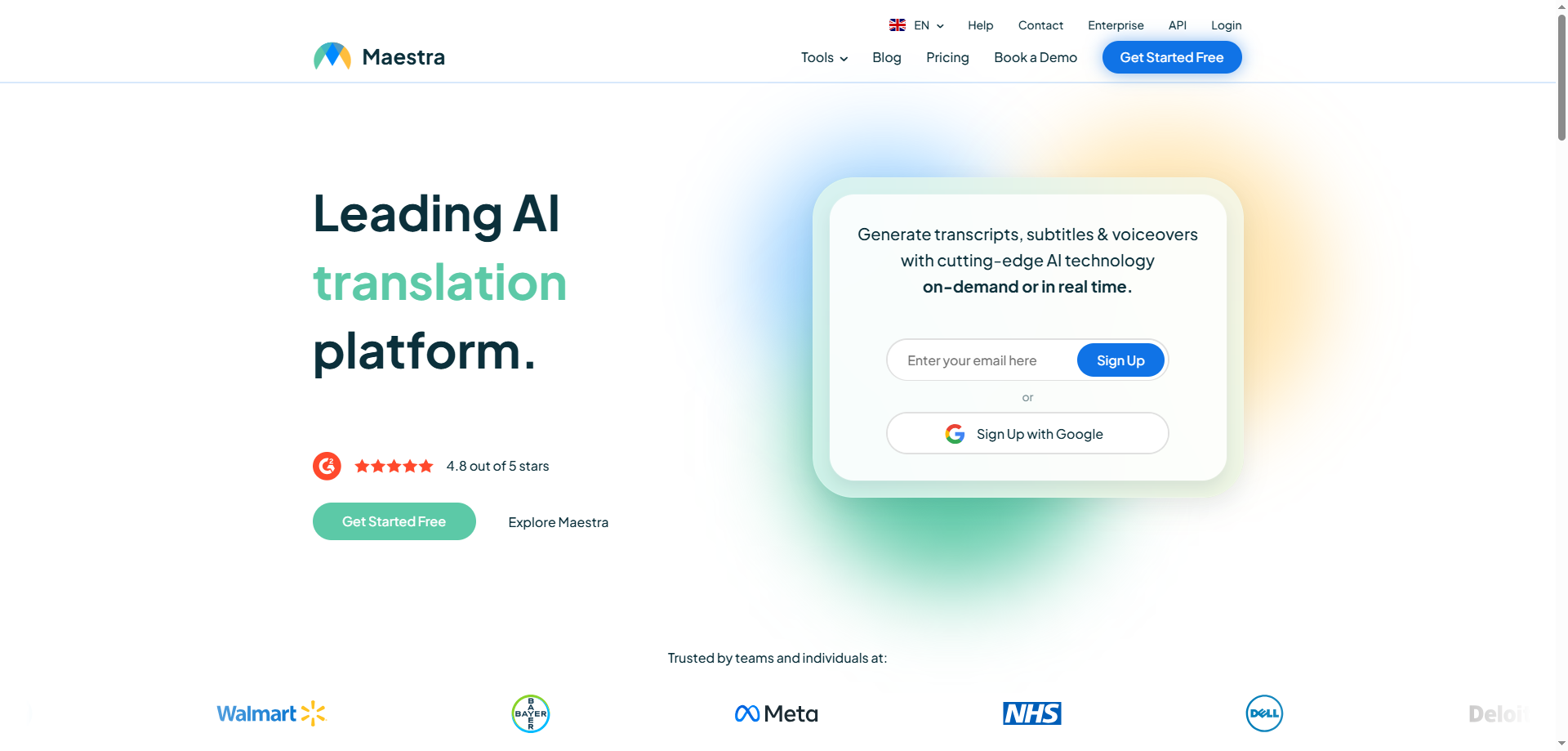
Image Credits: Screenshot from the Maestra website, accessed February 2026, for illustrative purposes only.
Maestra offers cutting-edge AI technology that simplifies localization. It also provides tools and products for subtitle generation, translation, transcription, and dubbing.
Why Choose Maestra
- Integrations. It simplifies workflows by integrating with various platforms. This can help you save time, so you can focus more on creating content.
- Multiple Tools/Products. Maestra offers video translation, video-to-text, audio translator, subtitle translator, and more.
- API and Enterprise Options. It offers API integrations and enterprise packages that provide a great localization experience for all your projects.
Phrase - Best for AI-Powered, End-to-End Localization Automation
Image Credits: Screenshot from the Phrase website, accessed February 2026, for illustrative purposes only.
Create a meaningful connection with your customers and grow your business with Phrase. This localization platform provides intelligent AI, consistent quality, actionable analytics, and more to help organizations deliver quality content.
Why Choose Phrase
- Multiple Products. It offers AI translation, a translation portal, intelligent automation, software localization, and more.
- Various Translation and Localization Solutions. These include machine translation, multilingual UX, translation management, professional translation services, collaborative localization, and more.
- Integrations. It supports multiple integrations to give you a more efficient workflow and help you get more things done.
How to Choose the Best AI Localization Tool for Your Business
Several factors must be considered when choosing the best AI localization tools to ensure that they are ideal for your content needs.
Identify Content
One factor to consider is the type of content you want to localize, such as infographics, social media content, educational content, or ads. This will help you identify the features you need, so you can easily know what to look for when you search for an AI localization tool.
Check Supported Languages
Check the supported languages to see whether the tool supports the ones you need. The more languages supported, the better.
Accuracy
Accuracy is not just about word-for-word translation. The AI-generated output must also be aligned with the context and retain the original message.
Culture and Context
Choose a tool that provides context-aware output and aligns with your target audience's culture.
Budget and Team Size
Another important factor to consider is the budget, which helps you identify the best plan that meets your needs and your team's size. When choosing a plan, check the features first to see whether the ones you need are included.
Why Localization Matters?
In today's more connected world, localization plays a significant role. It helps create content that resonates with your audience. Localization is important because it offers many advantages.
Reach Global Audience
Localization helps in reaching a global audience. It also helps increase audience engagement, so more people can know your brand, and it increases the likelihood of converting audience members into clients or customers.
Unlock New Opportunities
It also brings your content to a wider audience, and that kind of exposure benefits your brand by unlocking collaborations that open up new possibilities and help you grow.
Builds Trust and Authority
Localized content can also help build trust and be seen as an authority in your field. When people see you as an authority, you can be their go-to source or brand whenever they need your services, products, or solutions.
Improve User Experience
Localization also improves the user experience by helping users easily understand and relate to your message. With this, they can connect and engage more easily, helping you build a stronger connection with them.
Save Time, Effort, and Resources
Tools also help you be productive by reducing the time spent on manual tasks that can be automated. With this, you will be able to save time, effort, and resources so you can do more and have an efficient workflow.
How To Successfully Localize With VMEG AI?
Using the best AI localization tools also requires a strategy to ensure the output delivers a return on investment. One of the best tools to use is VMEG AI; it is easy to use, accurate, and offers powerful features.
Identify Content for Localization
Identify the type of content you want to localize, such as a social media post, educational materials, or marketing materials. VMEG AI supports various file types and links that make localization easier.
Set Target Language and Audience
Know the target language and audience to know their preferences and create content that suits them. VMEG AI can automatically detect the source language, and then you can choose the language you want the content to be translated into.
Choose the Localization Tool You Need
VMEG AI offers various localization tools, such as translation, dubbing, lip-sync, and voice cloning. It is a localization tool suitable for your different project needs.
Upload Content or Paste Content Link to VMEG AI
With VMEG AI, you can upload your content or paste its link, whichever you prefer. It supports various social media links, including Facebook and YouTube.
Review and Refine
One of the best things about VMEG AI is its support for hybrid translation. After the content has been generated, you can edit it before exporting to ensure accuracy and alignment with the original context, meaning, and culture.
Export and Distribute
When you export content, ensure you choose the correct file type for the platform you are uploading to or sharing with. Then distribute or share it on your website or social media.
Measure Content Performance
Check content performance to see how the algorithm is working, video engagement, and what works and what doesn't. In this way, you can create a strategy for localizing content and reaching your target audience.
Scale Global Localization
If localization is successful and you found the right strategy, you can scale localization with VMEG AI. It supports more than 170 languages without requiring extra effort while maintaining quality and staying consistent with your brand style.
FAQs
How is AI used in localization?
AI is used in localization to automate workflows and generate translations, subtitles, transcriptions, and more.
Will AI replace localization?
AI will not replace localization, as human expertise is still needed in the process. While it automates most tasks, human editing and proofreading remain important to ensure the output is accurate and relevant.
What is the best AI tool to translate?
The best AI tool for translating your content, such as video and audio, is VMEG AI, as it supports more than 170 languages and delivers high accuracy.
What is the best AI localization tool?
Some of the best AI localization tools are VMEG AI, Lokalise, Smartling, Maestra, and Phrase. The best one still depends on your project needs and preferences.
Are AI localization tools accurate?
Yes, AI localization tools are accurate, but they are not perfect, as some factors may be missed. It is always best to check the generated output before publishing.
Conclusion
Localization is an important part of business operations, especially today and in the future, as it brings you closer to your target audience, customers, and clients. The best AI localization tools are VMEG AI, Lokalise, Smartling, Maestra, and Phrase.
Video is a popular content format for building stronger connections with audiences and opening up new market opportunities. And VMEG AI is the best AI tool for localizing video content and other localization needs. It supports more than 170 languages, offers 7,000 AI-lifelike voices, is easy to use, and is ideal for a wide range of projects.


The VMEG Team
Behind VMEG stands a passionate team of creatives, engineers, and language lovers. At the crossroads of AI and storytelling, they craft tools that bridge languages and cultures.