

'%3e%3cpath%20d='M21.0949%203.79395L13.9961%209.82854H21.0949V3.79395Z'%20stroke='black'%20stroke-width='1.38'%20stroke-miterlimit='10'/%3e%3cpath%20d='M13.998%209.82854L7.44531%203.79395V9.82854H13.998Z'%20stroke='black'%20stroke-width='1.38'%20stroke-miterlimit='10'/%3e%3cpath%20d='M13.9961%202.69922V25.1919'%20stroke='black'%20stroke-width='1.38'%20stroke-miterlimit='10'/%3e%3cpath%20d='M20.5488%2016.4113L13.9961%209.82812V18.2217L20.5488%2024.0918V16.4113Z'%20stroke='black'%20stroke-width='1.38'%20stroke-miterlimit='10'/%3e%3cpath%20d='M7.44531%2016.4113L13.998%209.82812V18.0526L7.44531%2024.0918V16.4113Z'%20stroke='black'%20stroke-width='1.38'%20stroke-miterlimit='10'/%3e%3cpath%20d='M4.71094%209.82812V18.6057H7.44125V16.4113L13.9941%209.82812H4.71094Z'%20stroke='black'%20stroke-width='1.38'%20stroke-miterlimit='10'/%3e%3cpath%20d='M13.9961%209.82812L20.5488%2016.4113V18.6057H23.2792V9.82812H13.9961Z'%20stroke='black'%20stroke-width='1.38'%20stroke-miterlimit='10'/%3e%3c/g%3e%3c/svg%3e)

'%3e%3cmask%20id='mask0_21456_29260'%20style='mask-type:luminance'%20maskUnits='userSpaceOnUse'%20x='0'%20y='0'%20width='28'%20height='28'%3e%3cpath%20d='M27.5%200.5H0.5V27.5H27.5V0.5Z'%20fill='white'/%3e%3c/mask%3e%3cg%20mask='url(%23mask0_21456_29260)'%3e%3cpath%20d='M14%2027.5C13.4854%2024.1035%2011.8974%2020.9608%209.46828%2018.5317C7.03922%2016.1026%203.89651%2014.5146%200.5%2014C3.89651%2013.4854%207.03922%2011.8974%209.46828%209.46828C11.8974%207.03922%2013.4854%203.89651%2014%200.5C14.5147%203.89644%2016.1028%207.03905%2018.5318%209.46816C20.9609%2011.8972%2024.1035%2013.4853%2027.5%2014C24.1035%2014.5147%2020.9609%2016.1028%2018.5318%2018.5318C16.1028%2020.9609%2014.5147%2024.1035%2014%2027.5Z'%20fill='url(%23paint0_linear_21456_29260)'/%3e%3c/g%3e%3c/g%3e%3cdefs%3e%3clinearGradient%20id='paint0_linear_21456_29260'%20x1='9.5'%20y1='9.5'%20x2='20.75'%20y2='21.875'%20gradientUnits='userSpaceOnUse'%3e%3cstop%20stop-color='%23F0DCD6'/%3e%3cstop%20offset='0.914506'%20stop-color='%231D6DFF'/%3e%3c/linearGradient%3e%3cclipPath%20id='clip0_21456_29260'%3e%3crect%20width='28'%20height='28'%20fill='white'/%3e%3c/clipPath%3e%3c/defs%3e%3c/svg%3e)
'%3e%3cpath%20d='M22.8019%2011.2412L23.5234%2011.6807V12.0103L23.3172%2012.7796L14.5579%2014.9771L13.7344%2012.7951L22.8019%2011.2412Z'%20fill='%23D97757'/%3e%3cpath%20d='M19.5236%204.77832L20.5322%205.00396L20.8%205.35575L21.0552%206.19876L20.9494%206.73644L15.0712%2015.3068L13.1133%2013.2191L18.5338%205.63471L19.5236%204.77832Z'%20fill='%23D97757'/%3e%3cpath%20d='M14.4577%203.43951L15.0761%203L15.5912%203.21976L16.1065%203.9889L14.6949%2013.0345L13.7364%2012.3397L13.3242%2011.131L14.0456%204.31853L14.4577%203.43951Z'%20fill='%23D97757'/%3e%3cpath%20d='M7.84766%203.5851L8.48285%202.7199L8.89716%202.61914L9.71923%202.74717L10.125%203.08581L13.0815%2010.0748L14.1509%2013.3954L12.8997%2014.1372L8.13117%204.91019L7.84766%203.5851Z'%20fill='%23D97757'/%3e%3cpath%20d='M4.77232%208.38688L4.56641%207.50742L5.18478%206.73828L5.90613%206.84816H6.11223L10.4403%2010.2544L11.78%2011.3531L13.6349%2012.8914L12.6044%2014.7594L11.6769%2013.9903L11.0586%2013.331L5.08168%208.82593L4.77232%208.38688Z'%20fill='%23D97757'/%3e%3cpath%20d='M3.53288%2014.0982L3.06641%2013.5489L3.06647%2013.0601L3.53288%2012.8896L8.78833%2013.2193L13.9408%2013.6588L13.7736%2014.7528L3.94502%2014.2082L3.53288%2014.0982Z'%20fill='%23D97757'/%3e%3cpath%20d='M6.62378%2019.8178H5.59334L5.18359%2019.3146V18.7132L6.93299%2017.3946L14.045%2012.5674L14.7648%2013.8785L6.62378%2019.8178Z'%20fill='%23D97757'/%3e%3cpath%20d='M8.57739%2022.8884L8.16518%2022.9984L7.54688%2022.6687L7.64995%2022.1193L13.7299%2013.5488L14.5543%2014.7574L10.0201%2021.1305L8.57739%2022.8884Z'%20fill='%23D97757'/%3e%3cpath%20d='M13.7361%2023.9861L13.4271%2024.4257L12.8088%2024.6454L12.2935%2024.2058L11.9844%2023.5466L13.5301%2014.6465L14.4576%2014.7563L13.7361%2023.9861Z'%20fill='%23D97757'/%3e%3cpath%20d='M18.9869%2021.5713V22.4503L18.8838%2022.7799L18.4716%2022.9997L17.7503%2022.8974L12.7969%2015.0367L14.7617%2013.4404L16.4104%2016.6269L16.5652%2017.7805L18.9869%2021.5713Z'%20fill='%23D97757'/%3e%3cpath%20d='M21.3629%2020.2507L21.4659%2020.8L21.1568%2021.2396L20.8476%2021.1297L19.0958%2019.8112L16.4165%2017.284L14.3555%2015.7457L14.9736%2013.6582L16.0041%2014.3175L16.6226%2015.5259L21.3629%2020.2507Z'%20fill='%23D97757'/%3e%3cpath%20d='M20.0232%2014.6482L22.5995%2014.8679L23.2178%2015.3074L23.6299%2015.9667V16.441L22.4964%2016.9556L16.7256%2015.4173L14.3555%2015.3074L14.9737%2013L16.6226%2014.3185L20.0232%2014.6482Z'%20fill='%23D97757'/%3e%3c/g%3e%3c/svg%3e)
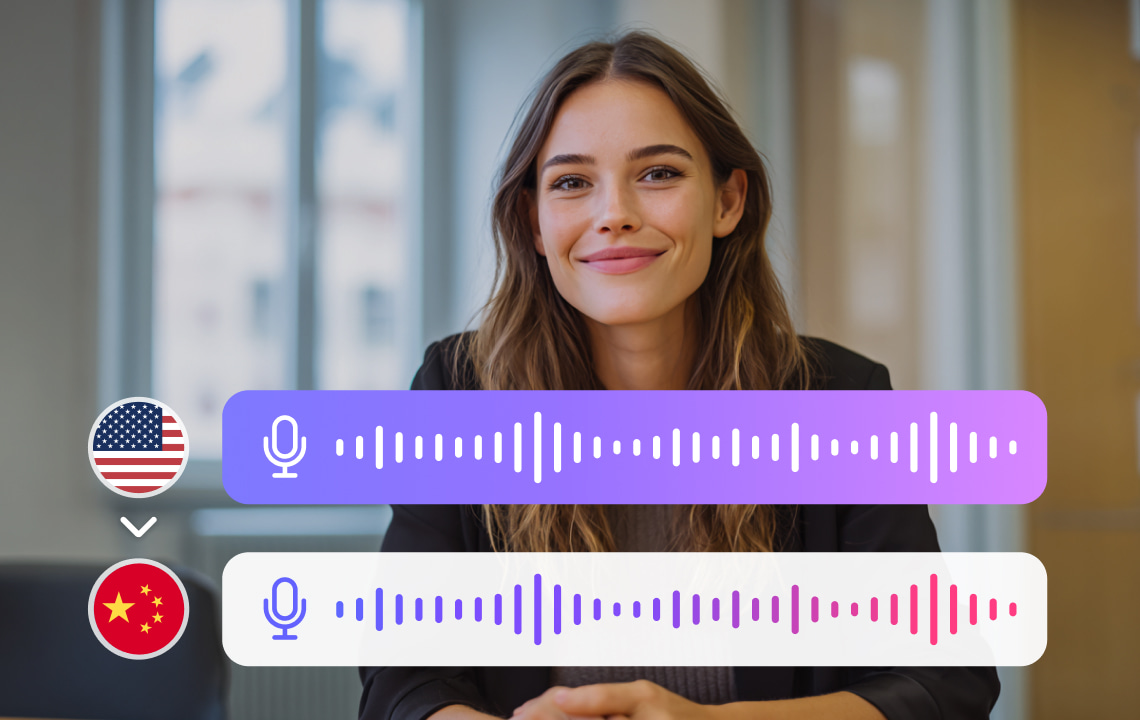
An English-to-Chinese translator is essential, especially for those communicating with Chinese teams or audiences. According to Statista (2025), Mandarin Chinese is among the most widely spoken languages worldwide.
These translators can be used for a range of purposes, including business, e-commerce, global marketing, education, travel, content creation, video, subtitles, social media, and more. Knowing the purpose is important for identifying the features you need.
Key Takeaways
- The best English-to-Chinese translators are VMEG AI, Google Translate, DeepL, Microsoft Translator, Baidu Translate, ChatGPT, Naver Papago, and Transync AI.
- English-to-Chinese translation is essential in 2026 because it directly affects global communication, customer trust, and business growth.
- The best translator depends on your specific use case, such as travel, business, marketing, education, or multimedia localization.
- High translation accuracy with proper context and cultural nuance is critical to preserving meaning and building credibility.
- Choosing the correct Chinese language (Simplified or Traditional) is vital for regional relevance, readability, and audience trust.
Why Finding the Best English to Chinese Translator Matters in 2026
Finding the best English-to-Chinese translator is critical in 2026, as it is a strategic necessity for growth and effective communication. It ensures native-level clarity, cultural accuracy, and a localized tone, as the translator directly affects trust, engagement, and conversion.
Key Reasons It Matters More Than Ever
- Chinese is one of the most spoken languages worldwide. From shows to product packages, Chinese is one of the languages used. This is important to ensure effective communication and to avoid misunderstandings that can pose risks.
- Consumers preferred purchasing products in their own language. According to CSA Research (2020), 76% of consumers across 29 countries prefer to buy products when information is provided in their own language.
- Accuracy matters. Accuracy is important as it builds trust. It helps in preserving the intent and original message.
- Global communication. As we are increasingly connected across borders, we need the best English-to-Chinese translation to ensure mutual understanding and convey our message.
- More content types need translation. From social media posts to product descriptions, having a translation app makes it easier to engage with the audience and communicate with customers.
Who Needs an English-to-Chinese Translator?
An English-to-Chinese translator is needed by individuals and businesses to communicate with stakeholders, audiences, clients, and more.
Businesses & eCommerce Brands
Businesses and e-commerce brands need an English-to-Chinese translator to streamline communication across business emails, product packaging, online team communication, document creation, and more.
Content Creators & Video Publishers
Content creators and video publishers also need an English-to-Chinese translator to engage effectively with their audience and create content that resonates with them.
Marketers & SEO Professionals
Marketers and SEO professionals need to increase engagement and improve search ranking, especially if they have a Chinese audience. It will help them to integrate the keywords their audience is searching for.
Students, Educators & Researchers
In research and academia, English-to-Chinese translators will help learners and researchers easily study the language. It is also beneficial to researchers to gather more accurate data, making their output more reliable.
Travelers & Expats
Travelers and expats also need translation apps to communicate more easily with locals, read signage and restaurant menus, and more.
Best English to Chinese Translators
App Name | Best For | Offline Mode | Camera Translation | Voice Conversation | Pricing |
VMEG AI | Best for English to Chinese Video, Subtitle & Multimodal Translation | No | No, but it supports multiple inputs and file types, such as links, audio, video, and more. | No, but it supports audio and other file types. | Offers free credits and a subscription plan. |
Google Translate | Best for Everyday & Travel Use | Yes - selected languages | Yes - camera and photos translation | Yes - selected languages | Free |
DeepL Translate | Best for Natural-Sounding English to Chinese | No | Yes - camera and photo translation | Supports dictation and text-to-speech | Free & Subscription plan. |
ChatGPT | Best for Context-Aware & Custom Translation | No | Yes | Yes, but it may have some limitations and may depend on your plan or version. | Free, In-App Purchases, Subscription |
Baidu Translate | Best for Mainland China Use | Offline mode can be limited | Yes - image translation | Supports AI audio and video translation | Free, and may require a fee if the free quota is used. |
Microsoft Translator | Best for Enterprise & Office Integration | Yes - selected languages | Yes - images | Supports voice and conversations | Free |
Naver Papago | Best for Asian Language Context | Yes | Yes - image translation | Yes - voice and conversation translation | Free |
Transync AI | Best for Real-Time Translation | No | No | Yes | Free, In-app purchases |
Notes on Features:
Features such as camera translation, offline mode, voice translation, and conversation translation may vary by app, languages, device, and subscription plan. Visit the Google Play Store or the app’s official website to learn more and find the option that best fits your goals.
Best English to Chinese Translators
VMEG AI is the best English-to-Chinese translator for localization. It has a simple and easy-to-use interface, making it ideal for beginners.
VMEG AI – Best for English to Chinese Video, Subtitle & Multimodal Translation
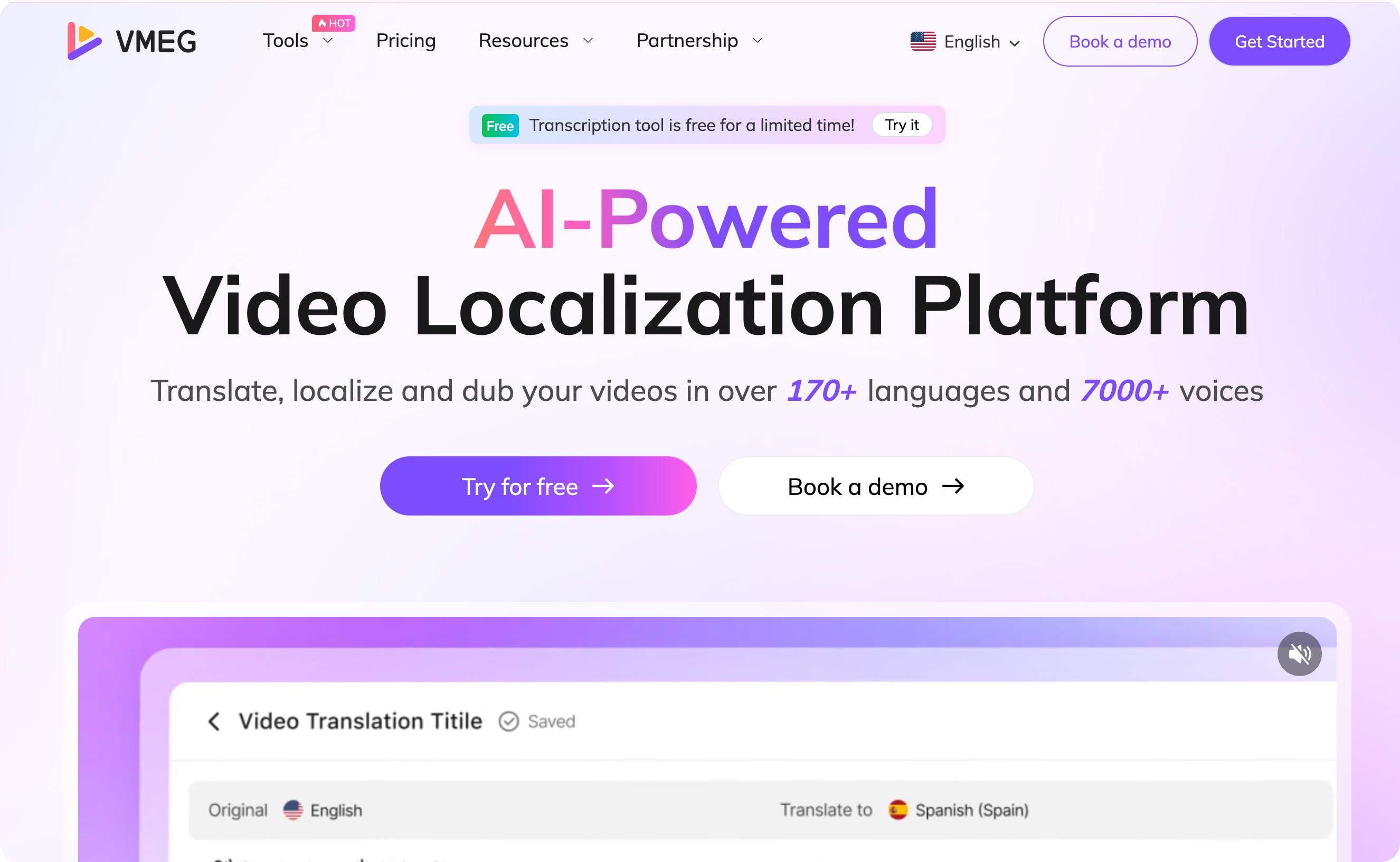
VMEG AI is an ideal Chinese translation tool for content localization. With VMEG AI, you can translate content, such as video, audio, MP3, and movies, in more than 170 languages and choose from its more than 7,000 lifelike voices.
Why VMEG AI Stands Out
- Localization is its masterpiece. VMEG AI specializes in localization, making it an ideal option if you are localizing content for different purposes.
- Supports more than 170 languages and 7,000 lifelike voices. With support for numerous languages and lifelike voices, you can easily localize content and choose a voice that fits your brand.
- Has multiple translation tools. VMEG AI offers a range of translation tools, including video, audio, MP3, and Movie translators.
- Supports different file types and links. Depending on the content you want to translate, VMEG AI supports a range of file types and links.
- All-in-one tool for localization. It supports multiple localization tools, including translation, transcription, subtitles, and text-to-speech.
Other Best English to Chinese Translators You Should Try
Here are some of the best English-to-Chinese translators for quick lookups, travel, and everyday use, which can be used alongside VMEG AI, depending on your needs.
Google Translate – Best for Everyday & Travel Use
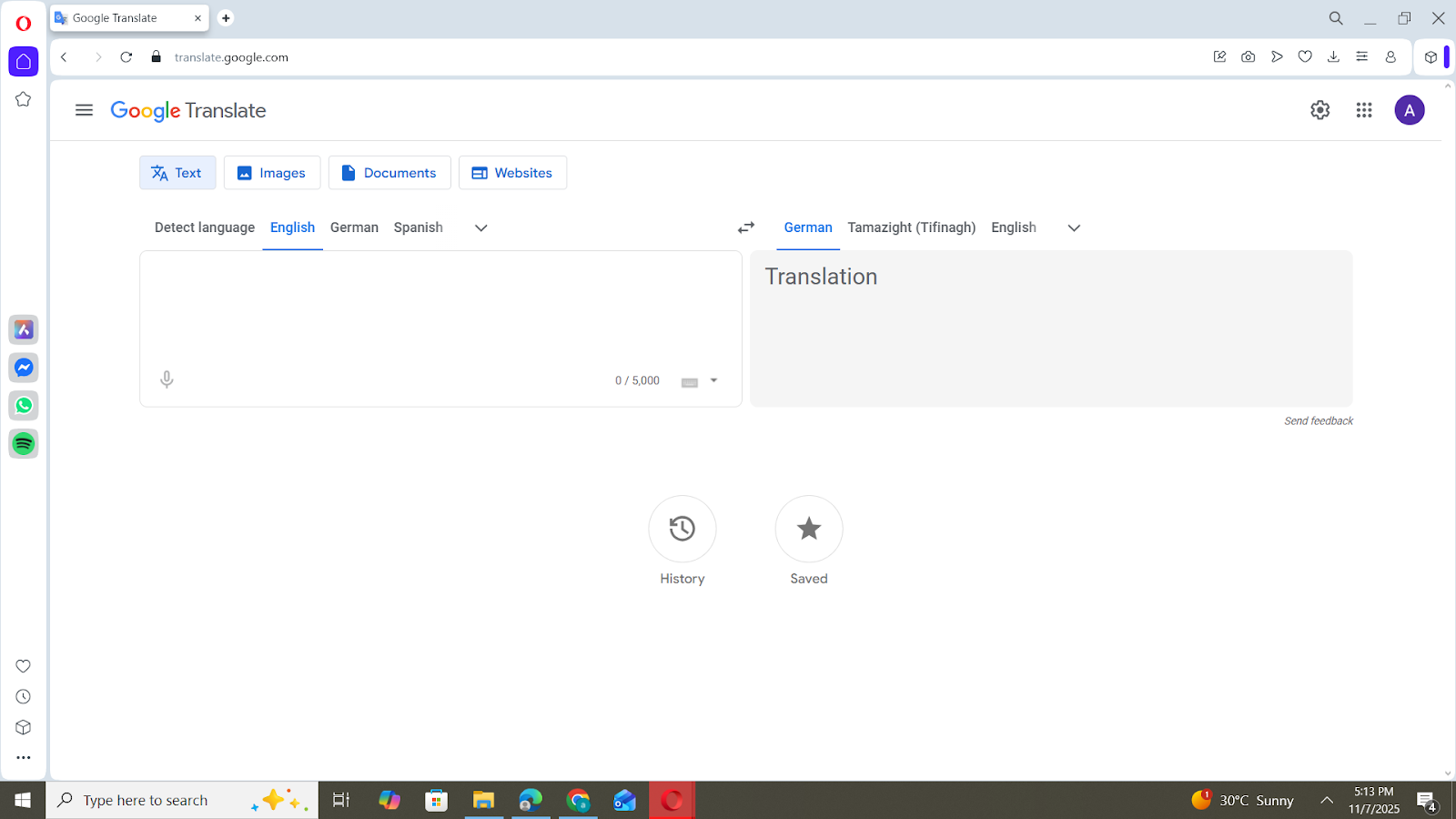
Image Credits: Screenshot from Google Translate website accessed in January 2026 for illustrative purposes only.
Google Translate is ideal for everyday use and travel, as it is easy to use and supports offline mode. With Google Translate, you can translate into more than 100 languages, including Chinese (Simplified) and Chinese (Traditional).
Why Choose Google Translate?
- Supports text, camera, photos, and conversation translation.
- Convenient as it also supports handwriting, cross-device syncing, offline mode, and transcription.
- Includes a tap-to-translate feature and a phrasebook for added convenience.
DeepL Translate – Best for Natural-Sounding English to Chinese
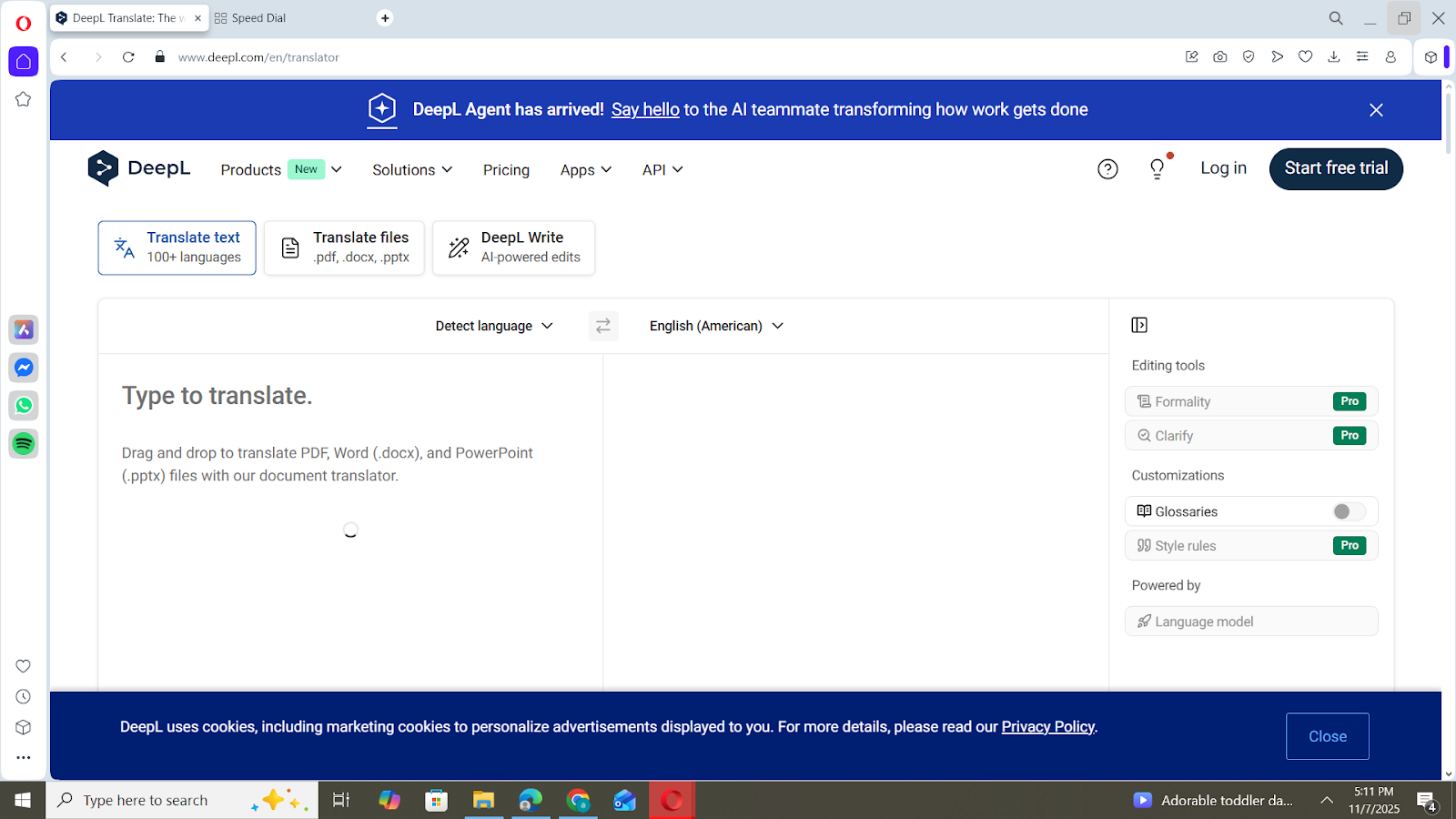
Image Credits: Screenshot from DeepL Translate website accessed in January 2026 for illustrative purposes only.
DeepL Translate is known for its accuracy, making it a strong tool for a wide range of use cases. It supports more than 100 languages, including Chinese (simplified) and Chinese (traditional).
Why Choose DeepL Translate?
- Supports camera, photo, file, and dictation translation.
- Choose the perfect words and phrases that match your content, along with their alternative translations.
- It also features text-to-speech, quick detection, favorites, history, glossary, tone, and more, making translation easier.
ChatGPT (AI Translation) – Best for Context-Aware & Custom Translation
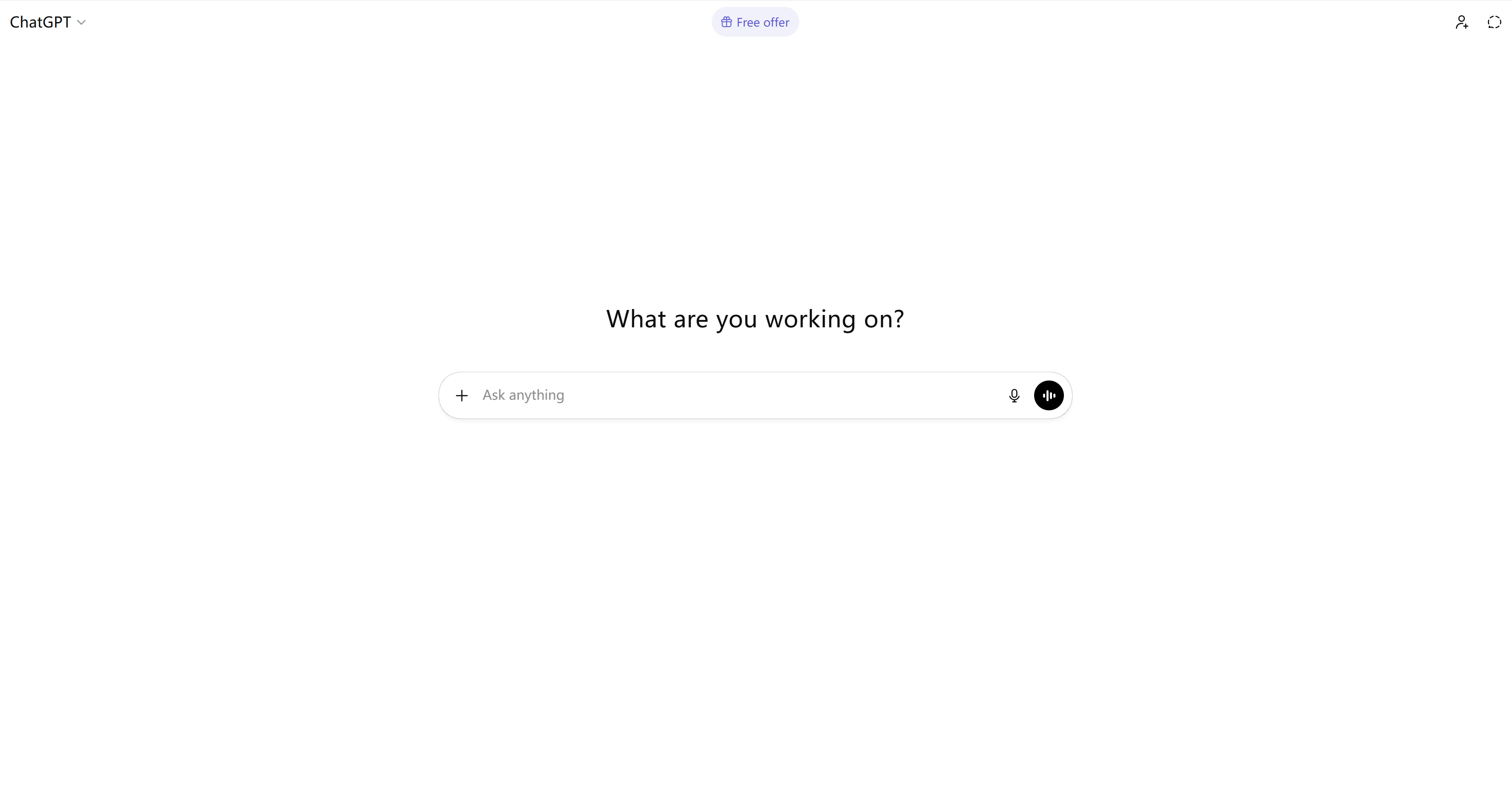
Image Credits: Screenshot from ChatGPT website accessed in January 2026 for illustrative purposes only.
Another best translator you can use is ChatGPT, especially if you want further explanation. It can also provide different options for different tones and purposes.
Why Choose ChatGPT?
- Can explain the translation, making comprehension and understanding easier.
- It can understand context and nuance and provide additional suggestions and explanations.
- Perfect for different styles and tones, whether you need formal, casual, or other tones.
Baidu Translate – Best for Mainland China Use
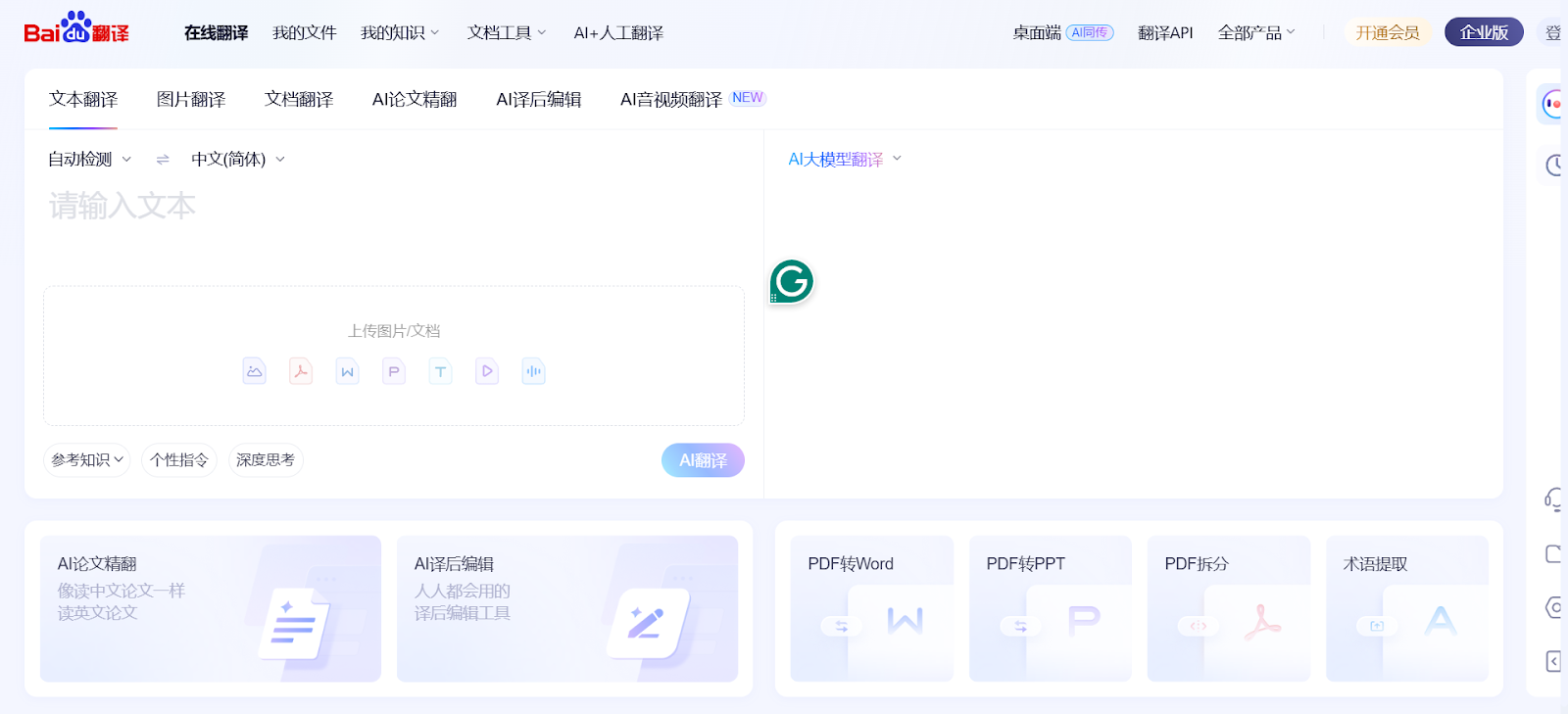
Image Credits: Screenshot from the Baidu Translate website accessed in January 2026 for illustrative purposes only.
Baidu Translate is ideal for English-to-Chinese translation. It supports multiple languages, including Simplified Chinese, Traditional Chinese, Chinese (Cantonese), and Chinese (Classical Chinese).
Why Choose Baidu Translate?
- Supports text, image, and document translation.
- Has AI-powered paper translation, AI translation and editing, and AI audio and video translation.
- It offers multiple translation services, including online, intelligent, and human translation.
Microsoft Translator – Best for Enterprise & Office Integration
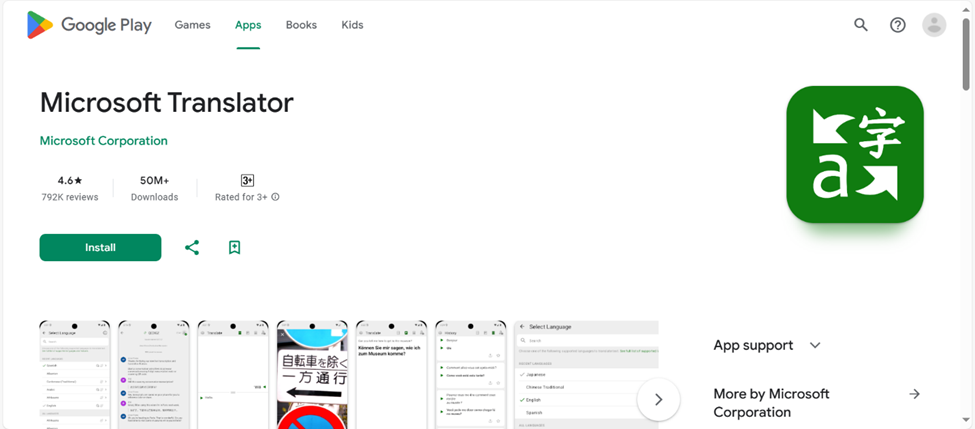
Image Credits: Screenshot from Google Play Store website accessed in January 2026 for illustrative purposes only.
Make English-to-Chinese translation easier with Microsoft Translator. It supports more than 100 languages, including Simplified Chinese, Traditional Chinese, and Chinese (Literary), so you can communicate with ease.
Why Choose Microsoft Translator?
- Supports text, images, voice, and conversation translations.
- Has an intuitive interface for easier communication.
- It can be used for travel, work, or school.
English to Simplified vs. Traditional Chinese: What You Should Know
When you choose the Chinese language in translation, one of the common options you will see is the Simplified and Traditional Chinese translations. These languages have different writing purposes and are used in different regions. The written form matters for audience trust and readability.
Here’s the difference between Simplified and Traditional Chinese, according to the American Translation Association:
Place | Language for Writing |
Mainland China | Simplified Chinese |
Taiwan | Traditional Chinese |
Hong Kong and Macao | Traditional Chinese |
Guangdong (formerly Canton) Province | Simplified Chinese |
Knowing which language to use helps meet audience expectations, improve search visibility, and build credibility.
How To Choose The Best English to Chinese Translation Tool
Knowing how to choose the best English-to-Chinese translation tool is important to ensure it produces the output you prefer.
Identify Your Primary Use Case
Knowing your primary purpose is important for determining which tool is ideal for you. For example, if you are a content creator localizing videos, VMEG AI is ideal; if you need quick lookups, you can use Google Translate.
Check Translation Accuracy & Context Handling
Try different tools and compare their accuracy and context handling. In this way, you’ll see which tool best suits your preferred tone and style.
Support for Simplified vs. Traditional Chinese
Choose a tool that supports both simplified and traditional Chinese language, making you more productive.
Multimedia & Subtitle Support
If you are localizing video content, choose a tool that supports multimedia and subtitles, like VMEG AI.
Platform Availability & Workflow
Check if it is available on your device for convenience and productivity. Try its tools first to see if they fit your workflow and to assess ease if use.
Free vs. Paid: Understand the Trade-Offs
Some tools are free, but others offer paid features or subscription plans that unlock premium capabilities to help you create better content. Choose a plan that is within your budget and includes the features you need.
FAQs
What is the best translation app for English to Chinese?
Some of the best English-to-Chinese translation apps include VMEG AI, Google Translate, DeepL Translate, ChatGPT, Baidu Translate, Microsoft Translator, Naver Papago, and Transync AI.
What is the most accurate English-to-Chinese translator?
Accuracy varies with how the tool handles context, and some of the most accurate English-to-Chinese translators are VMEG AI and DeepL Translate.
Is Papago accurate for Chinese?
Papago is accurate for Chinese translation, as it specializes in Asian languages, but it still may have some limitations.
Is Baidu a good translator?
Yes, Baidu is a good translator, especially for use in Mainland China.
Is DeepL or Google Translate better for Chinese?
Both DeepL and Google Translate are effective for Chinese translations, as they offer features that make translation more convenient.
Conclusion
The best English-to-Chinese translator depends on the use case and your preferences. Some tools you can try include VMEG AI, Google Translate, DeepL Translate, ChatGPT, Baidu Translate, Microsoft Translator, Naver Papago, and Transync AI. These tools are ideal for different use cases, each with its own features.
If you are looking for an all-in-one localization tool that lets you translate, transcribe, localize, and dub content, VMEG AI is the best English-to-Chinese translator. It is easy to use, from uploading your content or pasting a link to customizing your settings. With its high-accuracy output and simple interface, you can easily localize content to reach a wider audience.


The VMEG Team
Behind VMEG stands a passionate team of creatives, engineers, and language lovers. At the crossroads of AI and storytelling, they craft tools that bridge languages and cultures.