

'%3e%3cpath%20d='M21.0949%203.79395L13.9961%209.82854H21.0949V3.79395Z'%20stroke='black'%20stroke-width='1.38'%20stroke-miterlimit='10'/%3e%3cpath%20d='M13.998%209.82854L7.44531%203.79395V9.82854H13.998Z'%20stroke='black'%20stroke-width='1.38'%20stroke-miterlimit='10'/%3e%3cpath%20d='M13.9961%202.69922V25.1919'%20stroke='black'%20stroke-width='1.38'%20stroke-miterlimit='10'/%3e%3cpath%20d='M20.5488%2016.4113L13.9961%209.82812V18.2217L20.5488%2024.0918V16.4113Z'%20stroke='black'%20stroke-width='1.38'%20stroke-miterlimit='10'/%3e%3cpath%20d='M7.44531%2016.4113L13.998%209.82812V18.0526L7.44531%2024.0918V16.4113Z'%20stroke='black'%20stroke-width='1.38'%20stroke-miterlimit='10'/%3e%3cpath%20d='M4.71094%209.82812V18.6057H7.44125V16.4113L13.9941%209.82812H4.71094Z'%20stroke='black'%20stroke-width='1.38'%20stroke-miterlimit='10'/%3e%3cpath%20d='M13.9961%209.82812L20.5488%2016.4113V18.6057H23.2792V9.82812H13.9961Z'%20stroke='black'%20stroke-width='1.38'%20stroke-miterlimit='10'/%3e%3c/g%3e%3c/svg%3e)

'%3e%3cmask%20id='mask0_21456_29260'%20style='mask-type:luminance'%20maskUnits='userSpaceOnUse'%20x='0'%20y='0'%20width='28'%20height='28'%3e%3cpath%20d='M27.5%200.5H0.5V27.5H27.5V0.5Z'%20fill='white'/%3e%3c/mask%3e%3cg%20mask='url(%23mask0_21456_29260)'%3e%3cpath%20d='M14%2027.5C13.4854%2024.1035%2011.8974%2020.9608%209.46828%2018.5317C7.03922%2016.1026%203.89651%2014.5146%200.5%2014C3.89651%2013.4854%207.03922%2011.8974%209.46828%209.46828C11.8974%207.03922%2013.4854%203.89651%2014%200.5C14.5147%203.89644%2016.1028%207.03905%2018.5318%209.46816C20.9609%2011.8972%2024.1035%2013.4853%2027.5%2014C24.1035%2014.5147%2020.9609%2016.1028%2018.5318%2018.5318C16.1028%2020.9609%2014.5147%2024.1035%2014%2027.5Z'%20fill='url(%23paint0_linear_21456_29260)'/%3e%3c/g%3e%3c/g%3e%3cdefs%3e%3clinearGradient%20id='paint0_linear_21456_29260'%20x1='9.5'%20y1='9.5'%20x2='20.75'%20y2='21.875'%20gradientUnits='userSpaceOnUse'%3e%3cstop%20stop-color='%23F0DCD6'/%3e%3cstop%20offset='0.914506'%20stop-color='%231D6DFF'/%3e%3c/linearGradient%3e%3cclipPath%20id='clip0_21456_29260'%3e%3crect%20width='28'%20height='28'%20fill='white'/%3e%3c/clipPath%3e%3c/defs%3e%3c/svg%3e)
'%3e%3cpath%20d='M22.8019%2011.2412L23.5234%2011.6807V12.0103L23.3172%2012.7796L14.5579%2014.9771L13.7344%2012.7951L22.8019%2011.2412Z'%20fill='%23D97757'/%3e%3cpath%20d='M19.5236%204.77832L20.5322%205.00396L20.8%205.35575L21.0552%206.19876L20.9494%206.73644L15.0712%2015.3068L13.1133%2013.2191L18.5338%205.63471L19.5236%204.77832Z'%20fill='%23D97757'/%3e%3cpath%20d='M14.4577%203.43951L15.0761%203L15.5912%203.21976L16.1065%203.9889L14.6949%2013.0345L13.7364%2012.3397L13.3242%2011.131L14.0456%204.31853L14.4577%203.43951Z'%20fill='%23D97757'/%3e%3cpath%20d='M7.84766%203.5851L8.48285%202.7199L8.89716%202.61914L9.71923%202.74717L10.125%203.08581L13.0815%2010.0748L14.1509%2013.3954L12.8997%2014.1372L8.13117%204.91019L7.84766%203.5851Z'%20fill='%23D97757'/%3e%3cpath%20d='M4.77232%208.38688L4.56641%207.50742L5.18478%206.73828L5.90613%206.84816H6.11223L10.4403%2010.2544L11.78%2011.3531L13.6349%2012.8914L12.6044%2014.7594L11.6769%2013.9903L11.0586%2013.331L5.08168%208.82593L4.77232%208.38688Z'%20fill='%23D97757'/%3e%3cpath%20d='M3.53288%2014.0982L3.06641%2013.5489L3.06647%2013.0601L3.53288%2012.8896L8.78833%2013.2193L13.9408%2013.6588L13.7736%2014.7528L3.94502%2014.2082L3.53288%2014.0982Z'%20fill='%23D97757'/%3e%3cpath%20d='M6.62378%2019.8178H5.59334L5.18359%2019.3146V18.7132L6.93299%2017.3946L14.045%2012.5674L14.7648%2013.8785L6.62378%2019.8178Z'%20fill='%23D97757'/%3e%3cpath%20d='M8.57739%2022.8884L8.16518%2022.9984L7.54688%2022.6687L7.64995%2022.1193L13.7299%2013.5488L14.5543%2014.7574L10.0201%2021.1305L8.57739%2022.8884Z'%20fill='%23D97757'/%3e%3cpath%20d='M13.7361%2023.9861L13.4271%2024.4257L12.8088%2024.6454L12.2935%2024.2058L11.9844%2023.5466L13.5301%2014.6465L14.4576%2014.7563L13.7361%2023.9861Z'%20fill='%23D97757'/%3e%3cpath%20d='M18.9869%2021.5713V22.4503L18.8838%2022.7799L18.4716%2022.9997L17.7503%2022.8974L12.7969%2015.0367L14.7617%2013.4404L16.4104%2016.6269L16.5652%2017.7805L18.9869%2021.5713Z'%20fill='%23D97757'/%3e%3cpath%20d='M21.3629%2020.2507L21.4659%2020.8L21.1568%2021.2396L20.8476%2021.1297L19.0958%2019.8112L16.4165%2017.284L14.3555%2015.7457L14.9736%2013.6582L16.0041%2014.3175L16.6226%2015.5259L21.3629%2020.2507Z'%20fill='%23D97757'/%3e%3cpath%20d='M20.0232%2014.6482L22.5995%2014.8679L23.2178%2015.3074L23.6299%2015.9667V16.441L22.4964%2016.9556L16.7256%2015.4173L14.3555%2015.3074L14.9737%2013L16.6226%2014.3185L20.0232%2014.6482Z'%20fill='%23D97757'/%3e%3c/g%3e%3c/svg%3e)
Are you considering a career as a professional translator and wondering whether AI can replace translators?
AI cannot replace translators. People might think that AI is a career stealer because it can do what humans can do. And sometimes, people think that they provide better results. But if you look closely, AI can be a tool to enhance your services. You just need to know how to use it to your advantage.
What Does “Replacing Translators” Actually Mean?
Replacing translators can mean replacing or improving the workflow of human translators. For example, instead of translating content from scratch, you can use AI and just edit and proofread the AI-generated output. In this way, you will be able to save time and improve your workflow.
When AI Works Well in Video Localization
Today, video localization is essential because it helps reach a wider audience. Here are some circumstances where AI works well in video localization.
- Automated subtitles and captions for large volumes of content. If you are creating a large volume of content and want to save time while creating more, AI can help you translate or localize content in just a few seconds or minutes.
- Voiceover and dubbing with AI-generated voices. Some important elements of video localization include lip-sync, voice-overs, and dubbing using AI-generated voices or voice cloning. It helps in creating a voice for your brand.
- Cost and time efficiency for repetitive or non-creative content. AI helps speed up workflows, saving time and reducing costs.
The accuracy of AI output depends on the platform you use and may miss nuance, humor, context, or cultural references, so it is important to always check before publishing.
Scenarios Where Human Expertise is Irreplaceable
AI cannot replace translators, as there are some scenarios where human expertise is irreplaceable.
- Marketing, storytelling, or branded content that needs tone and emotional impact. The tone and emotions play an important role in conveying meaning, and AI might miss them.
- Localization requiring cultural adaptation (idioms, humor, sensitive topics). When localizing content, culture is one factor to consider. Human expertise is still needed as they understand idioms, humor, and sensitive topics better.
- Quality control for nuance, flow, and audience engagement. When it comes to quality and accuracy, human expertise is irreplaceable because it understands how to connect with the audience, helping the content achieve higher engagement.
What AI Translation Can Do Well Today
Using AI translation in your workflow can bring many advantages, as it can speed up the process while maintaining quality.
Speed and Scalability
You can translate text, videos, and audio within a few seconds or minutes by using AI tools. It can help you produce more content and be more productive.
Cost Efficiency for Global Content
AI can help reduce costs as you reach a global audience. Most AI platforms offer subscription plans that cater to various needs, and some offer a free trial or credits so you can try it first and see the output quality before subscribing.
Consistency in Terminology
Using AI is good for large projects with repetitive content, as it can maintain consistent translations for repeated phrases, brand terms, or technical jargon.
Where AI Still Falls Short (and Why Humans Matter)
AI may still fall short in some areas, which is why human translators still matter.
Cultural Nuance and Context
Culture can be complex, and AI may not fully understand the context behind the source language. That’s why the AI-translated output must be checked and verified by humans to ensure it is appropriate for the target audience's culture and builds authority.
Brand Voice and Emotional Accuracy
Brand voice is important as it helps the audience to recognize you easily. The translated content must also be emotionally accurate to ensure it conveys the intended emotions, so the audience feels and understands its message.
Error Detection and Accountability
AI can make mistakes and may lack accountability, so human verification is essential. Humans can detect errors and minimize them to make the content more polished.
Can AI Replace Translators in Video Localization?
In video localization, AI cannot fully replace translators, as humans still need to check, edit, and proofread the AI-generated output.
Why Video Is the Hardest Format to Translate
- Speech recognition accuracy challenges. Several factors affect transcription accuracy, such as accents, background noise, overlapping dialogue, and informal speech patterns.
- Timing, pacing, and synchronization issues. Translations must be synchronized with subtitles, dubbing, or lip-sync to match the speaker's rhythm and emotions, making the text feel more natural.
- Multimodal complexity (audio + visuals + text). The dialogue, on-screen text, visuals, and context shape the content's meaning and message.
Replacement vs Empowerment
- AI as a productivity multiplier, not a replacement. AI translation accelerates workflows by handling tasks such as subtitle generation, transcription, and first-pass translation. This helps save time and costs by providing faster output. However, speed is not enough, as AI may struggle with tone, emotion, visual context, and cultural nuance, and these factors are essential in video content.
- Translators are shifting roles. AI empowers translators, and their roles are evolving into those of reviewers, editors, and cultural specialists. They refine AI output to ensure accuracy, natural phrasing, and cultural relevance. Meaning goes beyond words in video localization, which is why human translators are still essential.
The Hybrid Translation Model (AI + Human) Explained
There are times when AI may still fall short, and humans need a better workflow. This is where the hybrid translation model comes in. In hybrid translation, AI and human expertise will be part of the workflow to deliver better, faster, and more accurate results.
Step-by-Step Hybrid Workflow
- Choose a tool to use for translation. Upload the file or paste the link to your content, and select your preferred settings. Wait for it to translate.
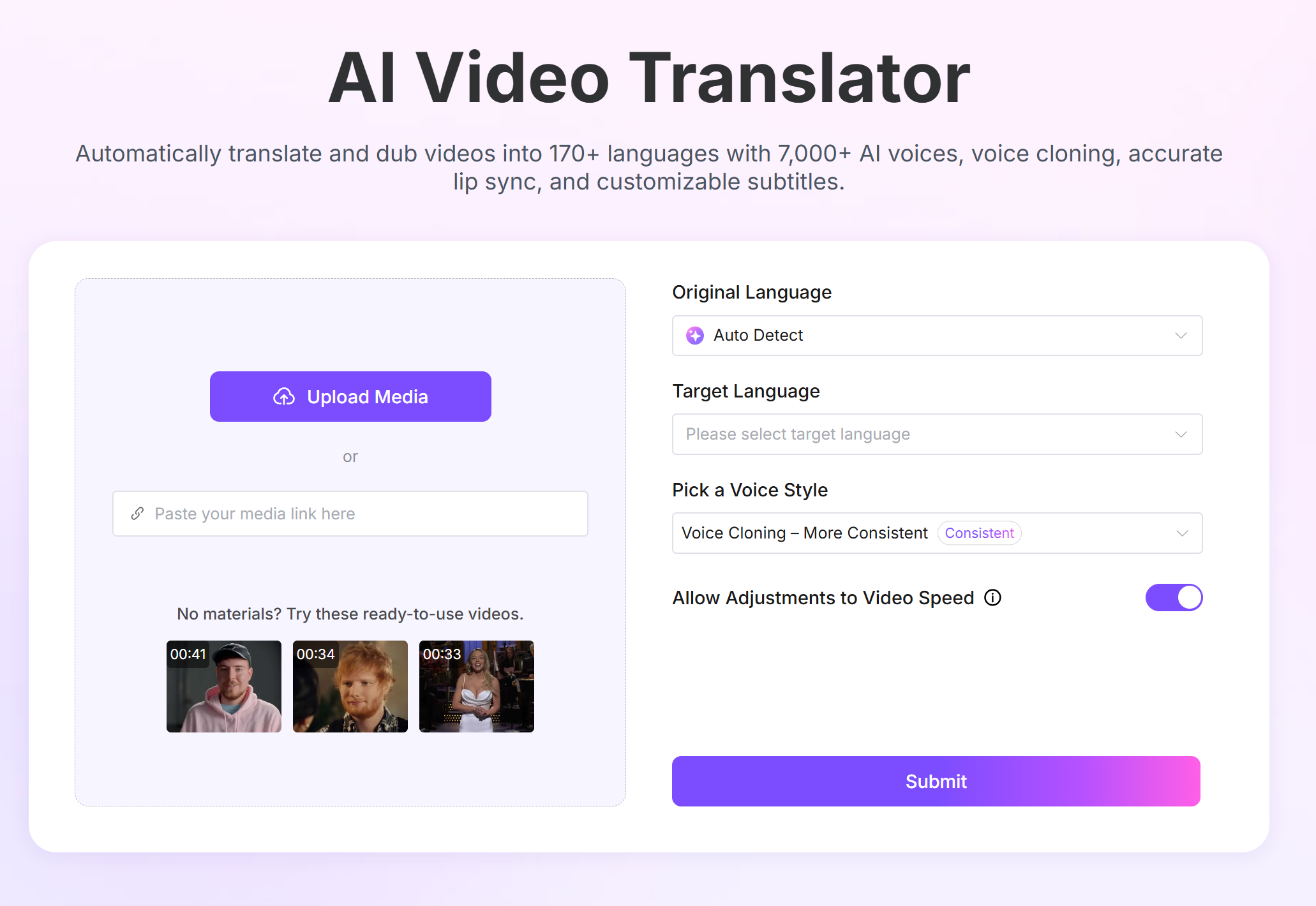
- After the content has been translated, check, review, and verify it so you can make any edits before exporting it.
Why This Model Works Better Than AI-Only
The Hybrid model performs better than AI-only approaches because it combines speed and accuracy.
- Combines speed with accuracy. AI helps speed things up while humans ensure accuracy. With AI, you can get a translated output in just a few seconds or minutes, and just edit it according to your preferences.
- Preserves cultural and emotional intent. The AI-generated output might miss some emotions and cultural nuances, but humans can spot them, so that the output will be high quality.
- Scales without sacrificing quality. With hybrid translation, you can create more content and ensure it is high-quality human translator will edit the AI-generated output. Platforms that provide high accuracy require minimal editing so that you can do more.
How VMEG AI Uses a Hybrid Translation Workflow
VMEG AI supports a hybrid translation workflow. After you translate your content with VMEG AI, you can edit it before exporting to ensure that it is accurate and relevant.
What Is VMEG AI?
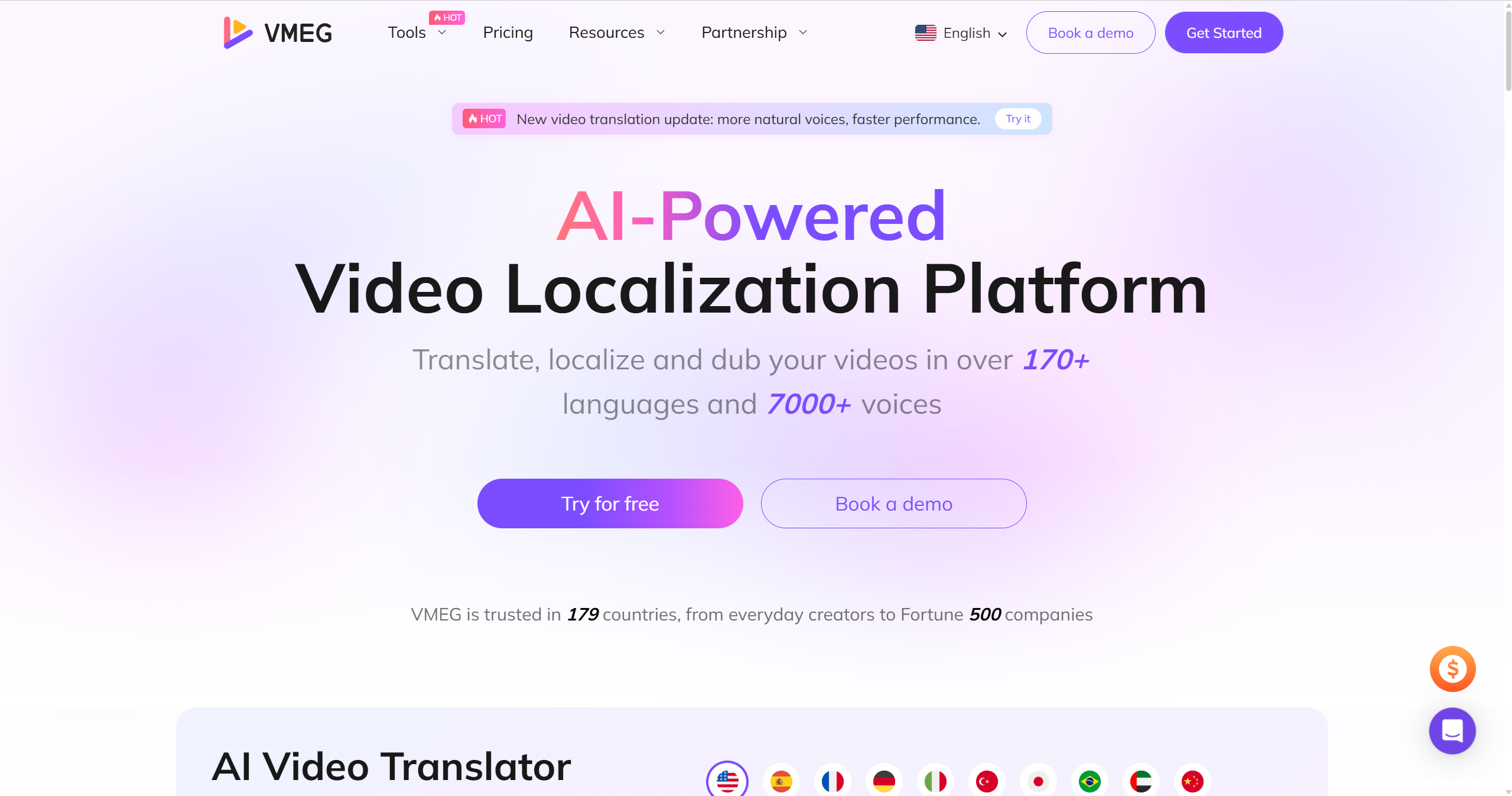
VMEG AI is a localization platform where you can translate your content. It supports more than 170 languages and 7,000 AI lifelike voices. With VMEG AI, you can translate video, audio, MP3, and movies.
VMEG AI’s Professional Translation Process
- Speech is first converted to text.
- Human translators review and refine the translation to ensure its accuracy.
- AI voice cloning creates multilingual dubbing, and editors can fine-tune audio and visuals before export. This is ideal for those who want an original brand voice.
Why VMEG AI Works Well With Translators
VMEG AI works well with human translators, who can edit the AI-generated output to ensure it aligns with the context and the original message you want to convey. This hybrid translation ensures a faster workflow and better output.
Who Benefits Most from AI-Assisted (Not AI-Replaced) Translation?
Marketing & Global Brand Teams
Using an AI-assisted workflow will help marketing and global teams to produce more content in lesser time. This will help them save time and focus on other marketing efforts.
Content Creators & Media Companies
Media companies and content creators also benefit from using AI to translate their content, making it easier to reach a global audience.
Localization & Translation Teams
Localization and translation teams will also benefit from AI-assisted platforms, as they can generate localized content within seconds or minutes. This is also ideal for those who want to create more content in less time.
When AI Should NOT Be Used Alone
AI is helpful, but it should not be used alone in some areas, especially those that require highly accurate content, as it may miss important details.
Legal, Medical, and Compliance Content
Legal and compliance content must be accurate to avoid misunderstandings and must be reviewed and verified by a professional to ensure accuracy.
Brand-Critical or Emotion-Heavy Videos
Branding is important to help your audience recognize you or your business, and AI might miss your brand style or tone. Emotions also play an important role in content, especially in emotion-heavy videos, and human review is essential to ensure the original emotions are captured.
High-Stakes Public Communications
Content used in high-stakes public communications must be checked, as it will affect how the audience perceives it. It is important to have highly accurate content, as it also helps in building trust and authority.
How to Use AI Translation Without Replacing Human Translators
Best Practices for Hybrid Localization
- Always include human review. It is important to include human review before exporting the content and publishing it to your platform. Content is king, and how it is presented can affect viewers' trust and engagement.
- Use AI for drafts, humans for decisions. The AI-generated output can be used for drafts, but a human must review and verify it to ensure it is correct and aligned with your brand and the original message you want to convey.
- Quality Assurance across audio, subtitles, and visuals. Always ensure the quality of the content and its elements, such as audio, subtitles, and visuals, so everything fits seamlessly and is engaging for the audience.
Choosing the Right Tool
When choosing the right AI tool, consider:
- Accuracy Level
- Supports hybrid translation, such as VMEG AI.
- Supports multiple formats and platforms.
- Ideal for different purposes.
- Ease of use
- Number of languages supported
- Features
The Future of Translators in the Age of AI
According to the U.S. Bureau of Labor Statistics (2025), there is a projected growth rate of about 2% from 2024 to 2034 in the interpreters and translators employment, which is below the average growth rate for other professions.
In the age of AI, this field may be affected in various ways, depending on factors such as how people perceive its impact and the strategies used to streamline workflows.
How Translator Roles Are Evolving
We can’t deny that AI affects our activities and careers. Others may view it as a career stealer, thinking that AI might replace them, but if you look at it positively, AI tools offer many advantages.
It can make the workflow easier and transform your role. As a translator, you can be a localization strategist or work in other roles.
One core skill you must have is AI literacy, which ensures you have the necessary knowledge and skills to do the job.
Why Human Expertise Becomes More Valuable, Not Less
Human expertise is valuable because:
- They have a unique creative spark that brings the content to life and makes it more engaging.
- They know how to align the content to the audience’s culture.
- They can make decisions in refining the content.
FAQs
Can AI be used for language translation?
Yes, AI can be used for language translation, but the output must be checked for accuracy.
Why can't AI replace translators?
AI can’t replace translators, as there is human expertise that can’t be easily replaced, such as knowledge and skill in creativity, judgement, ethics, accuracy, culture, and context.
Is there a future for translators?
Yes, there is a future for translators, even with AI, which can transform their work and open up new opportunities.
Are translators losing their jobs to AI?
Losing jobs to AI depends on mindset, specialization, and how someone chooses to adapt. The profession in translation is not vanishing; it is evolving. It’s about creating a strategy on how to use AI tools in your profession.
Is it worth becoming a translator?
Yes, it is worth becoming a translator, but before you enter this field, you must know how you will use AI to your advantage, so that you’ll get the necessary knowledge and skills, so it will not easily replace you.
Conclusion
Being a translator is a good career, as translators are needed in different industries and by individuals with international audiences. With the rise of AI and other advanced technologies, some might ask, “Can AI Replace Translators?” The answer to this question depends on how you view its impact. It can transform the profession, and roles may shift, but the most important thing is knowing how to use it to your advantage.
If you are considering a career as a translator, you can explore localization. With localization, you can localize various content, such as social media posts, short movies, and more. The best tool for localization is VMEG AI, as you can use it immediately, it is easy to use, and you can start your translation career easily.


The VMEG Team
Behind VMEG stands a passionate team of creatives, engineers, and language lovers. At the crossroads of AI and storytelling, they craft tools that bridge languages and cultures.