




'%3e%3cpath%20d='M21.0949%203.79395L13.9961%209.82854H21.0949V3.79395Z'%20stroke='black'%20stroke-width='1.38'%20stroke-miterlimit='10'/%3e%3cpath%20d='M13.998%209.82854L7.44531%203.79395V9.82854H13.998Z'%20stroke='black'%20stroke-width='1.38'%20stroke-miterlimit='10'/%3e%3cpath%20d='M13.9961%202.69922V25.1919'%20stroke='black'%20stroke-width='1.38'%20stroke-miterlimit='10'/%3e%3cpath%20d='M20.5488%2016.4113L13.9961%209.82812V18.2217L20.5488%2024.0918V16.4113Z'%20stroke='black'%20stroke-width='1.38'%20stroke-miterlimit='10'/%3e%3cpath%20d='M7.44531%2016.4113L13.998%209.82812V18.0526L7.44531%2024.0918V16.4113Z'%20stroke='black'%20stroke-width='1.38'%20stroke-miterlimit='10'/%3e%3cpath%20d='M4.71094%209.82812V18.6057H7.44125V16.4113L13.9941%209.82812H4.71094Z'%20stroke='black'%20stroke-width='1.38'%20stroke-miterlimit='10'/%3e%3cpath%20d='M13.9961%209.82812L20.5488%2016.4113V18.6057H23.2792V9.82812H13.9961Z'%20stroke='black'%20stroke-width='1.38'%20stroke-miterlimit='10'/%3e%3c/g%3e%3c/svg%3e)

'%3e%3cmask%20id='mask0_21456_29260'%20style='mask-type:luminance'%20maskUnits='userSpaceOnUse'%20x='0'%20y='0'%20width='28'%20height='28'%3e%3cpath%20d='M27.5%200.5H0.5V27.5H27.5V0.5Z'%20fill='white'/%3e%3c/mask%3e%3cg%20mask='url(%23mask0_21456_29260)'%3e%3cpath%20d='M14%2027.5C13.4854%2024.1035%2011.8974%2020.9608%209.46828%2018.5317C7.03922%2016.1026%203.89651%2014.5146%200.5%2014C3.89651%2013.4854%207.03922%2011.8974%209.46828%209.46828C11.8974%207.03922%2013.4854%203.89651%2014%200.5C14.5147%203.89644%2016.1028%207.03905%2018.5318%209.46816C20.9609%2011.8972%2024.1035%2013.4853%2027.5%2014C24.1035%2014.5147%2020.9609%2016.1028%2018.5318%2018.5318C16.1028%2020.9609%2014.5147%2024.1035%2014%2027.5Z'%20fill='url(%23paint0_linear_21456_29260)'/%3e%3c/g%3e%3c/g%3e%3cdefs%3e%3clinearGradient%20id='paint0_linear_21456_29260'%20x1='9.5'%20y1='9.5'%20x2='20.75'%20y2='21.875'%20gradientUnits='userSpaceOnUse'%3e%3cstop%20stop-color='%23F0DCD6'/%3e%3cstop%20offset='0.914506'%20stop-color='%231D6DFF'/%3e%3c/linearGradient%3e%3cclipPath%20id='clip0_21456_29260'%3e%3crect%20width='28'%20height='28'%20fill='white'/%3e%3c/clipPath%3e%3c/defs%3e%3c/svg%3e)
'%3e%3cpath%20d='M22.8019%2011.2412L23.5234%2011.6807V12.0103L23.3172%2012.7796L14.5579%2014.9771L13.7344%2012.7951L22.8019%2011.2412Z'%20fill='%23D97757'/%3e%3cpath%20d='M19.5236%204.77832L20.5322%205.00396L20.8%205.35575L21.0552%206.19876L20.9494%206.73644L15.0712%2015.3068L13.1133%2013.2191L18.5338%205.63471L19.5236%204.77832Z'%20fill='%23D97757'/%3e%3cpath%20d='M14.4577%203.43951L15.0761%203L15.5912%203.21976L16.1065%203.9889L14.6949%2013.0345L13.7364%2012.3397L13.3242%2011.131L14.0456%204.31853L14.4577%203.43951Z'%20fill='%23D97757'/%3e%3cpath%20d='M7.84766%203.5851L8.48285%202.7199L8.89716%202.61914L9.71923%202.74717L10.125%203.08581L13.0815%2010.0748L14.1509%2013.3954L12.8997%2014.1372L8.13117%204.91019L7.84766%203.5851Z'%20fill='%23D97757'/%3e%3cpath%20d='M4.77232%208.38688L4.56641%207.50742L5.18478%206.73828L5.90613%206.84816H6.11223L10.4403%2010.2544L11.78%2011.3531L13.6349%2012.8914L12.6044%2014.7594L11.6769%2013.9903L11.0586%2013.331L5.08168%208.82593L4.77232%208.38688Z'%20fill='%23D97757'/%3e%3cpath%20d='M3.53288%2014.0982L3.06641%2013.5489L3.06647%2013.0601L3.53288%2012.8896L8.78833%2013.2193L13.9408%2013.6588L13.7736%2014.7528L3.94502%2014.2082L3.53288%2014.0982Z'%20fill='%23D97757'/%3e%3cpath%20d='M6.62378%2019.8178H5.59334L5.18359%2019.3146V18.7132L6.93299%2017.3946L14.045%2012.5674L14.7648%2013.8785L6.62378%2019.8178Z'%20fill='%23D97757'/%3e%3cpath%20d='M8.57739%2022.8884L8.16518%2022.9984L7.54688%2022.6687L7.64995%2022.1193L13.7299%2013.5488L14.5543%2014.7574L10.0201%2021.1305L8.57739%2022.8884Z'%20fill='%23D97757'/%3e%3cpath%20d='M13.7361%2023.9861L13.4271%2024.4257L12.8088%2024.6454L12.2935%2024.2058L11.9844%2023.5466L13.5301%2014.6465L14.4576%2014.7563L13.7361%2023.9861Z'%20fill='%23D97757'/%3e%3cpath%20d='M18.9869%2021.5713V22.4503L18.8838%2022.7799L18.4716%2022.9997L17.7503%2022.8974L12.7969%2015.0367L14.7617%2013.4404L16.4104%2016.6269L16.5652%2017.7805L18.9869%2021.5713Z'%20fill='%23D97757'/%3e%3cpath%20d='M21.3629%2020.2507L21.4659%2020.8L21.1568%2021.2396L20.8476%2021.1297L19.0958%2019.8112L16.4165%2017.284L14.3555%2015.7457L14.9736%2013.6582L16.0041%2014.3175L16.6226%2015.5259L21.3629%2020.2507Z'%20fill='%23D97757'/%3e%3cpath%20d='M20.0232%2014.6482L22.5995%2014.8679L23.2178%2015.3074L23.6299%2015.9667V16.441L22.4964%2016.9556L16.7256%2015.4173L14.3555%2015.3074L14.9737%2013L16.6226%2014.3185L20.0232%2014.6482Z'%20fill='%23D97757'/%3e%3c/g%3e%3c/svg%3e)
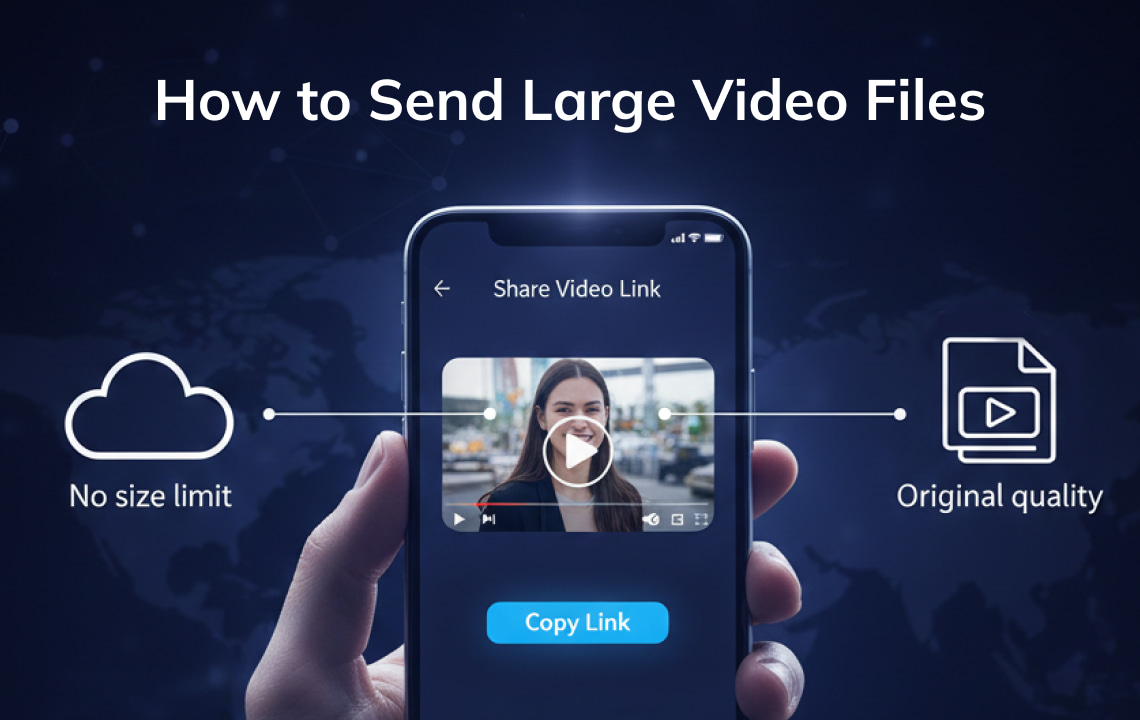
Video has emerged as the foundation of communication in the world. Be it marketing campaigns and online education or social media and corporate training, huge video files are being shared over teams, platforms, and borders on a daily basis. Nevertheless, it is not yet an easy task to share large video files, and video localization is one of them. So, how to share large video files?
Video localization can also involve the transmission of large files in high quality to translators, editors, the voice artists as well as the international stakeholders. The old systems of file sharing have problems of size restriction, slow uploading and security issues. You will get to know how to share big video files in this guide, why this is important in video localization, and the current tools make the whole process simpler.
Why Sharing Large Video Files Is a Localization Challenge
Video localization requires original and high quality files. Over compression of videos may impair their clarity, subtitles, and may also cause synchronization problems during translation or dubbing.
Big files are a rule as professional videos are provided in HD or 4K format. These files usually surpass the email or messaging apps limits and thus the usual sharing means are not reliable.
When the work is done in different countries, and different time zones, the failure to upload or access files can delay the process of localization considerably.
Learning File Size and Video Quality Trade-Offs
The size of the file depends on the resolution, frame rate and bit rate. Smaller files are less difficult to transmit, but can affect the quality of visual or audio.
Quality is paramount in the localization of video. Translators require good sound to translate accurately, editors require good graphics to match the subtitles or voiceovers appropriately.
It is not important to decrease quality without any reason but employ sharing techniques that are aimed at managing large files without losing their quality.
Common Mistakes When Sharing Large Video Files
Numerous users use email attachments or messaging applications, and then realize that they are too big or experience failures during transfers. Some of them squeeze files to death thus resulting in useless footage.
The other popular error is the use of insecure platforms that jeopardize the privacy of data. Localized content can be proprietary content, promotion of the company, or unpublished media.
Selecting the inappropriate sharing technique may lead to duplication of uploads, misunderstanding, and wastage.
Cloud Storage vs In-person Video Sharing
Large video files are shared using cloud storage platforms. They enable the large size uploads and access control.
But in the case of cloud storage, sometimes it is necessary to download the whole file, which could be slow among those collaborators in areas with low bandwidth. When there are several edits, version control may also get confusing.
Direct video sharing solutions aim at creation of easily accessible video links, in which the collaborators can watch or download files without the complicated permissions and frequent uploads.
The Way the Video Link Sharing Can Enhance the Localization Workflows
Multi-media collaboration is easily achieved by exchanging videos using secure links. Rather than transmitting huge files many times, a single link allows one to access a controlled version of the latest file.
This can be used particularly in the case of video localization teams. The same file can be accessed immediately by translators, subtitle editors and voiceover specialists.
Link sharing ensures less time is wasted, version mismatch is avoided and localization projects are kept in order.
The Video Link Generator of Role of VMEG AI
The Video Link Generator of VMEG AI is created to help simplify and streamline the process of distribution of big video files. It enables users to create shareable links to high quality videos that are secure.
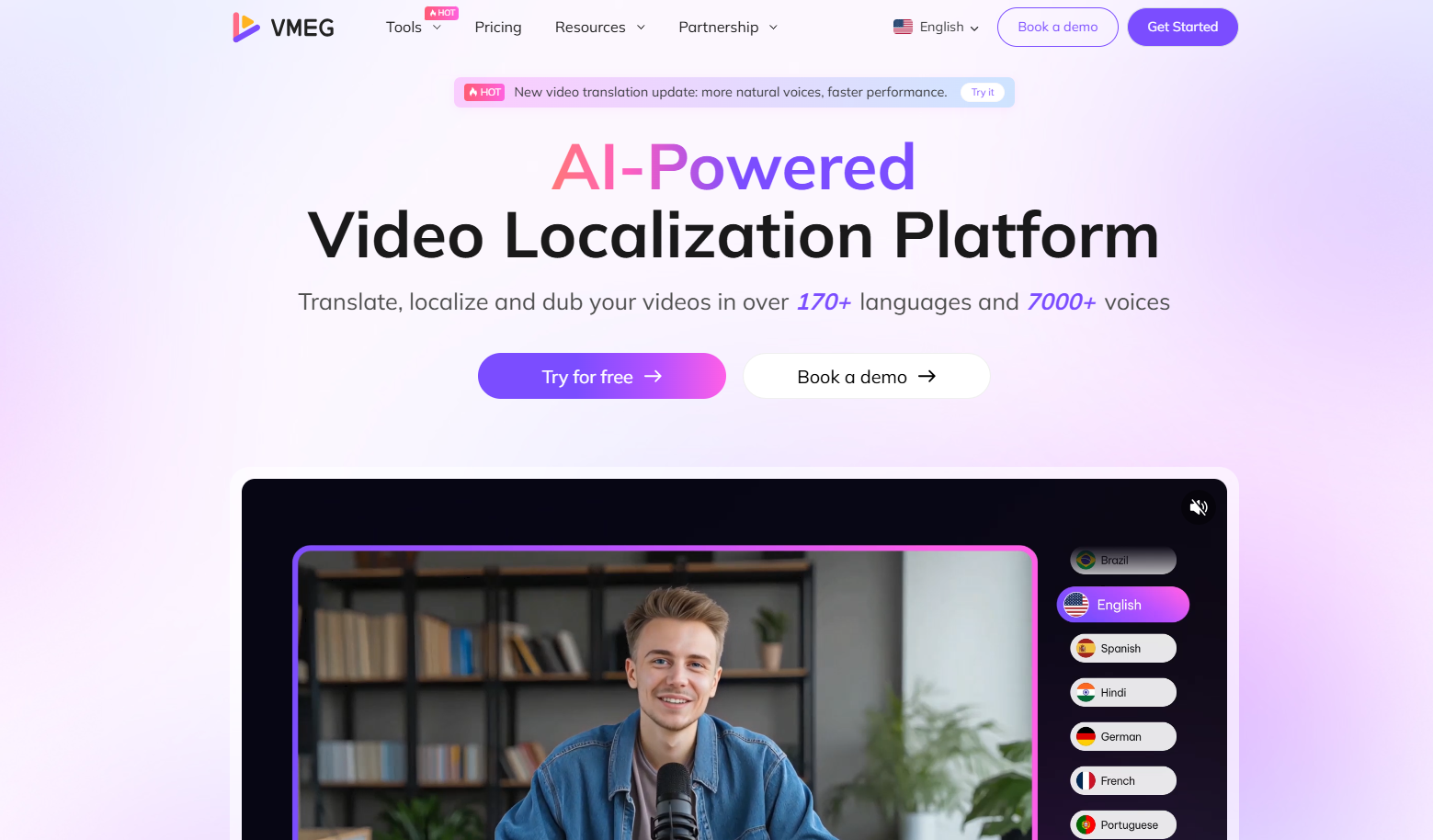
This characteristic comes in handy especially in video localization processes where a number of collaborators require access without having to download huge files on many occasions.
Teams also save time and ensure quality and security of videos when they use video links, as opposed to file transfers, during the entire localization process.
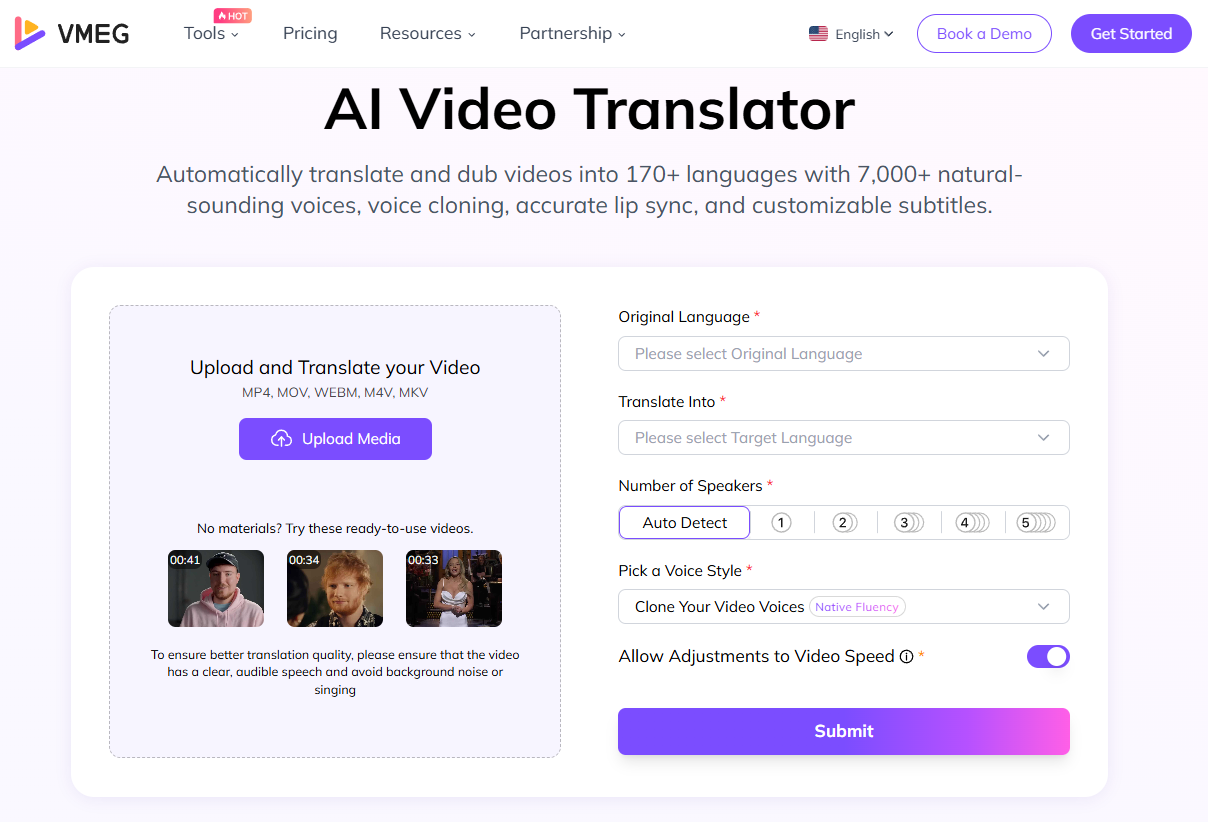
Step 1: Upload and Define Your Content
Navigate to the Video Translator dashboard. VMEG AI offers two flexible ways to start:
- Local Upload: Drag and drop your MP4, MOV, or AVI files directly from your computer.
- URL Integration: Paste a link from YouTube, Google Drive, or social media to import the video instantly.
Once uploaded, fill in the basic information about your video. This includes selecting your target language and the "tone" of the translation (e.g., professional, casual, or storytelling). This ensures the AI understands the context before it generates the final shareable asset.
Step 2: Process and Share
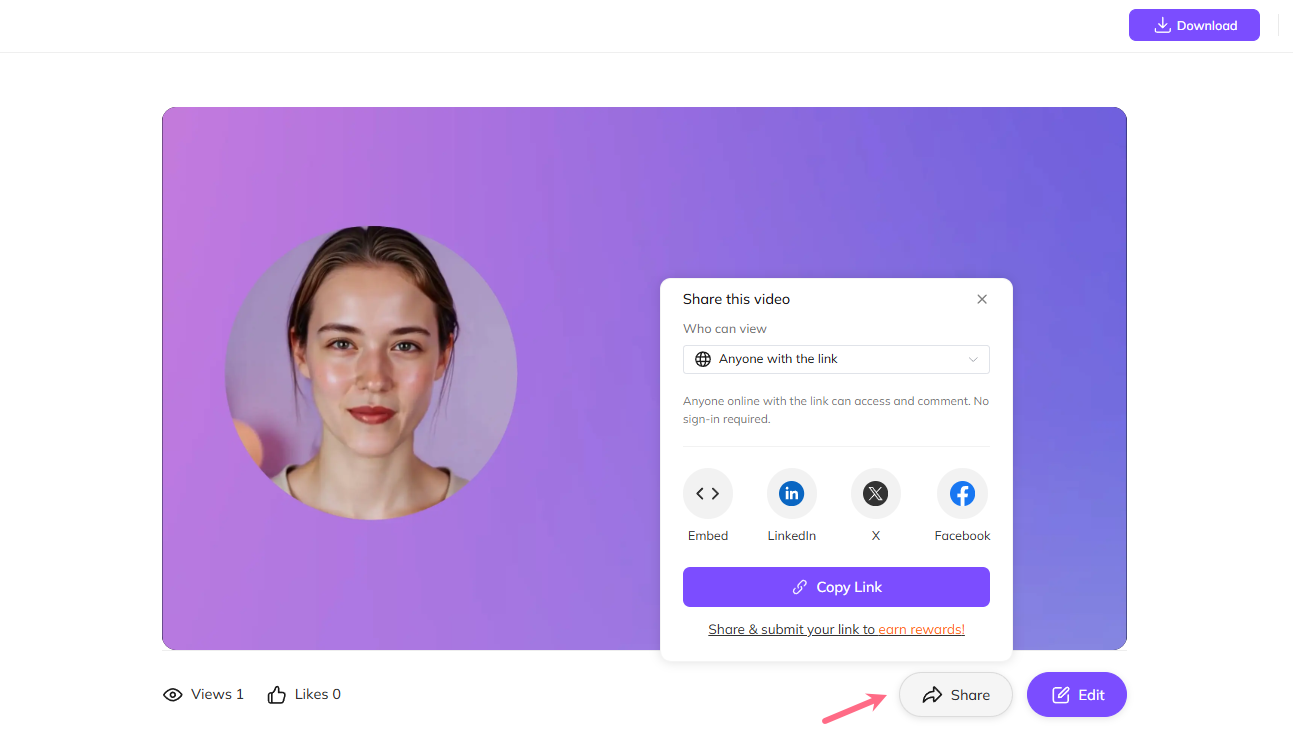
After you click "Generate," the AI goes to work, transcribing and translating your content. Once the task is complete:
- Review the Result: You can watch the translated video directly in the browser to ensure the dubbing or subtitles are perfect.
- One-Click Sharing: Look for the "Share" button on the top right of the video task. Clicking this instantly generates a hosted link that you can send to clients, team members, or social media followers.
Posting Big Videos to Translating and Subtitling
Subtitling and translation must have accurate audio and visual timing. Big video files have to be shared in original quality in order to get the accuracy.
With the help of trustworthy links, when files are shared, the translators will be able to stream or download with the necessary content without sacrificing the quality. This enhances the accuracy of transcription and synchronization of subtitles.
One can also do revisions more quickly through efficient sharing because, instead of having to restart the process, updated versions can be shared immediately.
Business and Marketing Videos: Secure Sharing
Corporate videos are usually full of sensitive information. The sharing must be secure in case of sending files to be localized.
The sharing based on links enables authors to regulate access and withdraw it where required. This is more secure than transmission of files via unsecured channels.
In the case of global campaigns, secure video sharing helps keep the content safe and at the same time localize the content to suit the different markets.
Content Creator and Social Media Use Cases
Both editors, translators, and brands often work with content creators. All the content schedules are maintained by sharing large video files fast.
The social media seem to demand varying versions of the same video depending on their localities. These variations are easier to deal with through efficient sharing.
With the contemporary video-sharing practices, creators are able to concentrate on creativity rather than technology challenges.
Best Practices of Sharing Large Video Files
Always provide original or good master files to make localizations. Do not compress unless it is necessary to do so.
Categorize files as well through the use of uniform file names to avoid inter team confusion. It is particularly significant with multilingual projects.
Make use of the tools that facilitate quick accessibility, safe sharing, and simplified updates. This makes the partnership in the localization lifecycle easier.
Comparison Table: The Top 6 At a Glance
| Tool | Best For | Standout Feature | Link Type | Password Option |
| Vimeo | High-end Portfolios | Ad-free, brandable player | Preview Page | Yes |
| Dropbox Transfer | Large File Delivery | 100GB single-link capacity | Download/Preview | Yes |
| Zight (CloudApp) | Quick Team Feedback | Instant "Record & Share" | Preview Page | Yes |
| WeTransfer | One-Off Sharing | 7-day "self-destruct" links | Download Link | Yes (Pro) |
| Kapwing | Quick Edits & Subtitles | Browser-based video editor | Preview/Direct | No |
| Streamable | Fast Social Embedding | Fastest direct link generation | Direct/Preview | No |
Conclusion
Video localization requires one to know how to share and share large video files. Ineffective sharing practices may cause project delays, quality loss and frustrations.
Through the selection of effective, safe sharing solutions, creators and businesses may reduce the localization processes and enhance the globality. The process can be simplified using such tools as a Video Link Generator of VMEG AI which allows obtaining high-quality videos without any technical issues. Hope so, now you know how to share large video files.
With video taking over the world of communication, sharing of large files is no longer a luxury. It is a step-wise move towards providing localized content that has an international appeal.
FAQs
1. How can large video files be shared to be localized?
Secure video link sharing is the most suitable method as it enables collaborators to view high-quality files without limitations of size and repetition of uploaded files.
2. Is it better to compress videos and share them to be translated?
No, it is preferable to provide quality files to make sure that it will be correctly transcribed, sub-titled and the voice will be synchronized in localization.
3. Is it possible to securely share big video files with international teams?
Yes, video-sharing tools used nowadays can be secured with controlled access which means that it is safe to share and transfer large files with international partners.


Fay
Behind VMEG stands a passionate team of creatives, engineers, and language lovers. At the crossroads of AI and storytelling, they craft tools that bridge languages and cultures.