


'%3e%3cpath%20d='M21.0949%203.79395L13.9961%209.82854H21.0949V3.79395Z'%20stroke='black'%20stroke-width='1.38'%20stroke-miterlimit='10'/%3e%3cpath%20d='M13.998%209.82854L7.44531%203.79395V9.82854H13.998Z'%20stroke='black'%20stroke-width='1.38'%20stroke-miterlimit='10'/%3e%3cpath%20d='M13.9961%202.69922V25.1919'%20stroke='black'%20stroke-width='1.38'%20stroke-miterlimit='10'/%3e%3cpath%20d='M20.5488%2016.4113L13.9961%209.82812V18.2217L20.5488%2024.0918V16.4113Z'%20stroke='black'%20stroke-width='1.38'%20stroke-miterlimit='10'/%3e%3cpath%20d='M7.44531%2016.4113L13.998%209.82812V18.0526L7.44531%2024.0918V16.4113Z'%20stroke='black'%20stroke-width='1.38'%20stroke-miterlimit='10'/%3e%3cpath%20d='M4.71094%209.82812V18.6057H7.44125V16.4113L13.9941%209.82812H4.71094Z'%20stroke='black'%20stroke-width='1.38'%20stroke-miterlimit='10'/%3e%3cpath%20d='M13.9961%209.82812L20.5488%2016.4113V18.6057H23.2792V9.82812H13.9961Z'%20stroke='black'%20stroke-width='1.38'%20stroke-miterlimit='10'/%3e%3c/g%3e%3c/svg%3e)

'%3e%3cmask%20id='mask0_21456_29260'%20style='mask-type:luminance'%20maskUnits='userSpaceOnUse'%20x='0'%20y='0'%20width='28'%20height='28'%3e%3cpath%20d='M27.5%200.5H0.5V27.5H27.5V0.5Z'%20fill='white'/%3e%3c/mask%3e%3cg%20mask='url(%23mask0_21456_29260)'%3e%3cpath%20d='M14%2027.5C13.4854%2024.1035%2011.8974%2020.9608%209.46828%2018.5317C7.03922%2016.1026%203.89651%2014.5146%200.5%2014C3.89651%2013.4854%207.03922%2011.8974%209.46828%209.46828C11.8974%207.03922%2013.4854%203.89651%2014%200.5C14.5147%203.89644%2016.1028%207.03905%2018.5318%209.46816C20.9609%2011.8972%2024.1035%2013.4853%2027.5%2014C24.1035%2014.5147%2020.9609%2016.1028%2018.5318%2018.5318C16.1028%2020.9609%2014.5147%2024.1035%2014%2027.5Z'%20fill='url(%23paint0_linear_21456_29260)'/%3e%3c/g%3e%3c/g%3e%3cdefs%3e%3clinearGradient%20id='paint0_linear_21456_29260'%20x1='9.5'%20y1='9.5'%20x2='20.75'%20y2='21.875'%20gradientUnits='userSpaceOnUse'%3e%3cstop%20stop-color='%23F0DCD6'/%3e%3cstop%20offset='0.914506'%20stop-color='%231D6DFF'/%3e%3c/linearGradient%3e%3cclipPath%20id='clip0_21456_29260'%3e%3crect%20width='28'%20height='28'%20fill='white'/%3e%3c/clipPath%3e%3c/defs%3e%3c/svg%3e)
'%3e%3cpath%20d='M22.8019%2011.2412L23.5234%2011.6807V12.0103L23.3172%2012.7796L14.5579%2014.9771L13.7344%2012.7951L22.8019%2011.2412Z'%20fill='%23D97757'/%3e%3cpath%20d='M19.5236%204.77832L20.5322%205.00396L20.8%205.35575L21.0552%206.19876L20.9494%206.73644L15.0712%2015.3068L13.1133%2013.2191L18.5338%205.63471L19.5236%204.77832Z'%20fill='%23D97757'/%3e%3cpath%20d='M14.4577%203.43951L15.0761%203L15.5912%203.21976L16.1065%203.9889L14.6949%2013.0345L13.7364%2012.3397L13.3242%2011.131L14.0456%204.31853L14.4577%203.43951Z'%20fill='%23D97757'/%3e%3cpath%20d='M7.84766%203.5851L8.48285%202.7199L8.89716%202.61914L9.71923%202.74717L10.125%203.08581L13.0815%2010.0748L14.1509%2013.3954L12.8997%2014.1372L8.13117%204.91019L7.84766%203.5851Z'%20fill='%23D97757'/%3e%3cpath%20d='M4.77232%208.38688L4.56641%207.50742L5.18478%206.73828L5.90613%206.84816H6.11223L10.4403%2010.2544L11.78%2011.3531L13.6349%2012.8914L12.6044%2014.7594L11.6769%2013.9903L11.0586%2013.331L5.08168%208.82593L4.77232%208.38688Z'%20fill='%23D97757'/%3e%3cpath%20d='M3.53288%2014.0982L3.06641%2013.5489L3.06647%2013.0601L3.53288%2012.8896L8.78833%2013.2193L13.9408%2013.6588L13.7736%2014.7528L3.94502%2014.2082L3.53288%2014.0982Z'%20fill='%23D97757'/%3e%3cpath%20d='M6.62378%2019.8178H5.59334L5.18359%2019.3146V18.7132L6.93299%2017.3946L14.045%2012.5674L14.7648%2013.8785L6.62378%2019.8178Z'%20fill='%23D97757'/%3e%3cpath%20d='M8.57739%2022.8884L8.16518%2022.9984L7.54688%2022.6687L7.64995%2022.1193L13.7299%2013.5488L14.5543%2014.7574L10.0201%2021.1305L8.57739%2022.8884Z'%20fill='%23D97757'/%3e%3cpath%20d='M13.7361%2023.9861L13.4271%2024.4257L12.8088%2024.6454L12.2935%2024.2058L11.9844%2023.5466L13.5301%2014.6465L14.4576%2014.7563L13.7361%2023.9861Z'%20fill='%23D97757'/%3e%3cpath%20d='M18.9869%2021.5713V22.4503L18.8838%2022.7799L18.4716%2022.9997L17.7503%2022.8974L12.7969%2015.0367L14.7617%2013.4404L16.4104%2016.6269L16.5652%2017.7805L18.9869%2021.5713Z'%20fill='%23D97757'/%3e%3cpath%20d='M21.3629%2020.2507L21.4659%2020.8L21.1568%2021.2396L20.8476%2021.1297L19.0958%2019.8112L16.4165%2017.284L14.3555%2015.7457L14.9736%2013.6582L16.0041%2014.3175L16.6226%2015.5259L21.3629%2020.2507Z'%20fill='%23D97757'/%3e%3cpath%20d='M20.0232%2014.6482L22.5995%2014.8679L23.2178%2015.3074L23.6299%2015.9667V16.441L22.4964%2016.9556L16.7256%2015.4173L14.3555%2015.3074L14.9737%2013L16.6226%2014.3185L20.0232%2014.6482Z'%20fill='%23D97757'/%3e%3c/g%3e%3c/svg%3e)
Key Takeaways:
|
YouTube is currently among the biggest platforms of video content on the planet because it brings creators and viewers together regardless of the language or location. Subtitles and automatic translation have significantly contributed to making videos global. Nevertheless, numerous creators and viewers have to face the cases when YouTube translation is switched off, restricted, or erroneous.
The language barrier returns when translation on YouTube is switched off, whether by default or as the creator opts to turn it off. This affects reach, watch time, and interaction particularly to international viewers. This listicle examines what it means by YouTube disable translation, why it occurs, how it impacts the growth of social media, and the ways the creators can circumvent such constraints with professional video localization offerings.
What Does YouTube Disable Translation Really Mean?
YouTube disable translation is where automatic subtitles or translation captions have not been created in a video. It may occur when the creator switches off community contributions, does not add captions, or the system of YouTube fails to recognize spoken words.
There are also situations when the translation is offered, but it is incorrect or delayed. In other ones, the translation option is never even visible to viewers. This is frustrating to international audiences and impacts their accessibility.
Knowing the reasons behind translation disabling makes creators have more control over what they make and strategize on localization rather than letting platforms do everything on their own.
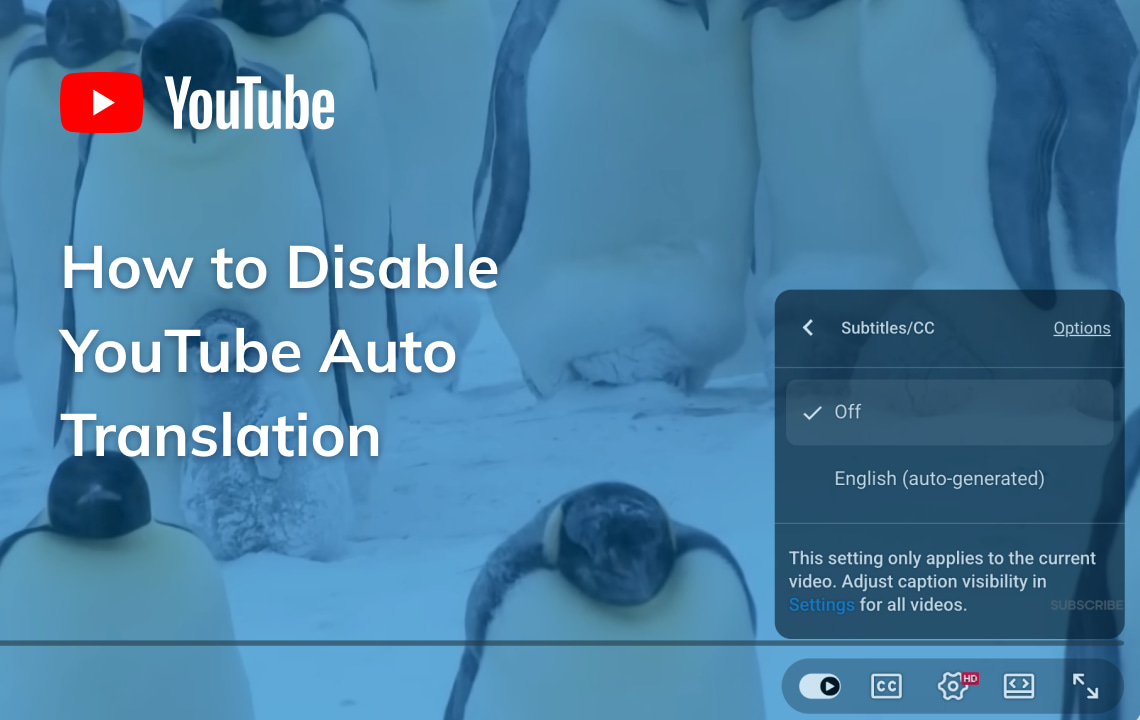
How to Disable YouTube Auto Translation
Captions on many videos are automatically translated by YouTube, but there are occasions that content creators or viewers might wish to turn off this option and maintain the original language or guarantee its accuracy. It is easy to learn how to disable auto translation with YouTube as long as you are aware of the procedure. Here’s a complete guide.
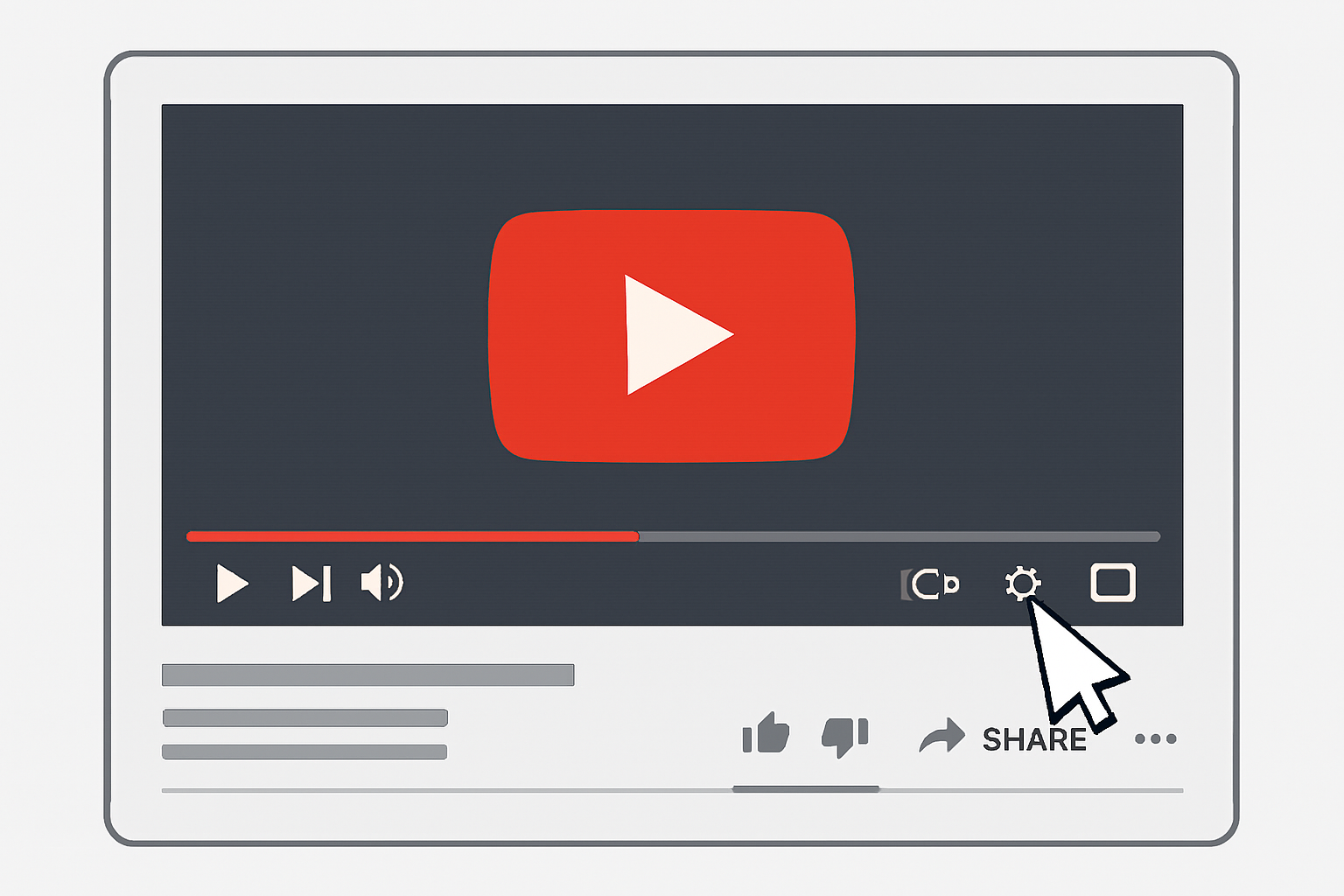
Step 1: Change Video Settings
You should start with the video you want to turn off auto translation on YouTube. On the right bottom of the video player, there is a gear icon (Settings). This will bring the video settings menu in which you may adjust subtitles, the speed at which you want to play the video and other video settings.
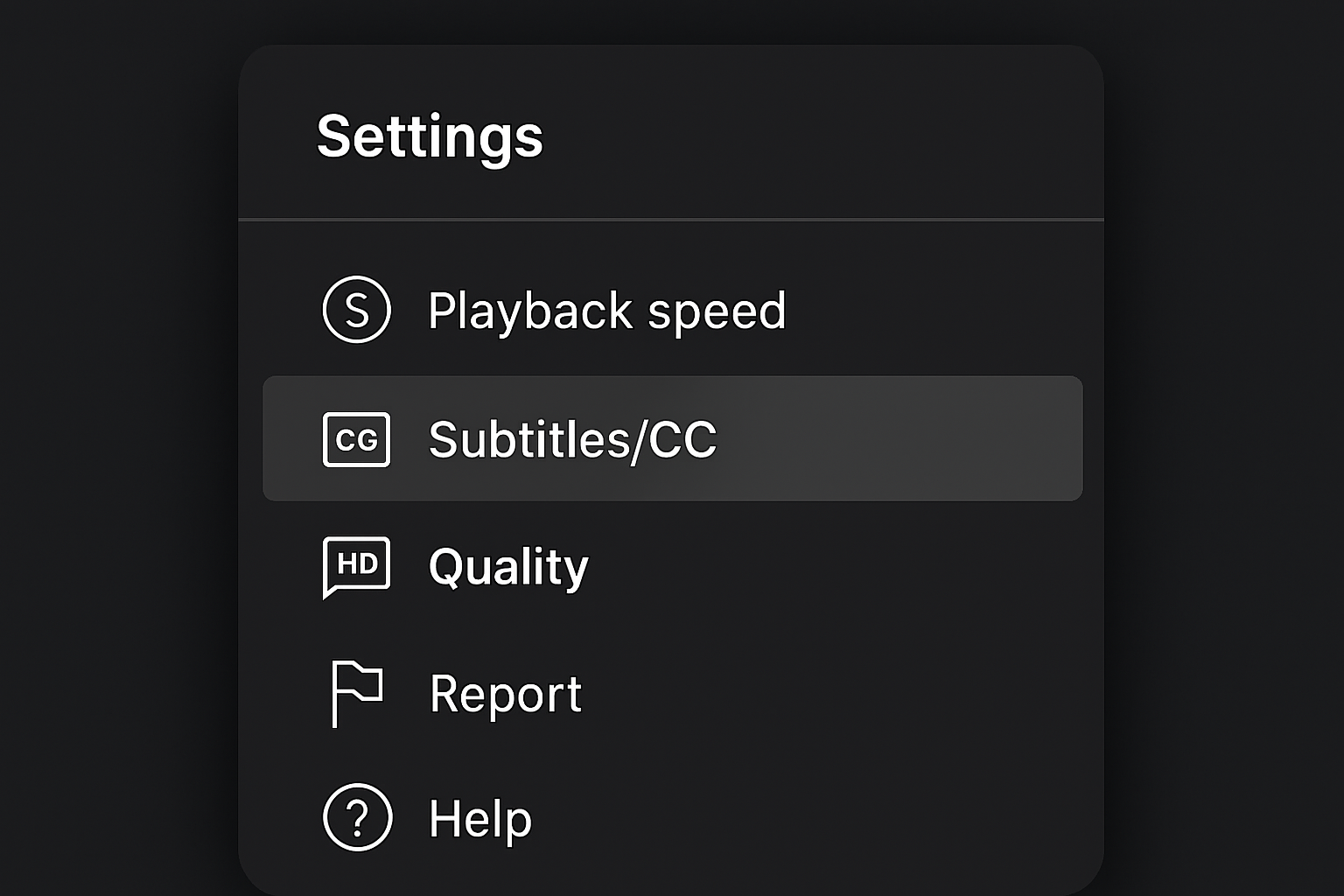
Step 2: Select Subtitles/CC Options
Go to the settings menu and this time, you will see Subtitles/CC. All potential subtitle choices of the video are enumerated in this section. The original captions (where available) and any automatic translation that YouTube provides will be found here.
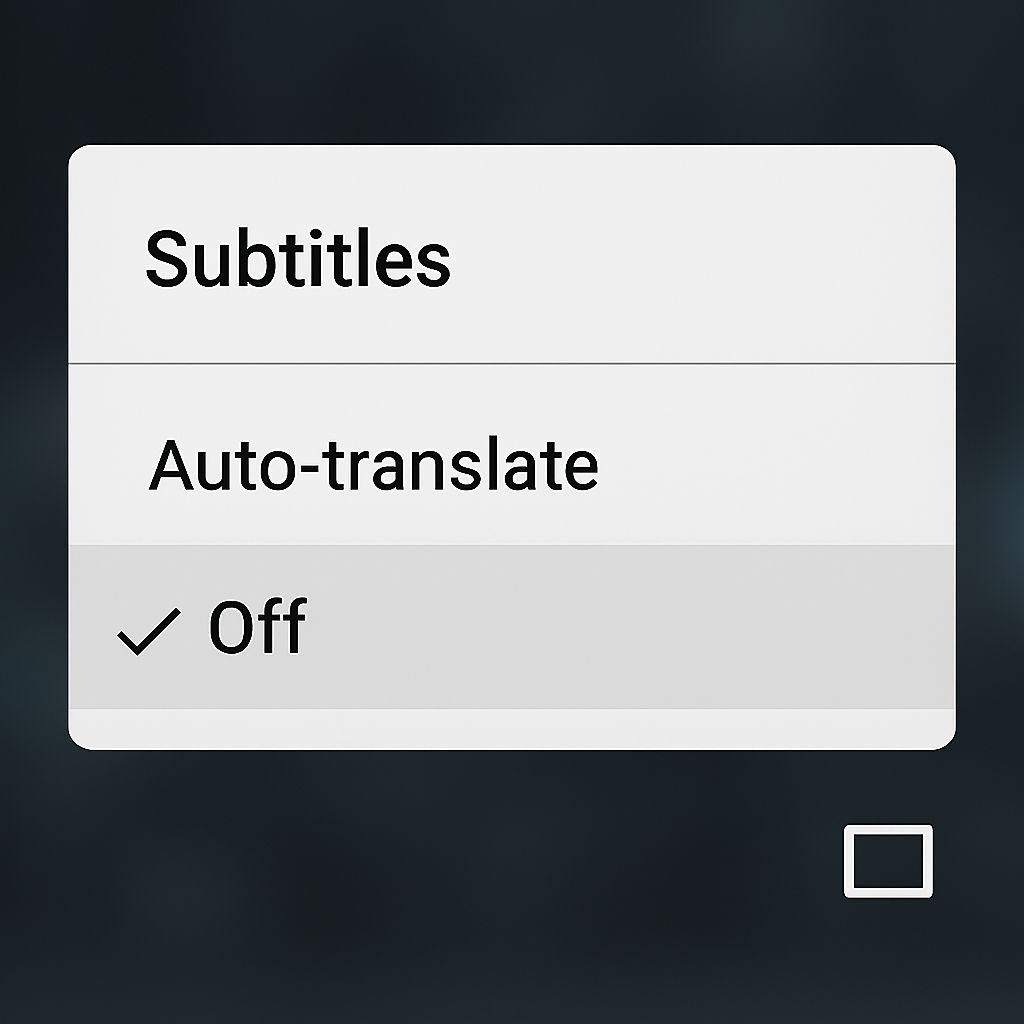
Step 3: Disable Auto-Translation
When auto-translation is activated, then a language will be displayed under the Auto-translate option. Click on the video and then scroll to the end and then turn it off or you can go back to the original language used in the video. This will turn off the auto-translation feature such that the subtitles will only be in the original language.
Step 4: Check the Captions
After you have switched off auto-translation, be sure to have the video played and then be sure that only original captions appear. This must be done to make sure that the viewers do not interpret the wrong text, and in the typical cases, mistranslation problems that can be caused by automatic captions do not occur.
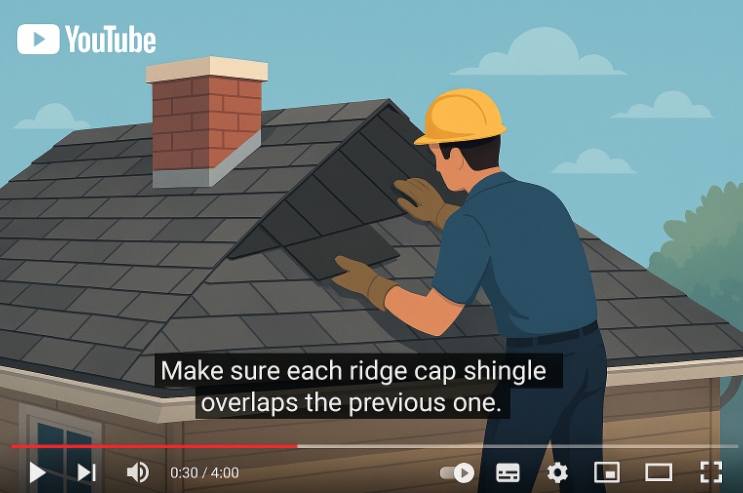
Step 5: Audience Communication Settings (Optional)
To creators that distribute their work abroad, it is a nice idea to tell the audience that auto-translation is turned off, especially when the source is in a certain language. To provide a note on the description or a pinned comment to show the watchers that they might desire the original language subtitles.
Step 6: Take into Account Professional Localization
When you are posting videos on a regular basis to a multilingual audience, it might be necessary to go beyond using YouTube captions. The use of professional and automated translation tools such as VMEG AI help you write correct subtitles, captions, and translations and keep the quality under control so that your audience could get accurate and culturally appropriate translations.
What Causes YouTube Translation to be Disabled or Limited?
Creator choice is one of the reasons. Other creators put disabling subtitles on purpose because of fears of mistranslations or brand message mistakes. There are also others who are not aware that the default settings of captions are disabled.
Technical constraints are also contributory factors. The AI of YouTube cannot produce the correct subtitles because of poor sound quality, background noise, or a mixture of languages. In case of decreased accuracy, translation can be restricted by YouTube.
Also, the automatic translation offered by YouTube does not assist all languages equally. Accent, fast speech, and regional dialects may lead to the loss or inability to use the translations.
The Implication of Disabled Translation and Social Media Development
In an event where translation is disabled, foreign viewers find it hard to comprehend content. The result is decreased watch time, decreased engagement, and shares.
In social media, the problem of access has a direct influence on the performance of the algorithm. Easier to understand videos will outperform in the area of recommendations and discovery features.
Disabled translation is an obstacle to people who want to expand into a different language or area. It restrains the growth of the audience and the possibilities of monetization.
User Experience When YouTube Does Not Have Translation
In the eyes of the viewer, disabled translation is frustrating. Even in the case of very valuable content, language barrier makes it inaccessible.
Videos can be left off by viewers prematurely, lowering retention levels. They can even not subscribe to such channels where they cannot always get to read content.
In a competitive social media platform, creators cannot afford to lose viewers because of accessibility problems that can be prevented.
Why Relying Only on YouTube Auto-Translation Is Risky
The automatic translation provided by YouTube is not always accurate. It tends to have a problem of working with industry-specific words, jargon, or touch.
Captions generated automatically are susceptible to misunderstanding or even a tarnished reputation. This is a particularly high risk among brands and educators.
The accuracy and control of video localization is a feature that professional creators will more and more not trust to the built-in functions of YouTube and instead apply specialized video localization software.
Manual vs. Automated Localization Tools Subtitles
Handwriting subtitles provide control and are slow and hard to scale. A manual captioning is not practical to creators who generate frequent or long-form content.
This has been filled with automated localization tools that combine transcription, translation and generation of subtitles. These are multilingual accuracy and consistency tools that are specifically used.
The translations would be in readable state and culturally acceptable using professional tools, which would not be the case with YouTube automation.
Video Localization is the Solution to YouTube Translation Problems
Video localization is more than video subtitles. It localizes content in language and culture to various audiences.
This involves proper transcription, natural translation, and voice location (optional). In YouTube, where translation is disabled, localized text or audio allows people to have access to the content.
Localization also enables creators to have control over quality, tone, and message, which is vital to brand safety and trustworthiness in the audience.
Using VMEG AI’s YouTube Video Translator as an Alternative
Youtube translation is turned off or untrustworthy, the YouTube Video Translator by VMEG AI is a viable option. It enables the creators to create correct translations without depending on the in-built system of YouTube.
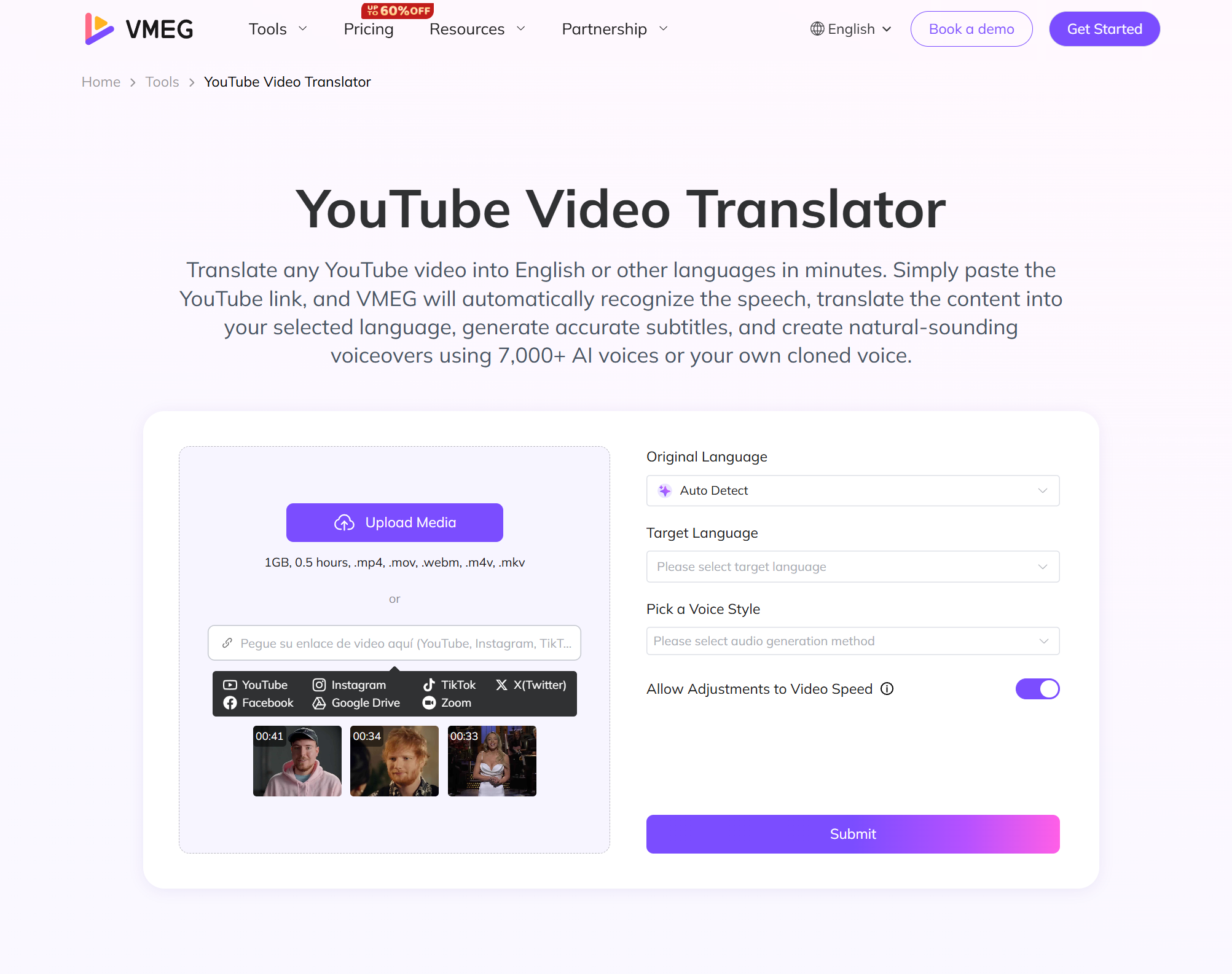
The tool facilitates transcription and translation prepared to work with social media. The creators will be able to post translated subtitles or local versions of their video without any fear.
This will make sure that the accessibility of the languages will not be dependent on the constraints of the platform, and creators will have the right to choose their own approach to localization.
Multilingual YouTube Channels Social Media Strategy
Effective multilingual channels strategize to be localized. They do not have to wait until YouTube does the auto-translation but creates subtitles or localized audio first.
This action plan enhances the first interaction and makes the foreign audiences feel as part of it right away. It also boosts the search engine optimization in YouTube by making it support different languages.
Through translation initiative, creators can reinforce their brand image both within regions and platforms.
The Future of Translation on Social Media Sites
Translation will be imperative as social media sites continue to expand in the world. Nevertheless, solutions based on platforms might still be limited.
Authors who use third party localization systems are able to achieve some degree of flexibility and consistency irrespective of platform differences. This future-proofs content to algorithm or feature upgrades.
Localization with the help of AI will keep improving, providing natural translations and voice recognition, and creating global content will be more efficient.
Conclusion
Video content in social media can be severely restricted and ineffective due to YouTube disable translation. There is an actual effect on the global audiences whether it be due to technical difficulties or due to the limitations of any platform.
Artists that realize these issues can be in control with video localization. With special tools and plans, the contents would be available, interesting and extendable across languages.
The YouTube Video Translator by VMEG AI represents a good substitute to YouTube translation, which fails to deliver in a world that becomes more and more multilingual through the use of technologies. The reason is that, by doing so, creators will preserve their global presence and engagement with their audiences in a digital environment.
FAQs
1. Why does YouTube sometimes disable translation on videos?
Translation may be disabled due to creator settings, poor audio quality, unsupported languages, or limitations in YouTube’s automatic caption system.
2. Can creators control whether YouTube translation is available?
Yes, creators can enable or upload captions manually, but relying solely on YouTube automation may still result in inconsistent translations.
3. What is the best way to ensure global audiences understand my YouTube videos?
Using professional video localization tools to create accurate subtitles or translated versions ensures accessibility regardless of YouTube’s translation settings.


Fay
Behind VMEG stands a passionate team of creatives, engineers, and language lovers. At the crossroads of AI and storytelling, they craft tools that bridge languages and cultures.