

'%3e%3cpath%20d='M21.0949%203.79395L13.9961%209.82854H21.0949V3.79395Z'%20stroke='black'%20stroke-width='1.38'%20stroke-miterlimit='10'/%3e%3cpath%20d='M13.998%209.82854L7.44531%203.79395V9.82854H13.998Z'%20stroke='black'%20stroke-width='1.38'%20stroke-miterlimit='10'/%3e%3cpath%20d='M13.9961%202.69922V25.1919'%20stroke='black'%20stroke-width='1.38'%20stroke-miterlimit='10'/%3e%3cpath%20d='M20.5488%2016.4113L13.9961%209.82812V18.2217L20.5488%2024.0918V16.4113Z'%20stroke='black'%20stroke-width='1.38'%20stroke-miterlimit='10'/%3e%3cpath%20d='M7.44531%2016.4113L13.998%209.82812V18.0526L7.44531%2024.0918V16.4113Z'%20stroke='black'%20stroke-width='1.38'%20stroke-miterlimit='10'/%3e%3cpath%20d='M4.71094%209.82812V18.6057H7.44125V16.4113L13.9941%209.82812H4.71094Z'%20stroke='black'%20stroke-width='1.38'%20stroke-miterlimit='10'/%3e%3cpath%20d='M13.9961%209.82812L20.5488%2016.4113V18.6057H23.2792V9.82812H13.9961Z'%20stroke='black'%20stroke-width='1.38'%20stroke-miterlimit='10'/%3e%3c/g%3e%3c/svg%3e)

'%3e%3cmask%20id='mask0_21456_29260'%20style='mask-type:luminance'%20maskUnits='userSpaceOnUse'%20x='0'%20y='0'%20width='28'%20height='28'%3e%3cpath%20d='M27.5%200.5H0.5V27.5H27.5V0.5Z'%20fill='white'/%3e%3c/mask%3e%3cg%20mask='url(%23mask0_21456_29260)'%3e%3cpath%20d='M14%2027.5C13.4854%2024.1035%2011.8974%2020.9608%209.46828%2018.5317C7.03922%2016.1026%203.89651%2014.5146%200.5%2014C3.89651%2013.4854%207.03922%2011.8974%209.46828%209.46828C11.8974%207.03922%2013.4854%203.89651%2014%200.5C14.5147%203.89644%2016.1028%207.03905%2018.5318%209.46816C20.9609%2011.8972%2024.1035%2013.4853%2027.5%2014C24.1035%2014.5147%2020.9609%2016.1028%2018.5318%2018.5318C16.1028%2020.9609%2014.5147%2024.1035%2014%2027.5Z'%20fill='url(%23paint0_linear_21456_29260)'/%3e%3c/g%3e%3c/g%3e%3cdefs%3e%3clinearGradient%20id='paint0_linear_21456_29260'%20x1='9.5'%20y1='9.5'%20x2='20.75'%20y2='21.875'%20gradientUnits='userSpaceOnUse'%3e%3cstop%20stop-color='%23F0DCD6'/%3e%3cstop%20offset='0.914506'%20stop-color='%231D6DFF'/%3e%3c/linearGradient%3e%3cclipPath%20id='clip0_21456_29260'%3e%3crect%20width='28'%20height='28'%20fill='white'/%3e%3c/clipPath%3e%3c/defs%3e%3c/svg%3e)
'%3e%3cpath%20d='M22.8019%2011.2412L23.5234%2011.6807V12.0103L23.3172%2012.7796L14.5579%2014.9771L13.7344%2012.7951L22.8019%2011.2412Z'%20fill='%23D97757'/%3e%3cpath%20d='M19.5236%204.77832L20.5322%205.00396L20.8%205.35575L21.0552%206.19876L20.9494%206.73644L15.0712%2015.3068L13.1133%2013.2191L18.5338%205.63471L19.5236%204.77832Z'%20fill='%23D97757'/%3e%3cpath%20d='M14.4577%203.43951L15.0761%203L15.5912%203.21976L16.1065%203.9889L14.6949%2013.0345L13.7364%2012.3397L13.3242%2011.131L14.0456%204.31853L14.4577%203.43951Z'%20fill='%23D97757'/%3e%3cpath%20d='M7.84766%203.5851L8.48285%202.7199L8.89716%202.61914L9.71923%202.74717L10.125%203.08581L13.0815%2010.0748L14.1509%2013.3954L12.8997%2014.1372L8.13117%204.91019L7.84766%203.5851Z'%20fill='%23D97757'/%3e%3cpath%20d='M4.77232%208.38688L4.56641%207.50742L5.18478%206.73828L5.90613%206.84816H6.11223L10.4403%2010.2544L11.78%2011.3531L13.6349%2012.8914L12.6044%2014.7594L11.6769%2013.9903L11.0586%2013.331L5.08168%208.82593L4.77232%208.38688Z'%20fill='%23D97757'/%3e%3cpath%20d='M3.53288%2014.0982L3.06641%2013.5489L3.06647%2013.0601L3.53288%2012.8896L8.78833%2013.2193L13.9408%2013.6588L13.7736%2014.7528L3.94502%2014.2082L3.53288%2014.0982Z'%20fill='%23D97757'/%3e%3cpath%20d='M6.62378%2019.8178H5.59334L5.18359%2019.3146V18.7132L6.93299%2017.3946L14.045%2012.5674L14.7648%2013.8785L6.62378%2019.8178Z'%20fill='%23D97757'/%3e%3cpath%20d='M8.57739%2022.8884L8.16518%2022.9984L7.54688%2022.6687L7.64995%2022.1193L13.7299%2013.5488L14.5543%2014.7574L10.0201%2021.1305L8.57739%2022.8884Z'%20fill='%23D97757'/%3e%3cpath%20d='M13.7361%2023.9861L13.4271%2024.4257L12.8088%2024.6454L12.2935%2024.2058L11.9844%2023.5466L13.5301%2014.6465L14.4576%2014.7563L13.7361%2023.9861Z'%20fill='%23D97757'/%3e%3cpath%20d='M18.9869%2021.5713V22.4503L18.8838%2022.7799L18.4716%2022.9997L17.7503%2022.8974L12.7969%2015.0367L14.7617%2013.4404L16.4104%2016.6269L16.5652%2017.7805L18.9869%2021.5713Z'%20fill='%23D97757'/%3e%3cpath%20d='M21.3629%2020.2507L21.4659%2020.8L21.1568%2021.2396L20.8476%2021.1297L19.0958%2019.8112L16.4165%2017.284L14.3555%2015.7457L14.9736%2013.6582L16.0041%2014.3175L16.6226%2015.5259L21.3629%2020.2507Z'%20fill='%23D97757'/%3e%3cpath%20d='M20.0232%2014.6482L22.5995%2014.8679L23.2178%2015.3074L23.6299%2015.9667V16.441L22.4964%2016.9556L16.7256%2015.4173L14.3555%2015.3074L14.9737%2013L16.6226%2014.3185L20.0232%2014.6482Z'%20fill='%23D97757'/%3e%3c/g%3e%3c/svg%3e)
Key Takeaways
- Some of the best Korean translators are Google Translate, Naver Papago, DeepL Translate, Microsoft Translator, and iTranslate Translator.
- VMEG AI is the best Korean video translator. It supports more than 170 languages, voice cloning, lip-sync, transcription, subtitles, text-to-speech, and more.
- The factors to consider when choosing the best Korean translators are translation quality and context, supported features, ease of use and interface, platform compatibility, purpose and use case, and privacy and data handling.
- Some common challenges in Korean translation include honorifics and politeness levels, differences in sentence structure, cultural context and idioms, and formal and casual tone.
- To improve Korean translation accuracy, use short and clear sentences, avoid slang unless the tool supports it, double-check with multiple tools, and use human review for critical content.
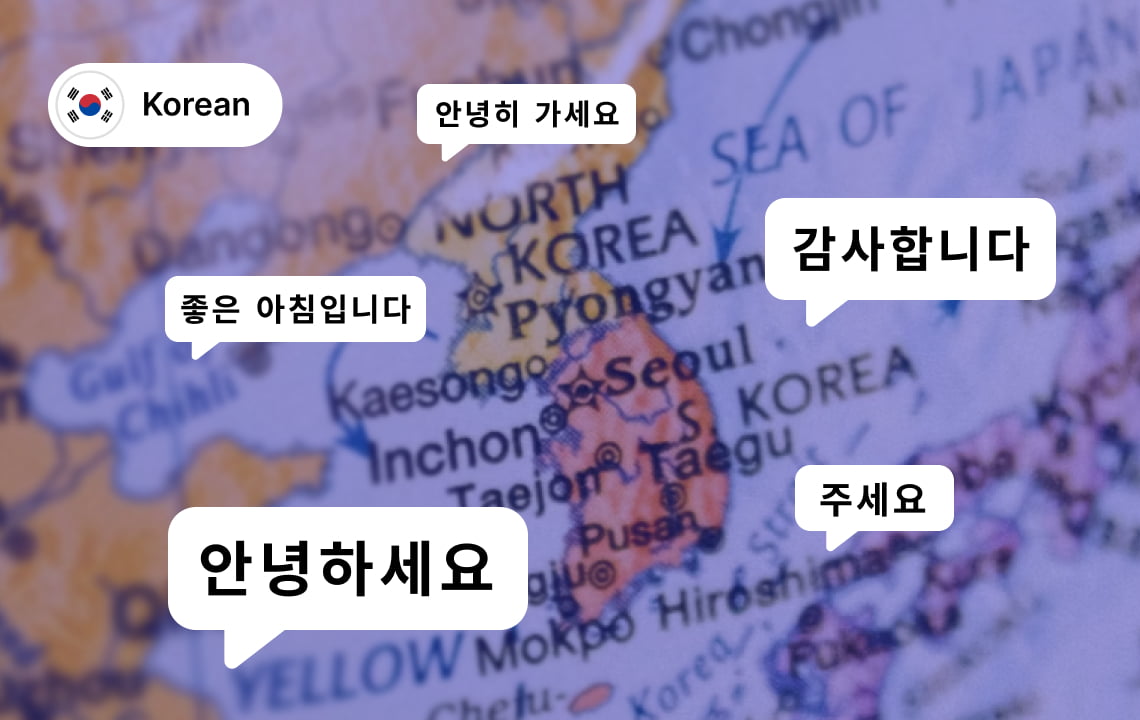
Korean Dramas and K-pop are two of the things that make Korean culture popular. People who want to easily relate to the drama they are watching and interact with their favorite Korean actors may need a Korean translator.
According to a former contributor for Forbes, Joan MacDonald (2023), the growing global popularity of K-pop, Korean dramas, and films has encouraged more people to take an interest in Korean culture, including learning the language.
Aside from that, Korean translators are also helpful when you travel and study in Korea, interacting with Koreans, and more.
In this post, we'll discuss some of the best Korean translators that will help you break the language barrier and communicate effectively.
What Is a Korean Translator?
A Korean translator is a tool for translating text, documents, images, audio, video, and other file types that a specific tool supports.
It can be used for various purposes, such as watching your favorite Korean dramas, travelling to Korea, buying Korean products, and creating content for the Korean audience. It helps in removing the language barrier, making communication easier.
Best Korean Translators
Tool | Best For | Key Features | Free/Paid |
VMEG AI | Best for Video Localization |
| Free Trials and Paid Plans |
Google Translate | Best for Quick, Everyday Translations |
| Free |
Naver Papago | Best for Korean Language Accuracy |
| Free |
DeepL Translate | Best for High-quality, Nuanced Text Translations |
| Free and Paid Plans |
Microsoft Translator | Best for Business Use |
| Free |
iTranslate Translator | Best for Voice Translation |
| Free and Paid |
Note: Feature may vary by app, language, updates, device, subscription plan, and other factors. Visit the Google Play Store, App Store, or the app’s official website to learn more and find the option that best fits your goals.
Best Korean Translators
Here are some of the best Korean translators:
Google Translate – Best for Quick, Everyday Translations
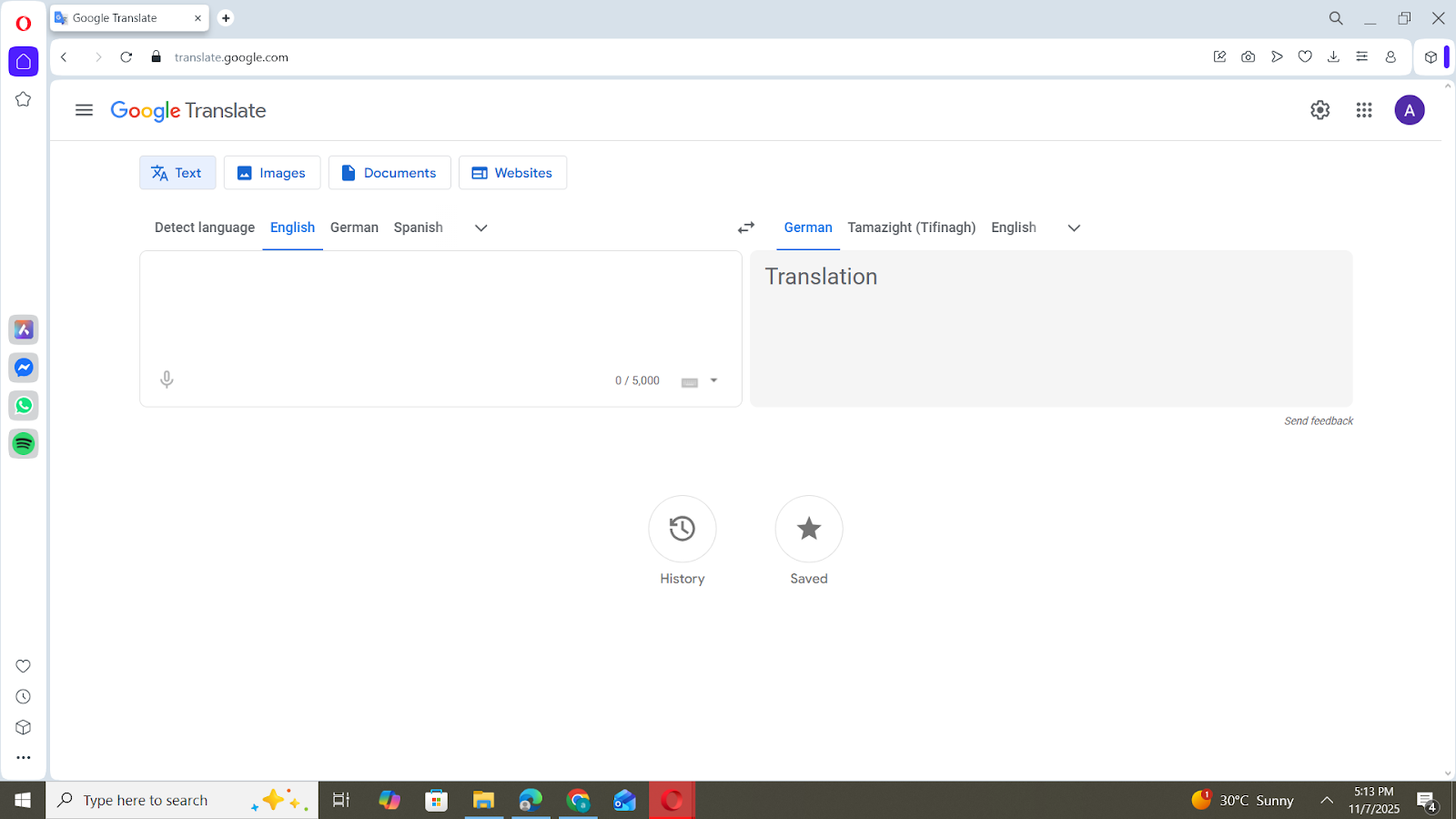
Image Credit: Screenshot from the Google Play Store, used for illustrative purposes only.
Google Translate is one of the most popular translation tools. It supports a wide range of languages, including Korean. It is ideal for casual conversations and has various features that make translation easier.
Why Choose Google Translate?
- Easy to use, with a good interface.
- Has a Tap to Translate feature, making translation easier by simply copying text in different applications and tapping the Google Translate icon to translate various languages.
- Has the Phrasebook feature, so users can easily star and save the words and phrases they translated for easier reference when they need them again in the future.
Naver Papago – Best for Korean Language Accuracy
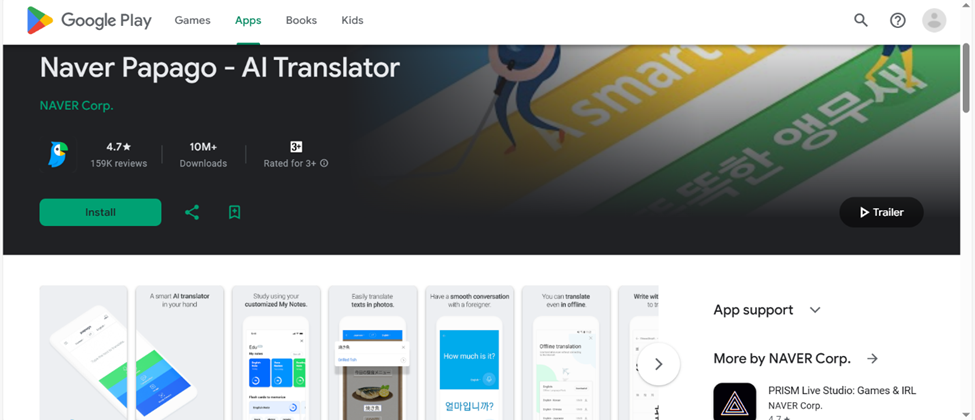
Image Credit: Screenshot from the Google Play Store, used for illustrative purposes only.
Naver Papago is a translation tool you can use for various activities, such as traveling, studying, and business trips. It supports Korean and other languages, such as English, Spanish, Chinese, and more.
Why Choose Naver Papago?
- Supports text, image, voice, conversation, handwriting, and offline translations.
- It also supports website translation, making it easier to understand the content of a foreign website.
- Aside from the initial translation, it also includes a dictionary that provides information, so you users can check additional meanings, helping them learn more.
DeepL Translate – Best for High-quality, Nuanced Text Translations
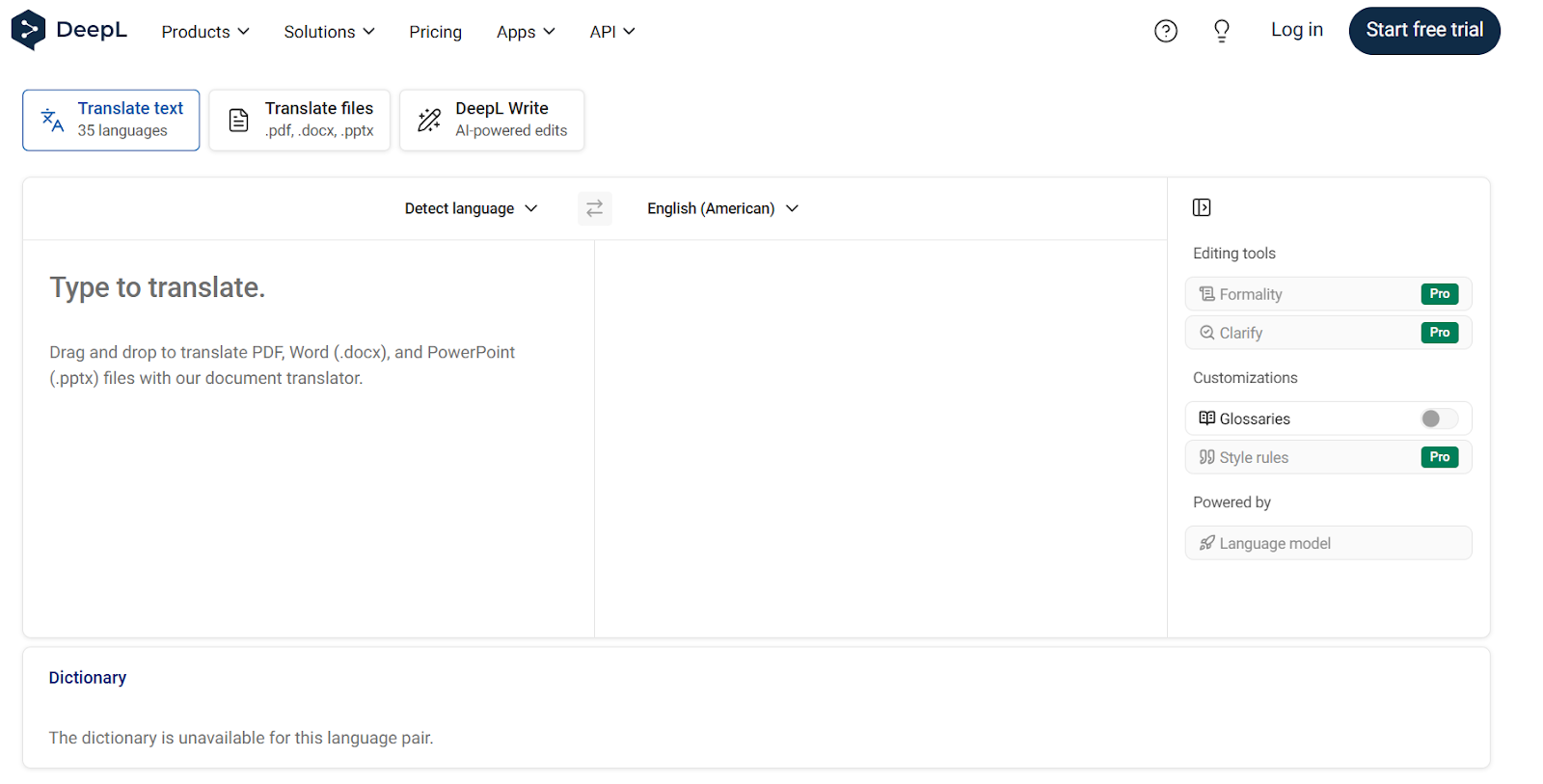
Image Credit: Screenshot from the Google Play Store, used for illustrative purposes only.
DeepL is known for accuracy. It supports multiple languages, including Korean. It offers features that make translation and communication easier.
Why Choose DeepL Translate?
- It is an ideal tool if you want high-accuracy translations.
- It can be used for casual and professional translations.
- Has DeepL Write, which provides writing suggestions to ensure the text is error-free.
Microsoft Translator – Best for Business Use
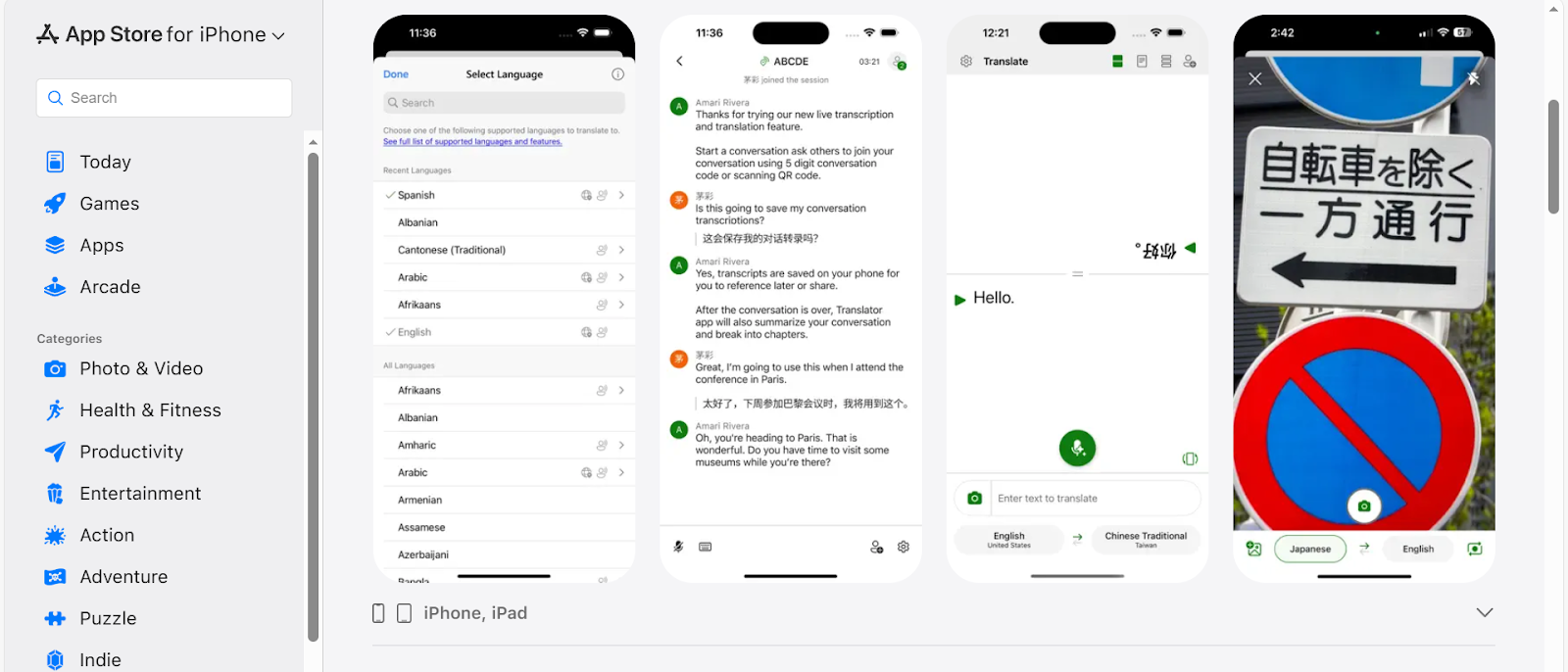
Image Credit: Screenshot from the Google Play Store, used for illustrative purposes only.
Microsoft Translator is another tool you can use to translate Korean. It is a helpful tool when you are travelling, communicating with peers, understanding signage, and more.
Why Choose Microsoft Translator?
- Helps in connecting easily with people from different parts of the world.
- Supports text, speech, image, text-to-speech, and multi-device conversation.
- It also supports offline translation on Android devices.
iTranslate Translator – Best for Voice Translation
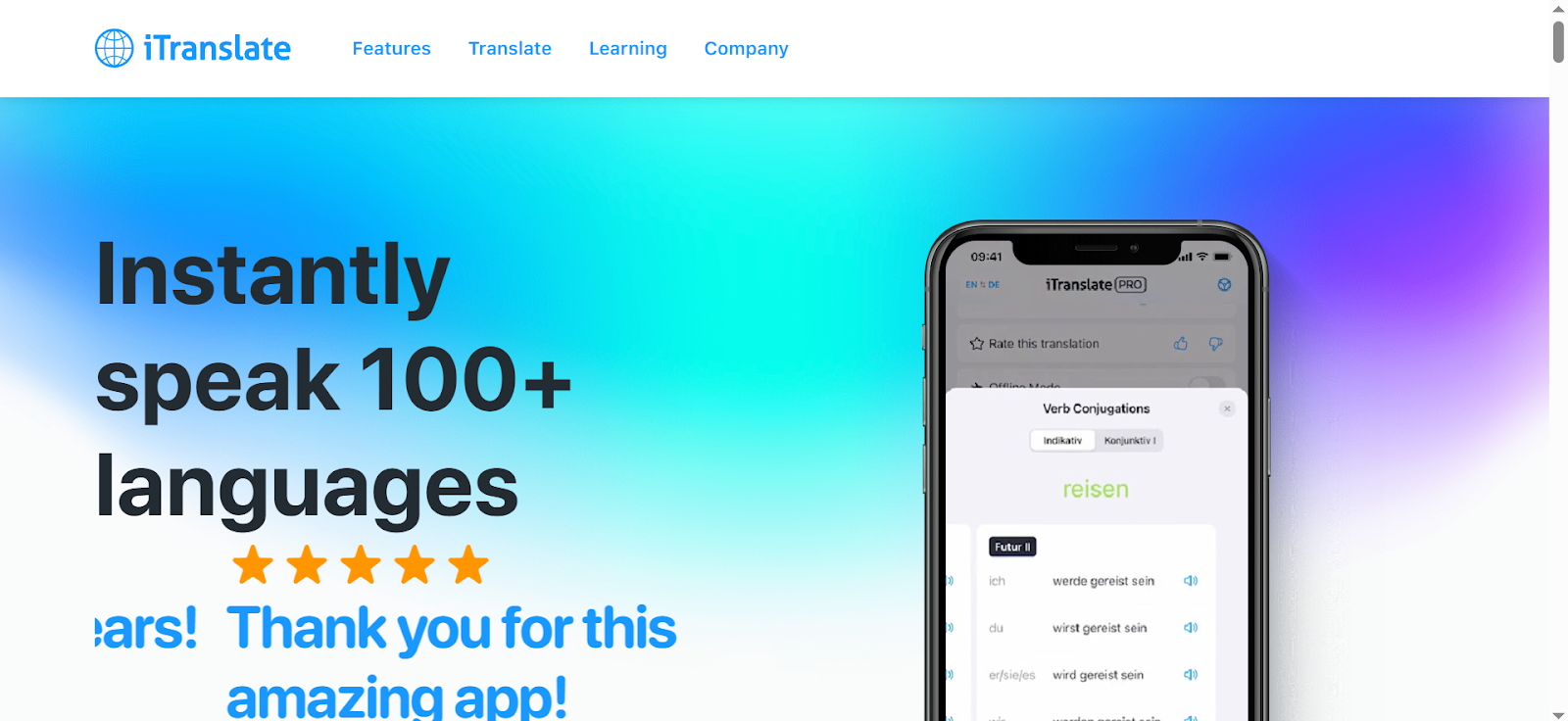
Image Credit: Screenshot from the Google Play Store, used for illustrative purposes only.
iTranslate is one of the best Korean translators, as many of its features support Korean. It is a good tool for communicating with your peers at school, work, and beyond.
Why Choose iTranslate?
- Supports text-to-speech, speech translation, and voice recognition.
- Has offline translation that lets users translate even without an internet connection.
- It is ideal for a wide range of individuals, including students, professionals, travelers, and more.
VMEG AI – Best for Video Localization
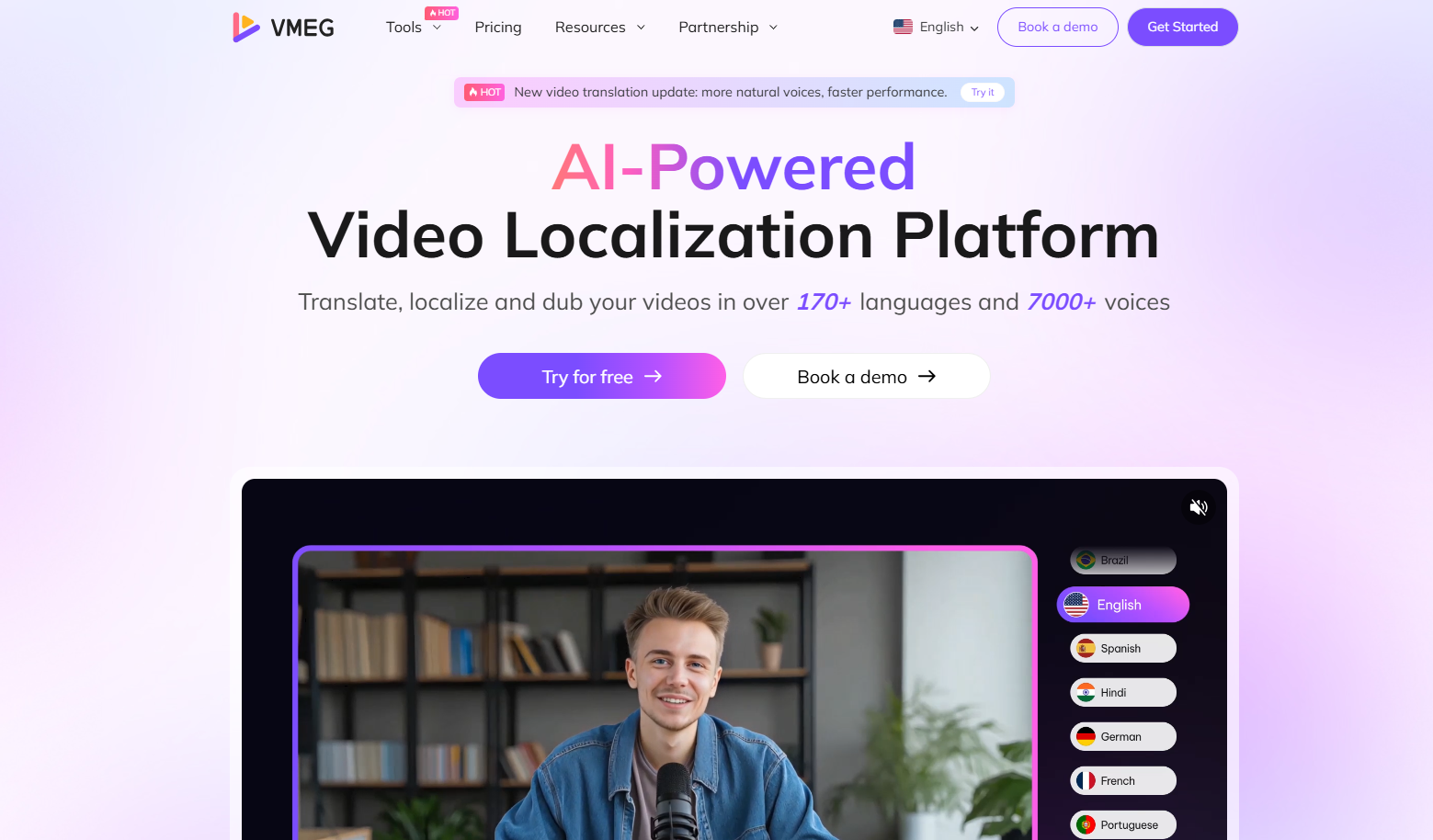
What Is VMEG AI?
VMEG is an AI-powered tool for video localization. It is ideal for individuals and organizations who want to localize videos to reach a global audience. It supports more than 170 languages and provides translation, subtitle, transcription, and text-to-speech tools.
Key Features of VMEG AI
Here are some key features of VMEG AI that make it an ideal choice for video localization.
- Localization Agent. This feature speeds up and simplifies the localization process by having the AI agent handle the complex task for you. It is easy to use, from uploading the file and entering a prompt, to reviewing and approving the agent's plan, and editing and exporting the output.
- Editing Studio. This is a unified workspace where teams and creators can edit, translate, and do voiceovers with accuracy. The timing, wording, and audio can be fine-tuned directly to the timeline, and it helps in matching these elements naturally, making the output look professional.
- Bulk Video Localization. It is one of the features that help localize faster at scale through batch processing and automation. Users can upload up to 20 videos or languages in just one click. It helps speed up the workflow and reduce costs.
- Structured and Efficient Localization Workflow. It has a structured workflow for video localization. The professional tools include a glossary, a translation prompt, sentence-level emotion, and an integrated audio and video editor.
Best Use Cases
Video localization is essential for individuals and organizations, as it helps them reach a global audience. Localization can also open new opportunities, such as collaboration and partnerships.
- Marketing.Marketing helps people to know your brand, products, and services. With VMEG AI, your advertisements can reach a global audience, thanks to its voice cloning and other features that keep marketing content consistent across all languages.
- Social Media. Social media is a powerful platform for reaching a global audience. VMEG AI helps localize video content faster, so you can keep up with global trends and create high-quality, professional content.
- Training. VMEG is ideal for corporate training and educational courses. It is ideal for organizations with team members from different countries, as it helps ensure everyone understands the message.
How to Choose the Best Korean Translator
There are many Korean translators, and choosing the best one for your needs can be challenging. Here are some of the factors you need to consider to help you choose the best Korean translator.
Translation Quality & Context
Check whether the translated output preserves the original meaning, as some translation tools may provide literal translations that can be confusing. Choose a tool that preserves and adapts the source language to the target language.
Supported Features
Check the features of the specific tool you want to use to see if they are the ones you need. Feature availability may vary depending on your current plan, as some tools offer free and premium plans. Compare different tools and platforms to see their features.
Ease of Use & Interface
Ease of use and the interface are important for making it easier to navigate the tool, especially for beginners. It will help users become more familiar, enabling them to translate faster and making the workflow more convenient.
Platform Compatibility
The translation tool must be compatible with the devices you already have for easy and convenient access. Check if the generated output supports the file type you need and suits the platform where you will share your content.
Purpose & Use Case
Identify the purpose of using a Korean translator, as each tool has its own specialization. For example, if you need text translation, you can choose DeepL or Google Translate. For video localization, you can choose VMEG AI.
Privacy & Data Handling
Understand how the tools handle your data, especially if the input has sensitive information. Here at VMEG AI, safety is part of our architecture, and your input is not used to train AI models.
Common Challenges in Korean Translation
Here are some challenges in Korean translation:
Honorifics and politeness levels
Multiple speech levels in Korean are used to show respect, hierarchy, and familiarity. If honorifics are translated incorrectly, it can lead to misunderstandings or offend the audience. Some verbs and nouns can also change depending on the relationship between the speaker and the listener.
Sentence structure differences
Korean follows a Subject-Object-Verb (SOV) order, unlike English, which has a Subject-Verb-Object (SVO) order. The difference in sentence structure between languages may result in literal translation producing awkward or confusing sentences. The arrangement of sentence elements and the preservation of meaning are important for accurate translation.
Cultural context and idioms
It is important to preserve the cultural context to make it more relevant and natural to the target audience. Idioms may lose meaning if translated word-for-word. It is always important to check the translated output to ensure it aligns with the context.
Formal vs casual tone
The tone is important and can be formal, polite, or casual. Using the wrong tone can make the sound inappropriate in the context of the conversation. The audience and setting must always be considered to ensure that the sound suits them.
Tips to Improve Korean Translation Accuracy
Here are some tips to improve Korean translation accuracy:
Use short, clear sentences
Using short sentences can improve translation, as they are easier to translate. It will also help you easily check whether the context matches the source language. Use general terms and avoid specific terms that could affect translation.
Avoid slang unless the tool supports it.
Avoid slang words in translation because they are region-specific and highly context-dependent. Slang words may make translations inaccurate or confusing. These words can be formal or playful in one language but offensive or awkward in another.
Double-check with multiple tools.
Use multiple tools to compare translation outputs and identify which provides the most accurate translation. It can also help you understand the differences in speed, reliability, and accuracy among the tools.
Use human review for critical content.
Human review is an important factor in improving translation accuracy. Choose a tool with a human-in-the-loop workflow to make things faster. Review the translated output before copying it.
Free vs Paid Korean Translators
Korean translators can be free or paid. You can start with the free plan to test the tool and get familiar with it, then upgrade later.
When free tools are enough
Free tools are enough when:
- You only need basic translation and features.
- It will be used for casual use.
- If the features that are available in the free version are good enough for your projects.
- If there are budget constraints.
- You are still trying out various platforms to find the best one.
When to upgrade
Upgrade or subscribe to a plan when:
- You need premium features to enhance translations.
- You already found the specific tool that suits your needs and provides high accuracy.
- You have a budget for a premium plan.
FAQs
Which is the most accurate Korean translator?
Various factors affect the accuracy of Korean translators. Naver Papago and DeepL are two of the most accurate Korean translators. For video localization, VMEG AI is a tool that provides highly accurate translation.
What is the best offline translator for Korean?
Some tools that offer offline translation are iTranslate and Microsoft Translator.
The offline feature may be available as a premium. Some tools also require users to download a language to use it offline. Check it first to see if it works offline, as the tool's offline support may be limited to only a few languages.
Which translator is best for Korean to English?
Some of the best Korean-to-English translation services are Naver Papago and DeepL. For video localization, VMEG AI is one of the best Korean-to-English translators.
Which is the best Korean translator?
The best Korean translator depends on your needs. For example, you need to translate text, some of the best Korean translators are Naver Papago, DeepL, and Google Translate. For translating videos, VMEG is the best Korean translator.
What is the best Korean translator for video localization?
The best Korean translator is VMEG AI. It delivers high-quality, fast results, speeding up your workflow.
Conclusion
The best Korean translator depends on your needs, as each translator has its own features. Some of the best Korean translators are Google Translate, DeepL, Naver Papago, iTranslate Translator, and Microsoft Translator.
When it comes to translating and localization, VMEG AI is the best Korean translator. It supports more than 170 languages, including Korean. With VMEG AI, you can translate, transcribe, dub, and localize your video content to reach more audiences. This is an ideal tool if you want to localize your content for Korean audiences.


The VMEG Team
Behind VMEG stands a passionate team of creatives, engineers, and language lovers. At the crossroads of AI and storytelling, they craft tools that bridge languages and cultures.