VMEG AI Research & Insights
Explore technical deep dives and engineering insights on AI dubbing, voice cloning, and lip-sync—powering next-generation professional video localization.
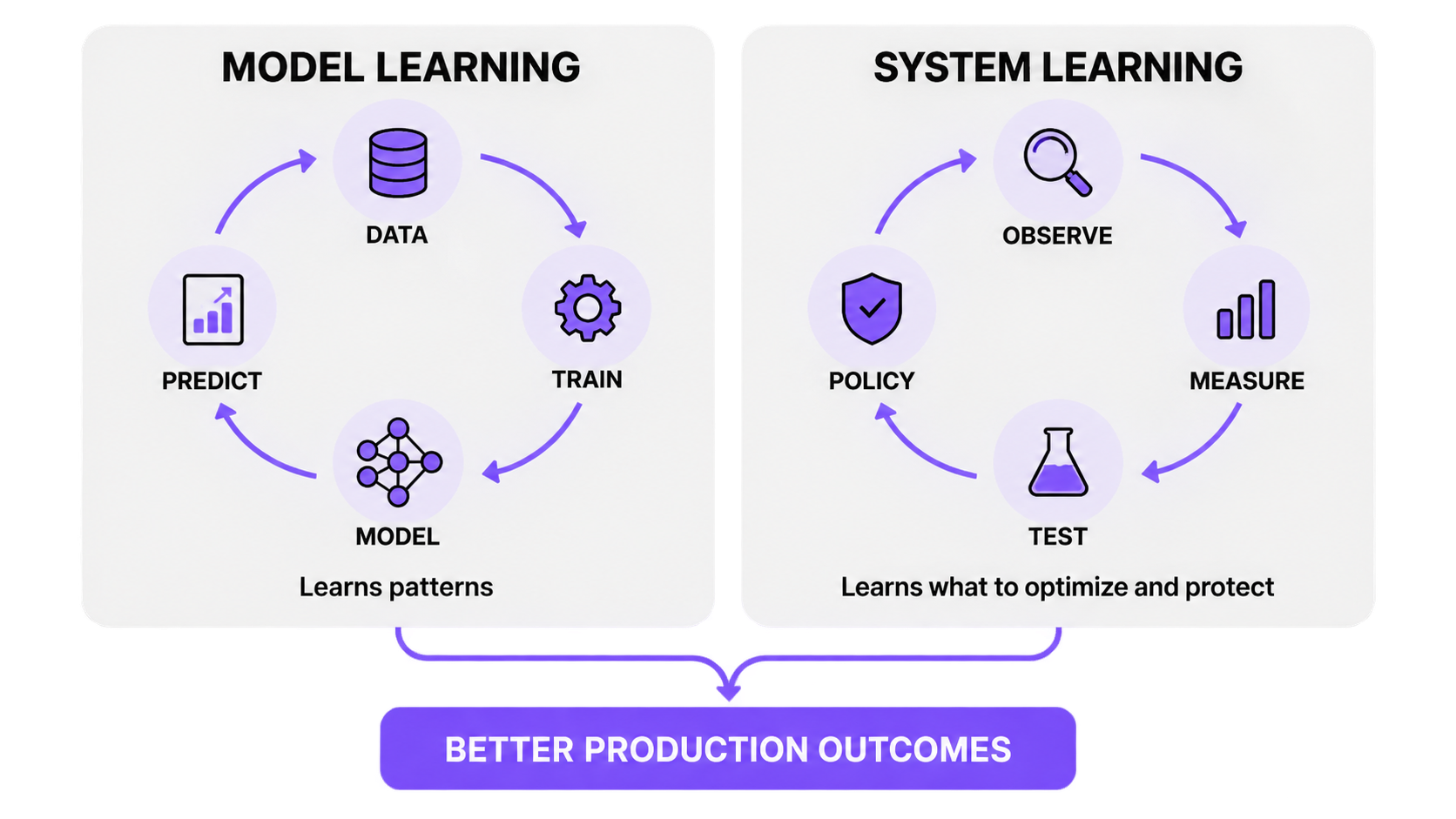
Beyond Model Training: How Complex Algorithms Learn from Production
Continuous learning is not limited to model training. See how production metrics, safety checks, controlled replays, and live evidence helped VMEG improve AI dubbing alignment without retraining a model.
Read more →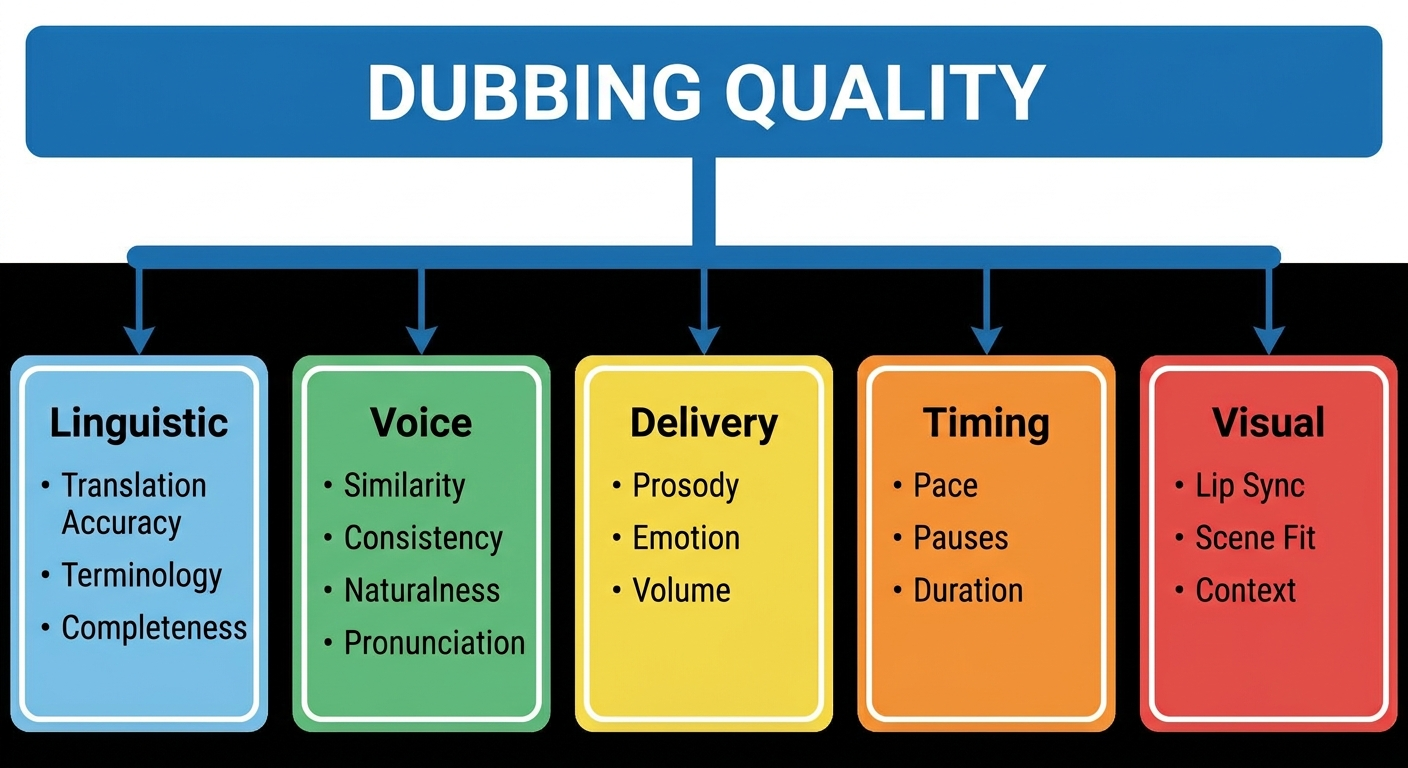
How Do You Measure the Quality of an AI-Dubbed Video?
WER, BLEU, MOS, and lip-sync scores each measure one slice of AI dubbing. Production quality is a vector—translation, speaker identity, prosody, emotion, pace, and visual sync—plus the failures viewers actually notice.
Read more →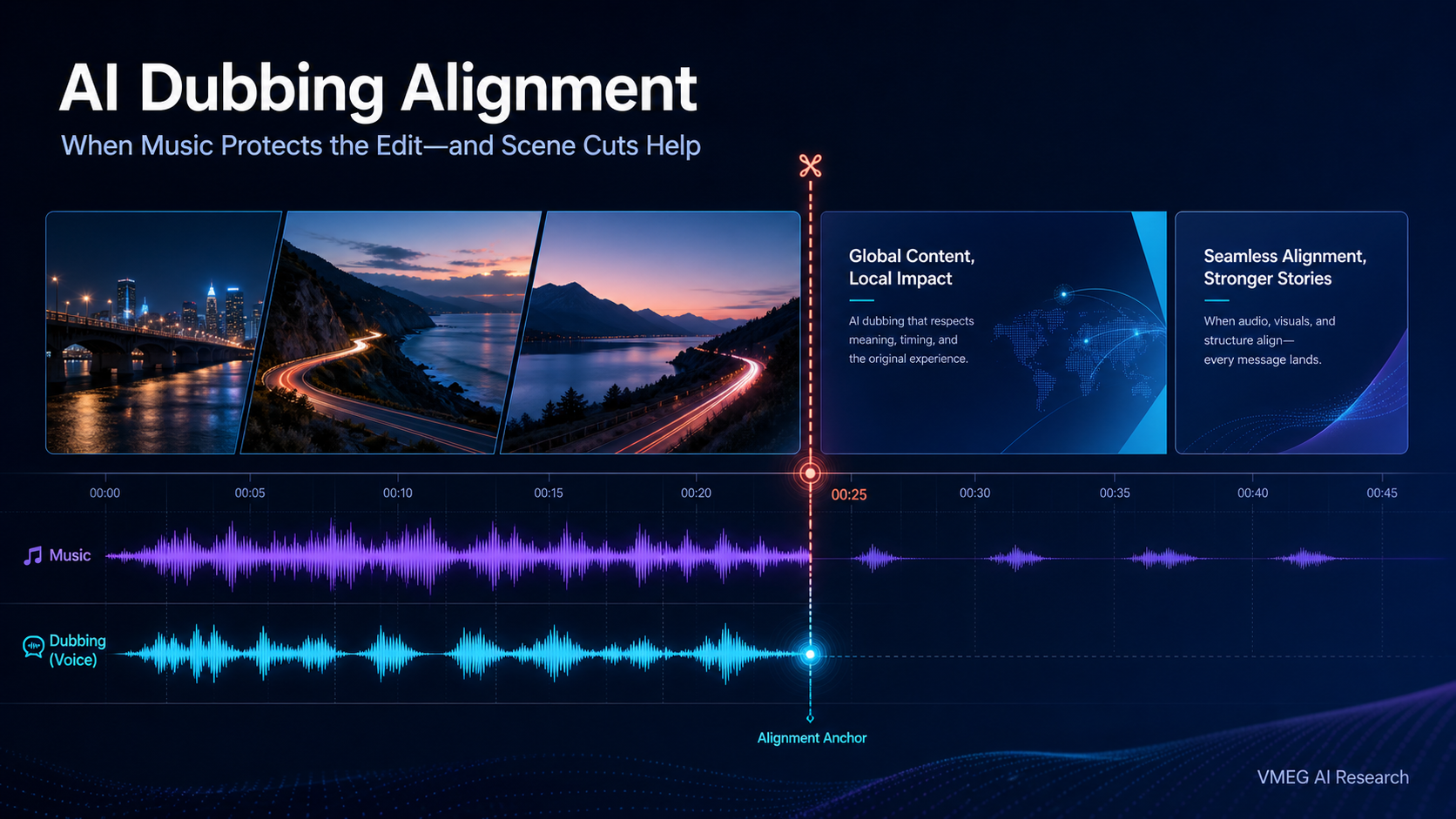
How Retained Music Beds and Scene Cuts Guide AI Dubbing Timing
Background music and scene cuts can provide useful timing evidence for AI dubbing. Learn when a retained music bed should protect the original rhythm and when a reliable cut can help a dubbed line land naturally.
Read more →
Finding an AI Voice That Sounds Like You
Voice match finds the closest catalog voice to a reference. “Like me” splits into identity, vibe, and scenario, and products like VMEG filter the pool before ranking similarity.
Read more →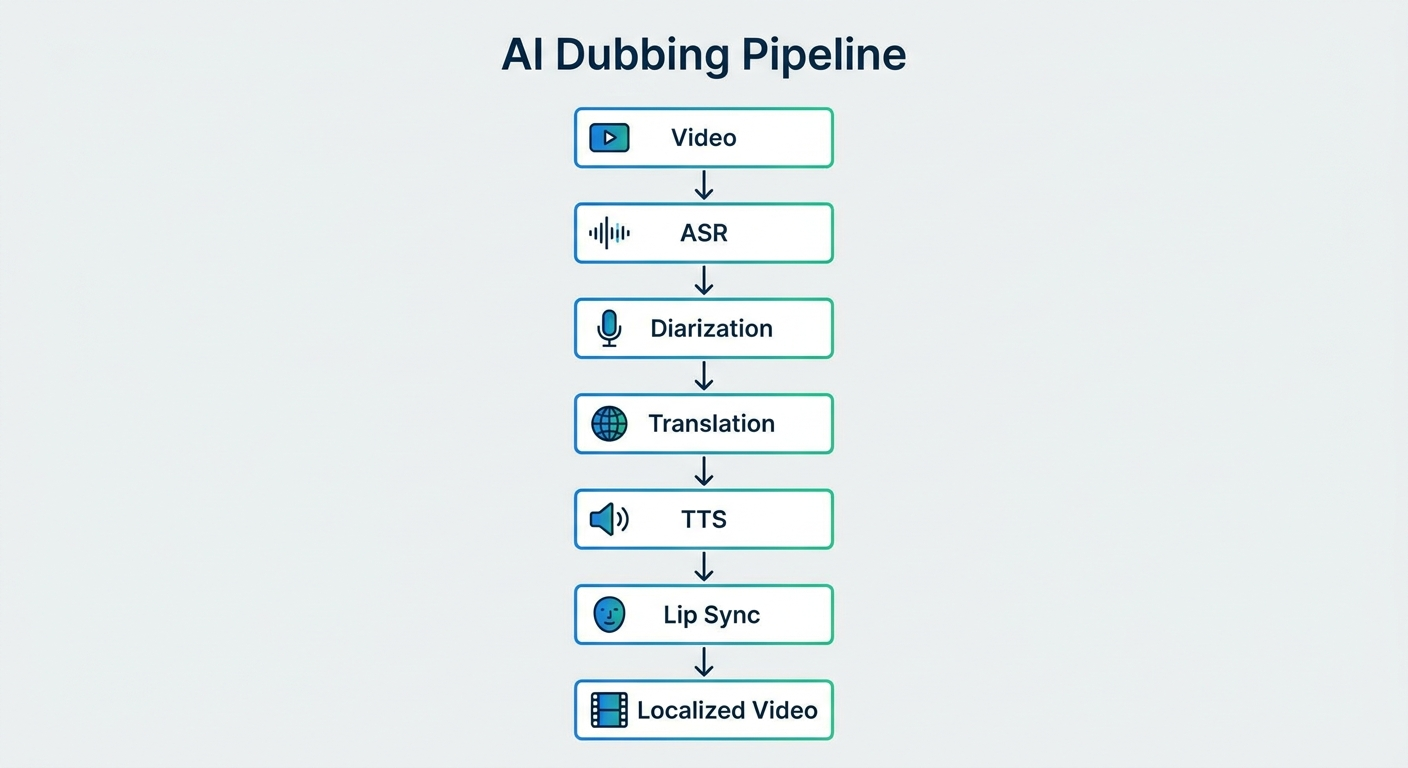
End-to-End Intelligence, Pipeline-Level Control: Rethinking the Architecture of AI Dubbing
Multimodal models and integrated dubbing APIs make a single video-in, video-out pipeline tempting. Production still needs observability, partial regeneration, and human review—so the future is end-to-end intelligence with pipeline-level control.
Read more →Beyond Model Training: How Complex Algorithms Learn from Production
Continuous learning is not limited to model training. See how production metrics, safety checks, controlled replays, and live evidence helped VMEG improve AI dubbing alignment without retraining a model.
How Do You Measure the Quality of an AI-Dubbed Video?
WER, BLEU, MOS, and lip-sync scores each measure one slice of AI dubbing. Production quality is a vector—translation, speaker identity, prosody, emotion, pace, and visual sync—plus the failures viewers actually notice.
How Retained Music Beds and Scene Cuts Guide AI Dubbing Timing
Background music and scene cuts can provide useful timing evidence for AI dubbing. Learn when a retained music bed should protect the original rhythm and when a reliable cut can help a dubbed line land naturally.
Finding an AI Voice That Sounds Like You
Voice match finds the closest catalog voice to a reference. “Like me” splits into identity, vibe, and scenario, and products like VMEG filter the pool before ranking similarity.
End-to-End Intelligence, Pipeline-Level Control: Rethinking the Architecture of AI Dubbing
Multimodal models and integrated dubbing APIs make a single video-in, video-out pipeline tempting. Production still needs observability, partial regeneration, and human review—so the future is end-to-end intelligence with pipeline-level control.
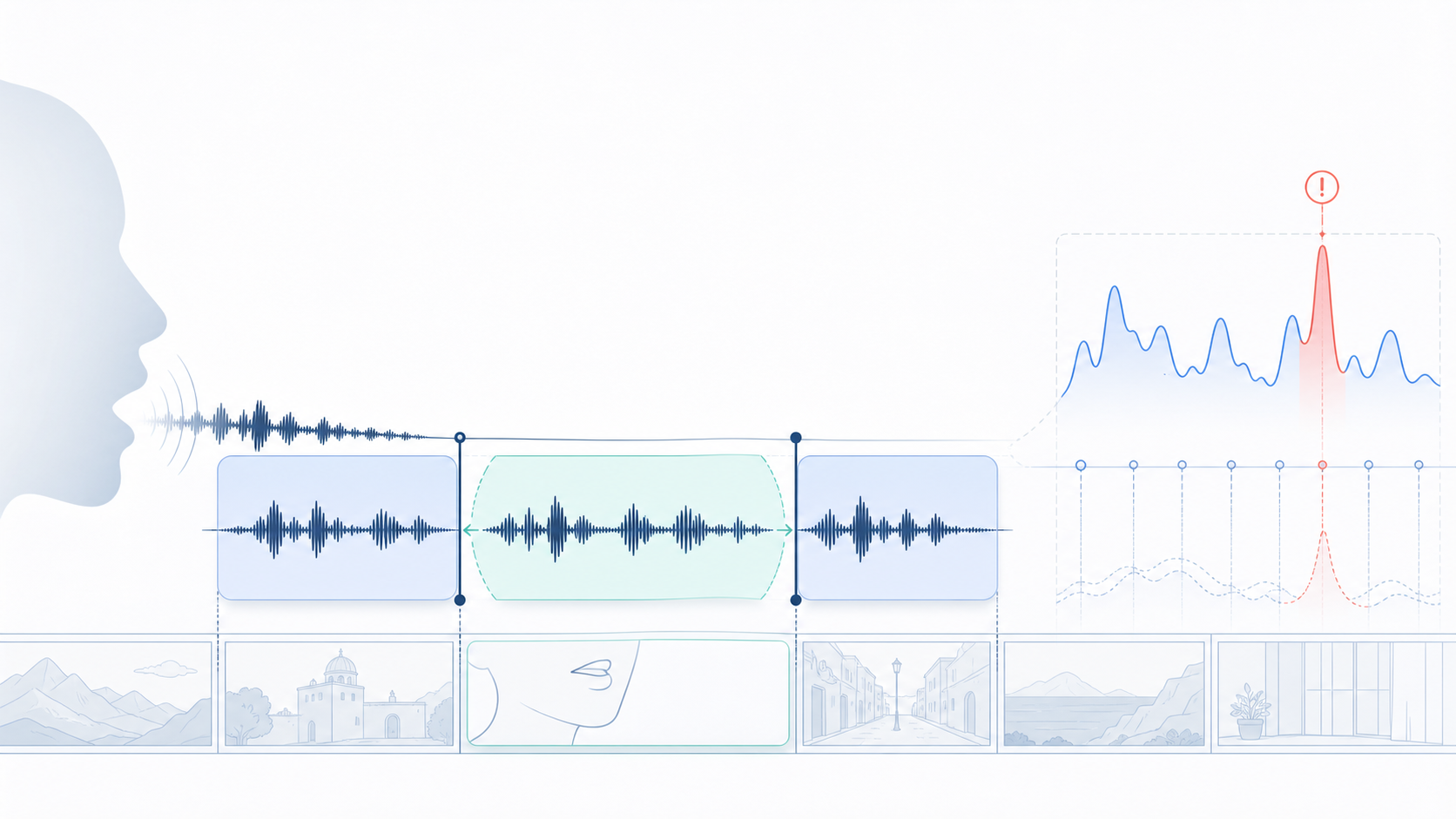
Dubbed pace: what we can measure, and how we keep it natural
Absolute syllable-rate meters break down on noisy, cut, or short source audio. Relative perceived pace tracks the ear better, so we expand neighboring slots first, rewrite when needed, and change playback speed last.
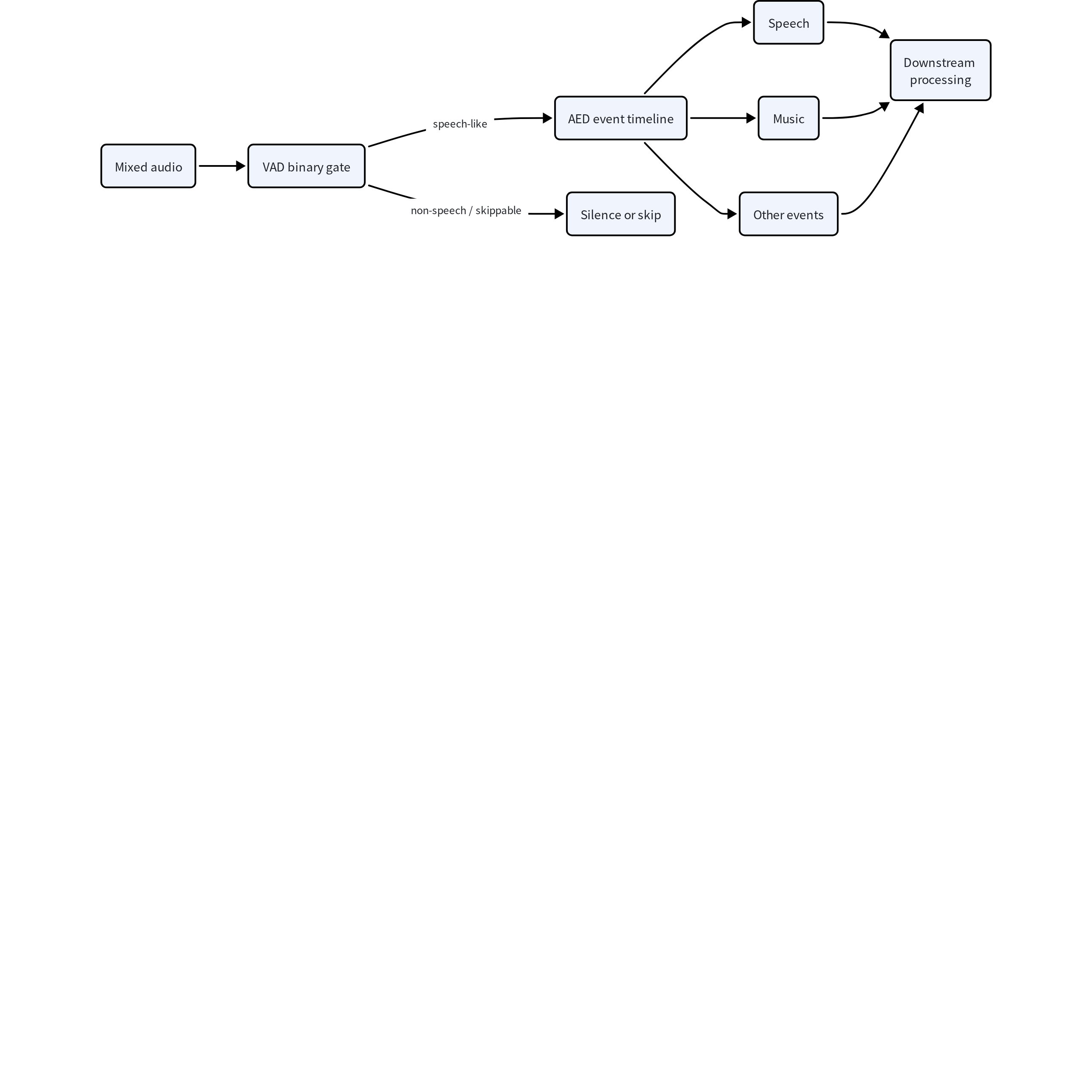
From VAD to AED: Why Audio Event Detection Has to Hear More Than Voice
Voice Activity Detection only answers whether someone is speaking. Mixed media also has music, laughter, applause, and overlapping effects. Audio Event Detection gives later stages a typed timeline so dubbing and mixing do not treat every sound as speech.
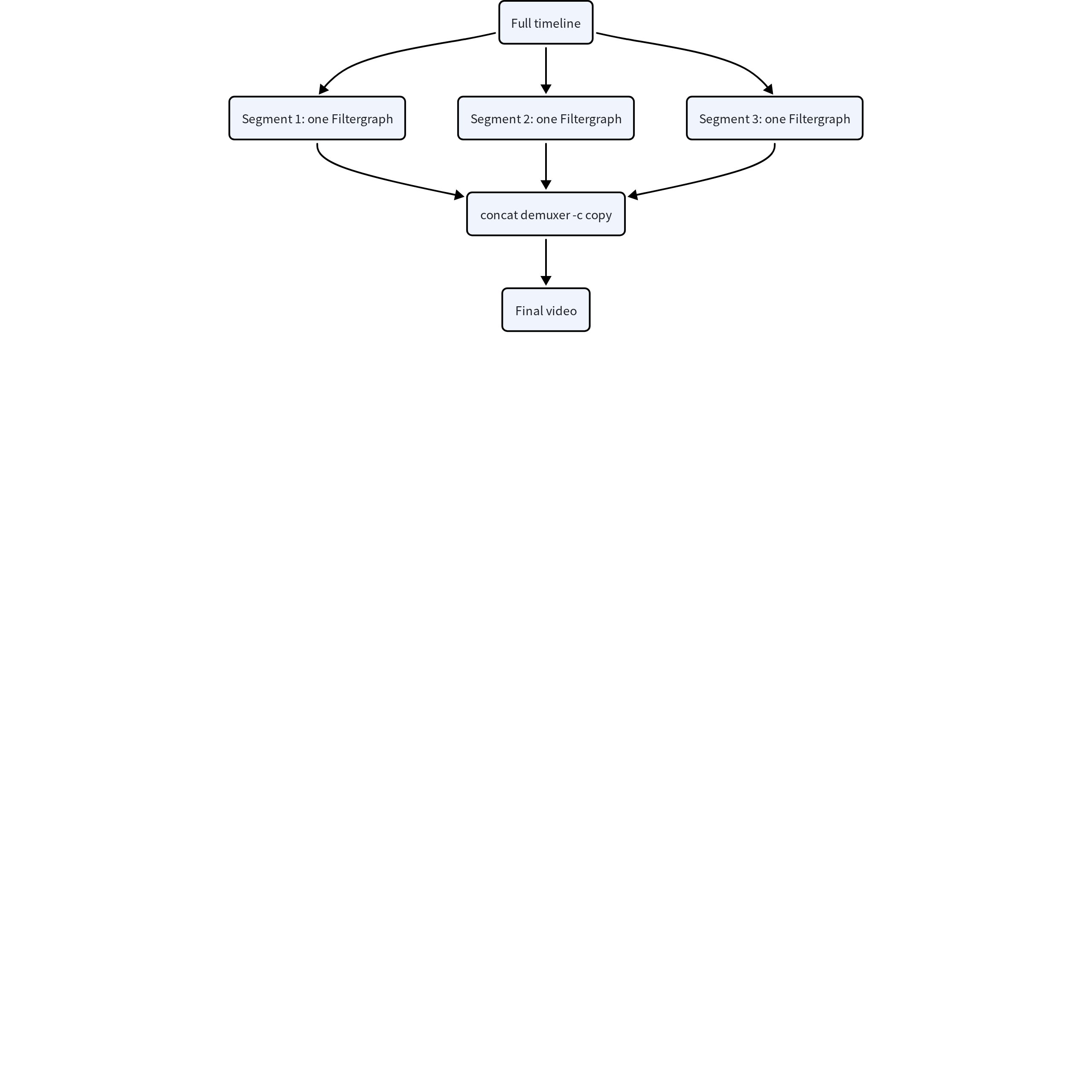
Bound the Working Set: Avoiding OOM in Long-Video Filtergraphs
Filtergraphs are fast because they keep intermediates in memory. On long videos with hundreds of TTS clips, that working set can OOM. Bound graph lifetime by pixel-seconds and amix stream count, then concat with -c copy.
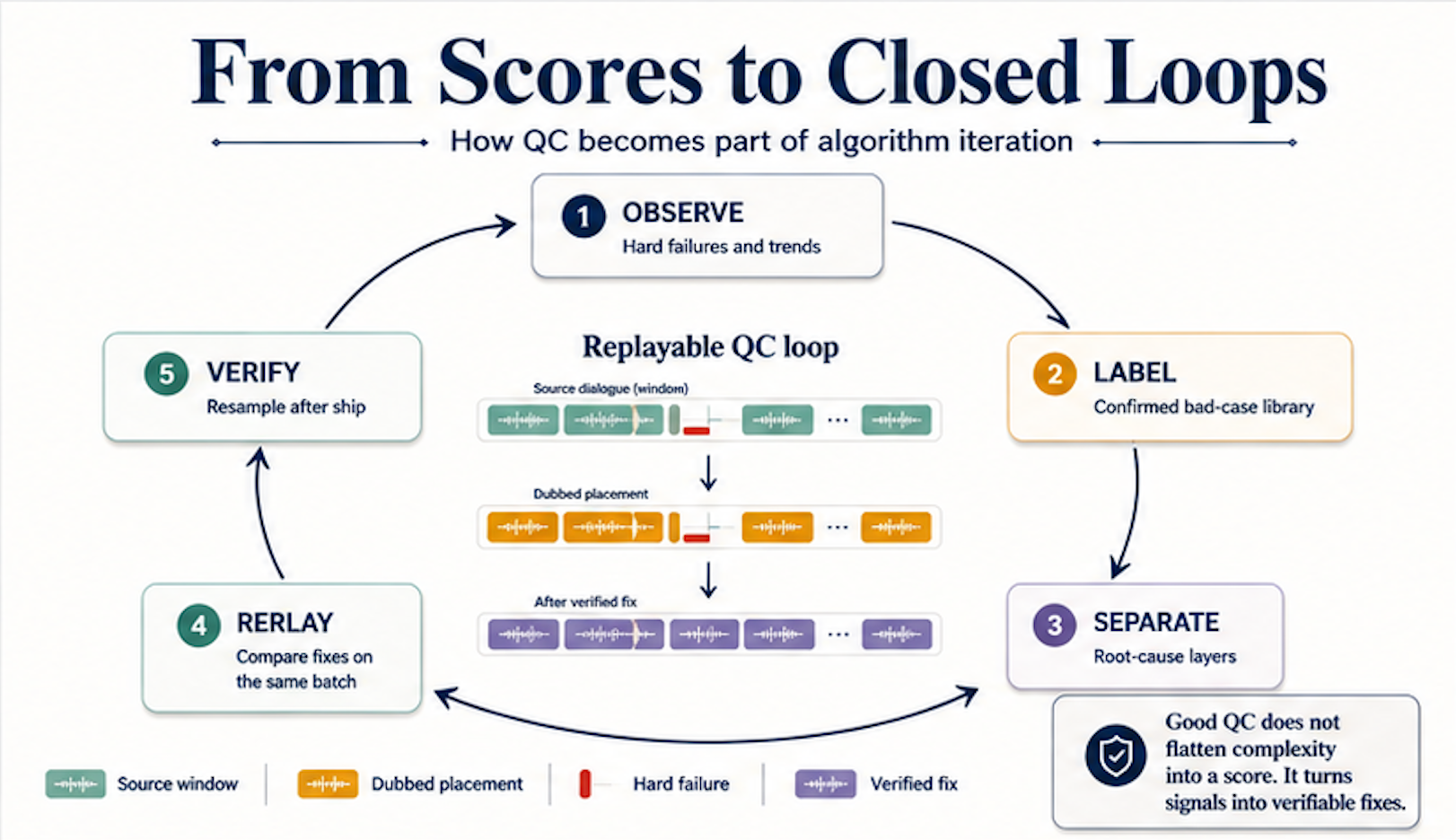
From Scores to Closed Loops: Relearning Quality Control in Video Dubbing
A QC score can flag a bad dubbing job without telling you which pipeline layer to fix. Here's how VMEG moved from composite stage scores to a closed loop—observe, label, classify, replay, verify—that feeds algorithm iteration.
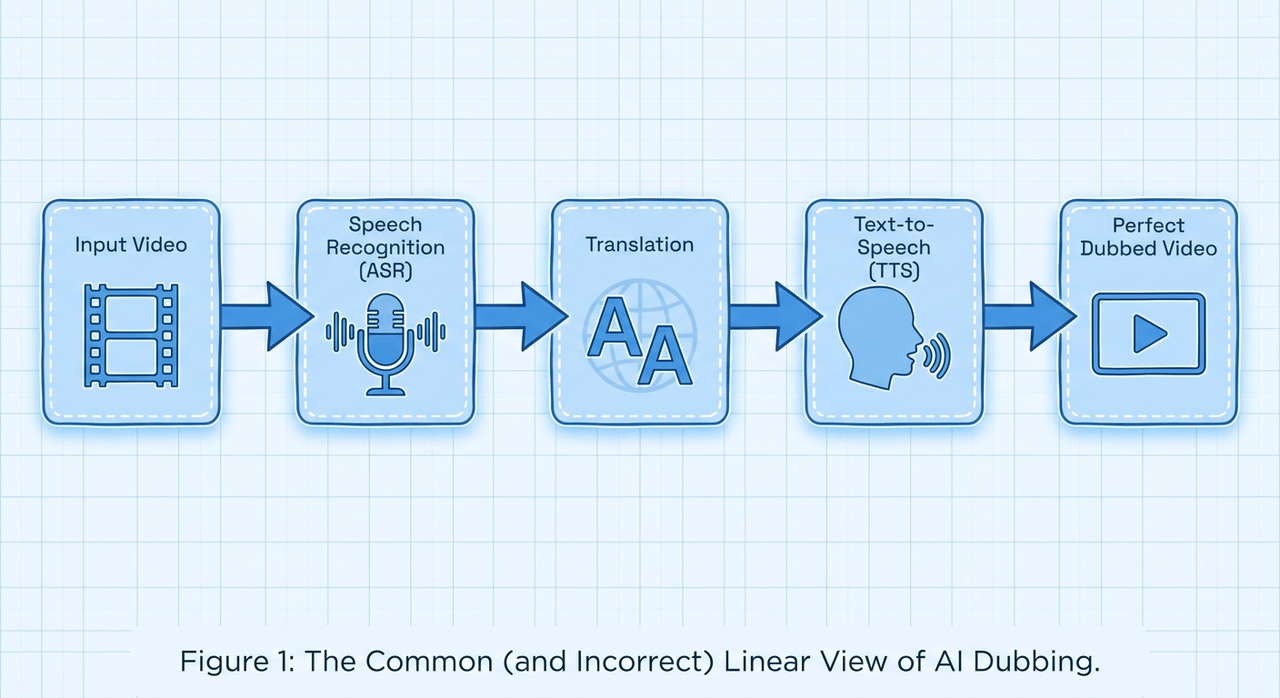
Why AI Dubbing Is More Than Just Text-to-Speech
Recreating a human performance across languages is far more difficult than generating a natural voice. Modern TTS is impressive, but AI dubbing must preserve timing, emotion, rhythm, and speaker identity—not just convert text to speech.
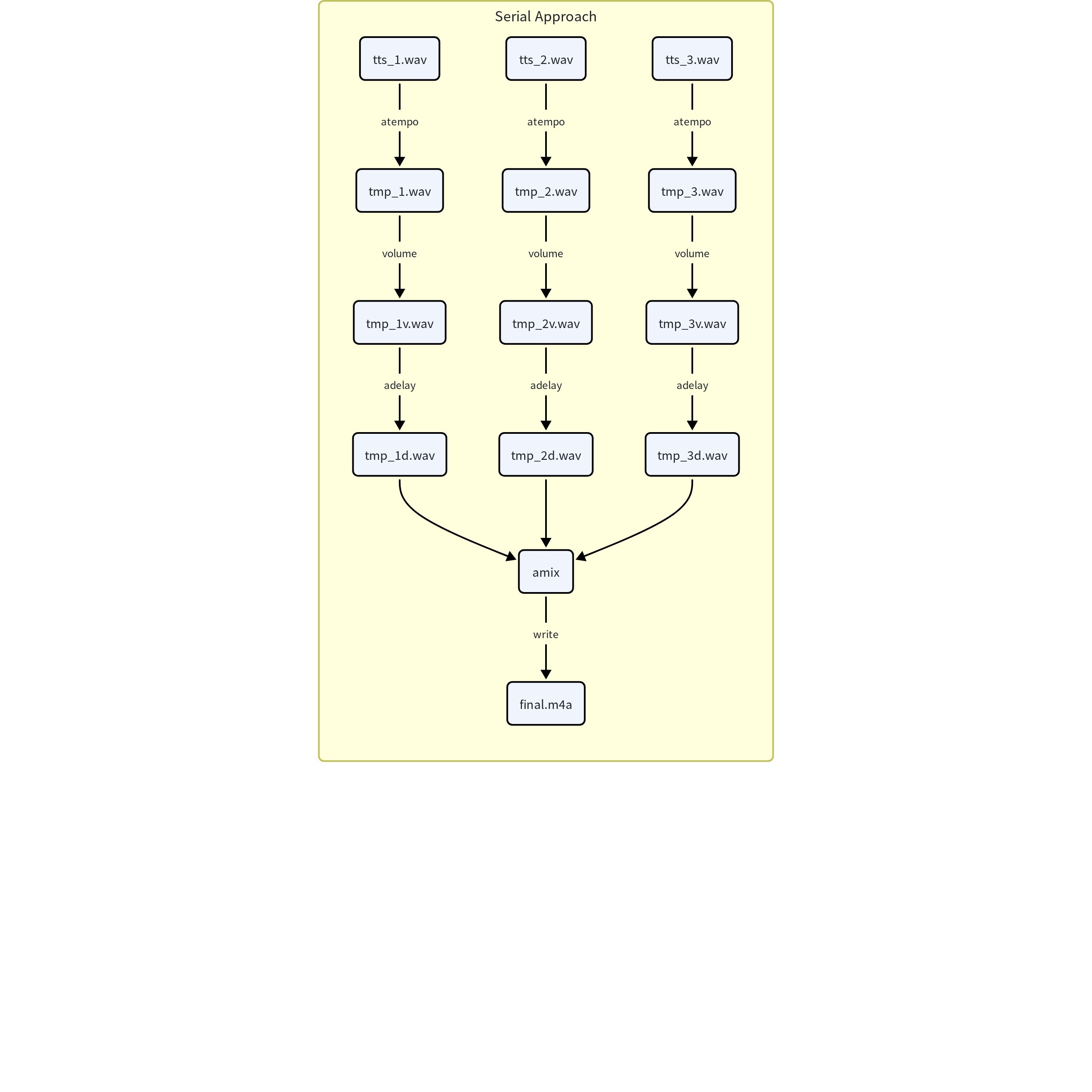
Pushing Compute to the Limit: 100x Faster Video Rendering with FFmpeg Complex Filtergraphs
In VMEG's video translation pipeline, export stacks TTS, mixing, subtitles, watermarks, and muxing. Serial FFmpeg steps waste CPU on re-encoding and disk I/O. A single Complex Filtergraph plus ffmpeg-python can collapse that into one decode-encode pass.
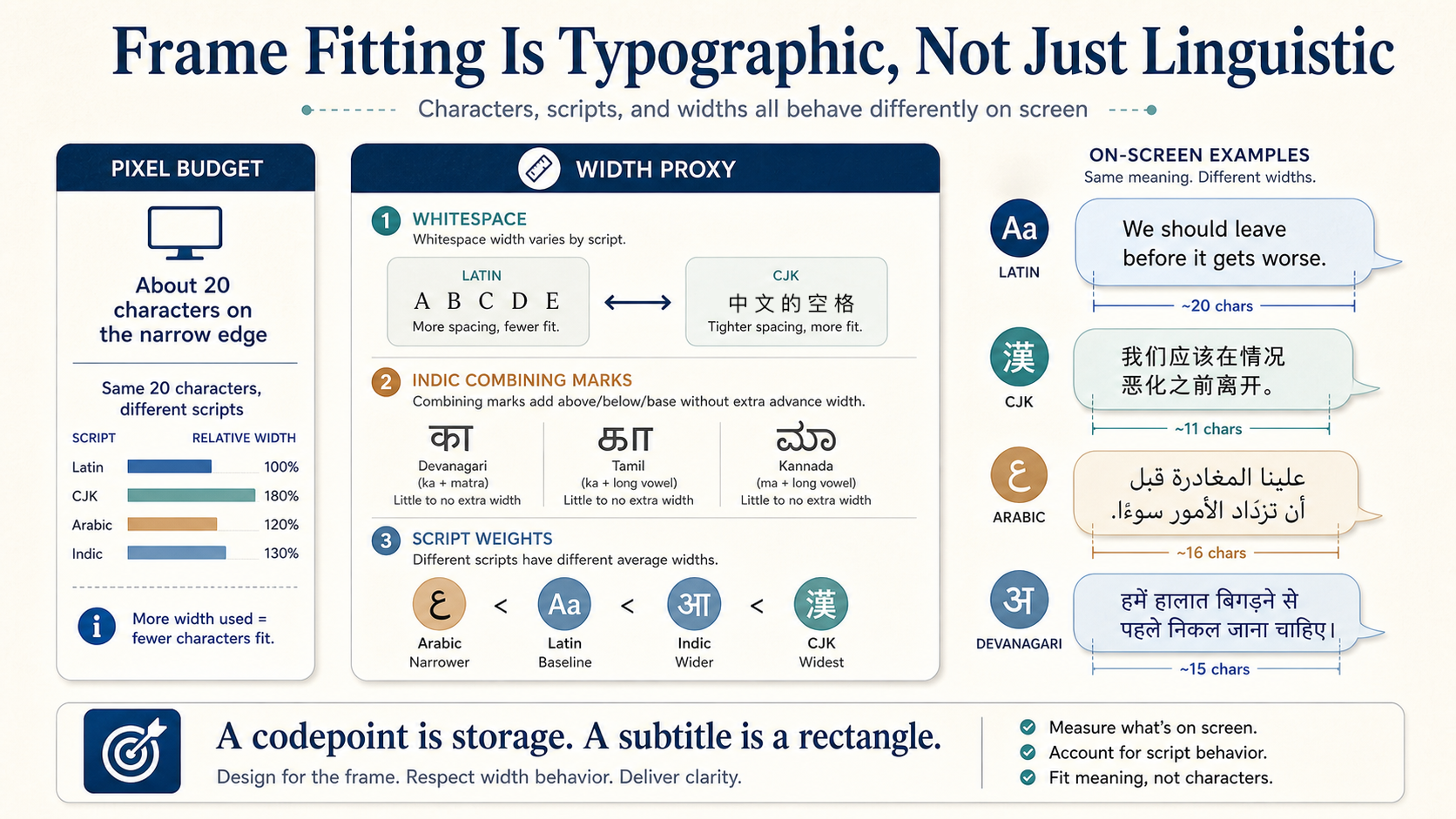
Where to Break a Subtitle Is Geometry, Not Language
Subtitle line breaks look like a language problem. In production they are mostly geometry—fitting glyphs into a frame across Latin, CJK, Arabic, Indic, and spaceless scripts.
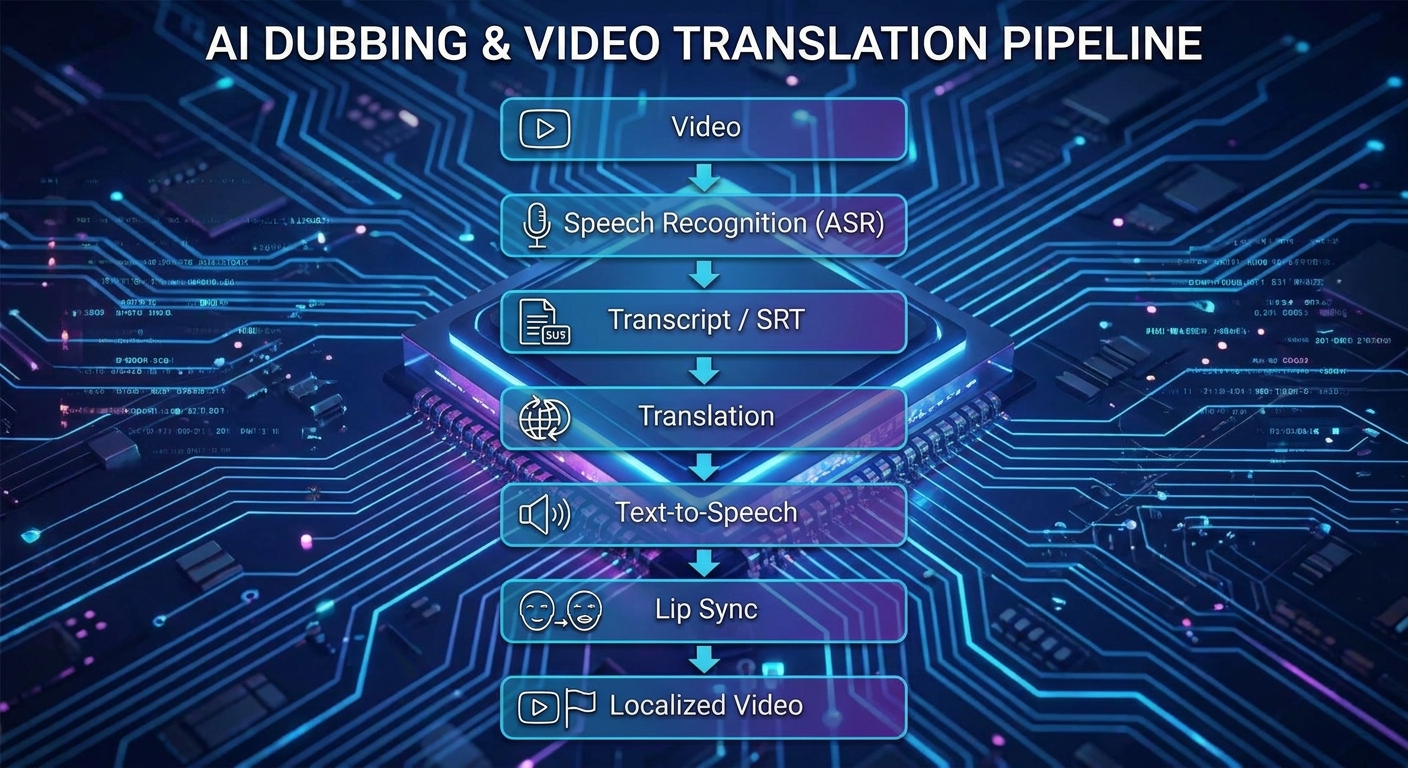
Why AI Video Localization Needs More Than Transcripts
Speech recognition converts speech into words. AI video localization needs to understand the entire video—who speaks, how they speak, when languages switch, and what every downstream system needs beyond a plain transcript.

Translation Models Know the Language. They Just Pick the Wrong Version.
We translate everything from corporate explainers to casual vlogs, short dramas, and ads. The hard part is usually not getting a model to produce Tamil, Arabic, or Cantonese—it's getting the version people would actually use in the situation you are dubbing.
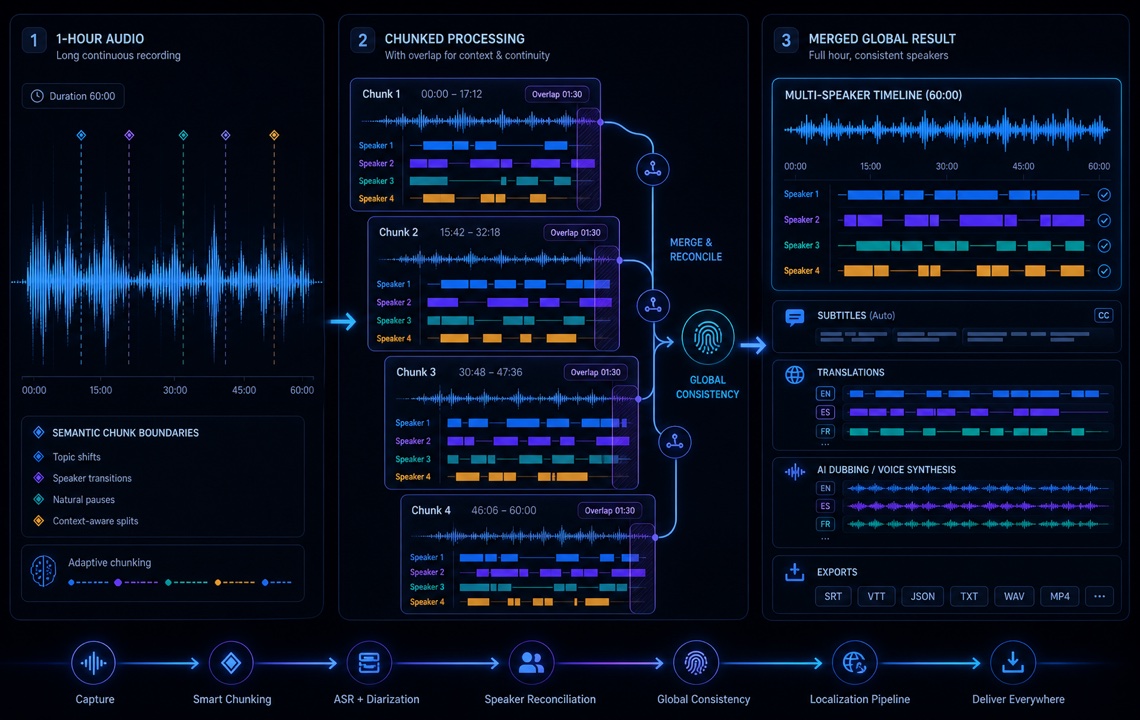
When One Hour Isn’t One Audio File: Engineering Long-Form Speech Processing at Scale
Long-form speech processing isn’t limited by AI models—it’s limited by engineering. Here’s how production systems preserve consistency across hours of audio, dozens of speakers, and complex localization pipelines.
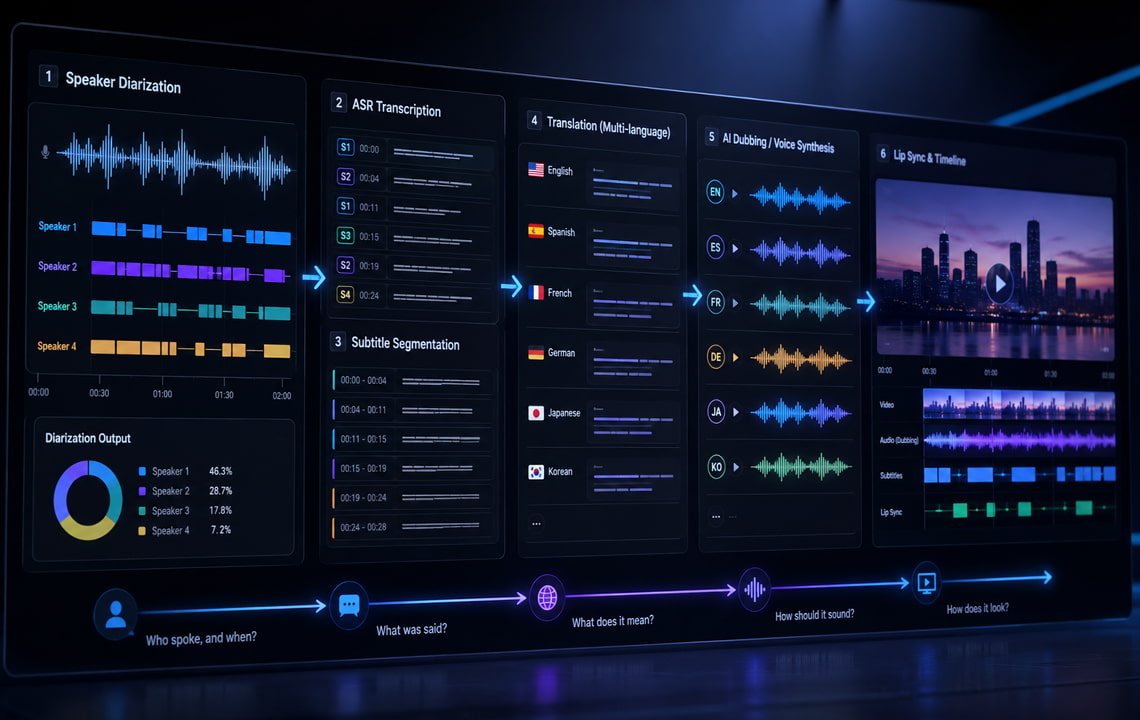
Speaker Diarization in Production: Why Optimizing DER Isn’t Enough for AI Video Localization
Speaker diarization is often treated as a standalone AI task. In reality, it’s one of the most influential—and most misunderstood—components of an end-to-end video localization pipeline.
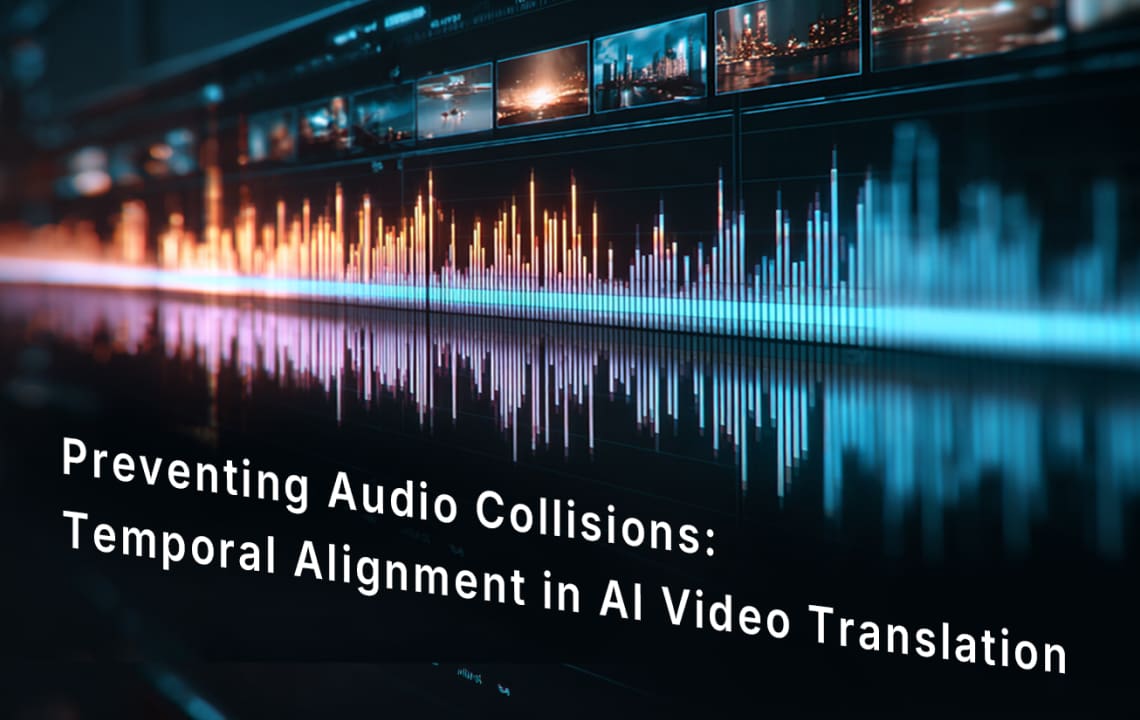
Preventing Audio Collisions: Temporal Alignment in AI Video Translation
When people talk about AI video translation, many assume the main challenges are simply audio source separation (removing the original speech) and text translation. So how does VMEG’s AI video localization workflow resolve this tension?
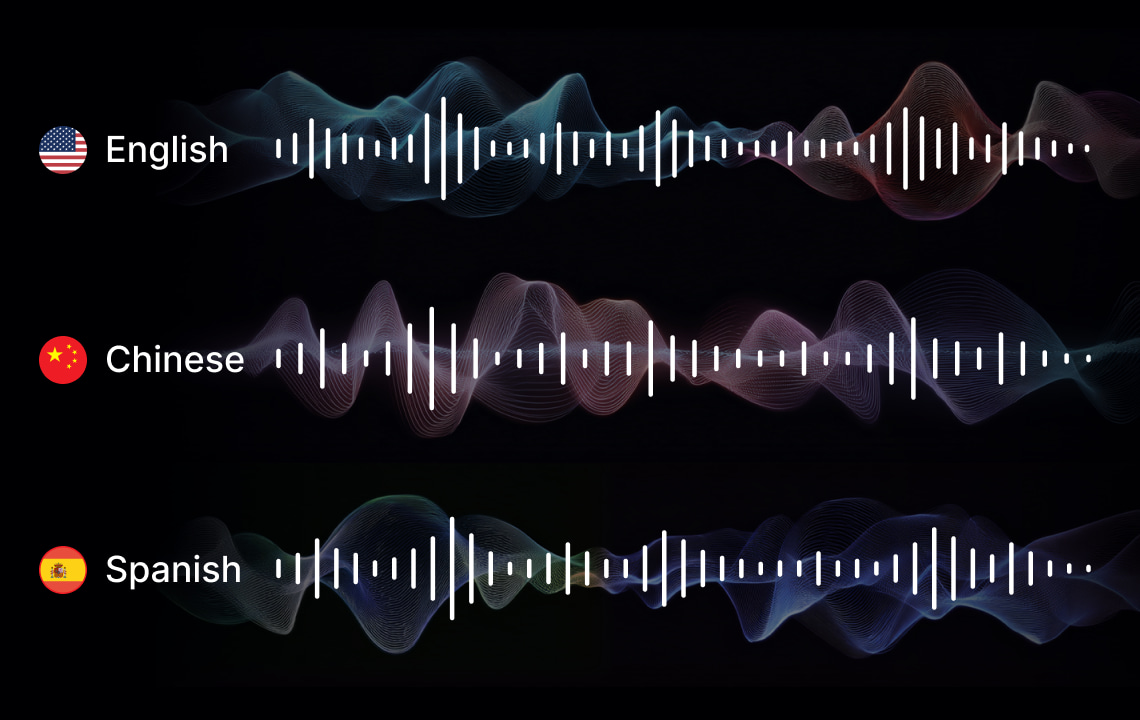
How to Match the Perfect 'Breath' for Cross-Lingual Subtitles
In global video distribution, a core challenge is ensuring subtitles and dubs are not only accurate in meaning but also natural in rhythm for the local audience.
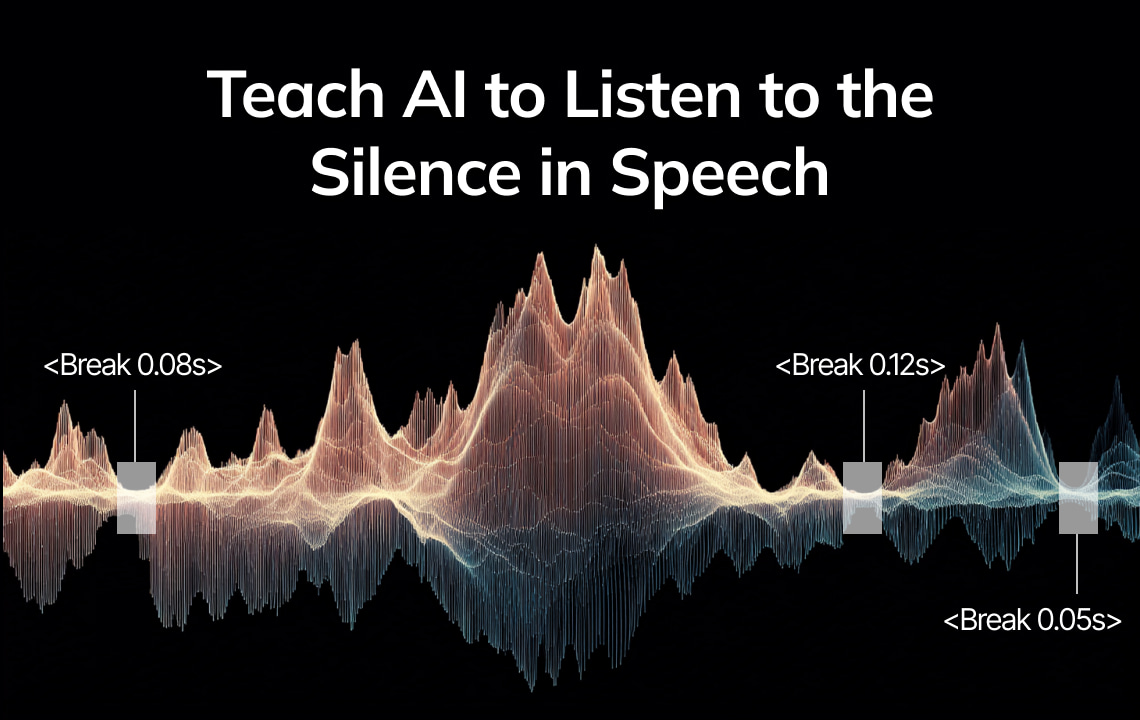
How to Teach AI to Listen to the Silence in Speech
Discover how AI learns to perceive Silence in Speech through silent-speech-recognition and rhythm modeling—training machines to capture human pauses, emotion, and breath.