'%3e%3cpath%20d='M21.0949%203.79395L13.9961%209.82854H21.0949V3.79395Z'%20stroke='black'%20stroke-width='1.38'%20stroke-miterlimit='10'/%3e%3cpath%20d='M13.998%209.82854L7.44531%203.79395V9.82854H13.998Z'%20stroke='black'%20stroke-width='1.38'%20stroke-miterlimit='10'/%3e%3cpath%20d='M13.9961%202.69922V25.1919'%20stroke='black'%20stroke-width='1.38'%20stroke-miterlimit='10'/%3e%3cpath%20d='M20.5488%2016.4113L13.9961%209.82812V18.2217L20.5488%2024.0918V16.4113Z'%20stroke='black'%20stroke-width='1.38'%20stroke-miterlimit='10'/%3e%3cpath%20d='M7.44531%2016.4113L13.998%209.82812V18.0526L7.44531%2024.0918V16.4113Z'%20stroke='black'%20stroke-width='1.38'%20stroke-miterlimit='10'/%3e%3cpath%20d='M4.71094%209.82812V18.6057H7.44125V16.4113L13.9941%209.82812H4.71094Z'%20stroke='black'%20stroke-width='1.38'%20stroke-miterlimit='10'/%3e%3cpath%20d='M13.9961%209.82812L20.5488%2016.4113V18.6057H23.2792V9.82812H13.9961Z'%20stroke='black'%20stroke-width='1.38'%20stroke-miterlimit='10'/%3e%3c/g%3e%3c/svg%3e)

'%3e%3cmask%20id='mask0_21456_29260'%20style='mask-type:luminance'%20maskUnits='userSpaceOnUse'%20x='0'%20y='0'%20width='28'%20height='28'%3e%3cpath%20d='M27.5%200.5H0.5V27.5H27.5V0.5Z'%20fill='white'/%3e%3c/mask%3e%3cg%20mask='url(%23mask0_21456_29260)'%3e%3cpath%20d='M14%2027.5C13.4854%2024.1035%2011.8974%2020.9608%209.46828%2018.5317C7.03922%2016.1026%203.89651%2014.5146%200.5%2014C3.89651%2013.4854%207.03922%2011.8974%209.46828%209.46828C11.8974%207.03922%2013.4854%203.89651%2014%200.5C14.5147%203.89644%2016.1028%207.03905%2018.5318%209.46816C20.9609%2011.8972%2024.1035%2013.4853%2027.5%2014C24.1035%2014.5147%2020.9609%2016.1028%2018.5318%2018.5318C16.1028%2020.9609%2014.5147%2024.1035%2014%2027.5Z'%20fill='url(%23paint0_linear_21456_29260)'/%3e%3c/g%3e%3c/g%3e%3cdefs%3e%3clinearGradient%20id='paint0_linear_21456_29260'%20x1='9.5'%20y1='9.5'%20x2='20.75'%20y2='21.875'%20gradientUnits='userSpaceOnUse'%3e%3cstop%20stop-color='%23F0DCD6'/%3e%3cstop%20offset='0.914506'%20stop-color='%231D6DFF'/%3e%3c/linearGradient%3e%3cclipPath%20id='clip0_21456_29260'%3e%3crect%20width='28'%20height='28'%20fill='white'/%3e%3c/clipPath%3e%3c/defs%3e%3c/svg%3e)
'%3e%3cpath%20d='M22.8019%2011.2412L23.5234%2011.6807V12.0103L23.3172%2012.7796L14.5579%2014.9771L13.7344%2012.7951L22.8019%2011.2412Z'%20fill='%23D97757'/%3e%3cpath%20d='M19.5236%204.77832L20.5322%205.00396L20.8%205.35575L21.0552%206.19876L20.9494%206.73644L15.0712%2015.3068L13.1133%2013.2191L18.5338%205.63471L19.5236%204.77832Z'%20fill='%23D97757'/%3e%3cpath%20d='M14.4577%203.43951L15.0761%203L15.5912%203.21976L16.1065%203.9889L14.6949%2013.0345L13.7364%2012.3397L13.3242%2011.131L14.0456%204.31853L14.4577%203.43951Z'%20fill='%23D97757'/%3e%3cpath%20d='M7.84766%203.5851L8.48285%202.7199L8.89716%202.61914L9.71923%202.74717L10.125%203.08581L13.0815%2010.0748L14.1509%2013.3954L12.8997%2014.1372L8.13117%204.91019L7.84766%203.5851Z'%20fill='%23D97757'/%3e%3cpath%20d='M4.77232%208.38688L4.56641%207.50742L5.18478%206.73828L5.90613%206.84816H6.11223L10.4403%2010.2544L11.78%2011.3531L13.6349%2012.8914L12.6044%2014.7594L11.6769%2013.9903L11.0586%2013.331L5.08168%208.82593L4.77232%208.38688Z'%20fill='%23D97757'/%3e%3cpath%20d='M3.53288%2014.0982L3.06641%2013.5489L3.06647%2013.0601L3.53288%2012.8896L8.78833%2013.2193L13.9408%2013.6588L13.7736%2014.7528L3.94502%2014.2082L3.53288%2014.0982Z'%20fill='%23D97757'/%3e%3cpath%20d='M6.62378%2019.8178H5.59334L5.18359%2019.3146V18.7132L6.93299%2017.3946L14.045%2012.5674L14.7648%2013.8785L6.62378%2019.8178Z'%20fill='%23D97757'/%3e%3cpath%20d='M8.57739%2022.8884L8.16518%2022.9984L7.54688%2022.6687L7.64995%2022.1193L13.7299%2013.5488L14.5543%2014.7574L10.0201%2021.1305L8.57739%2022.8884Z'%20fill='%23D97757'/%3e%3cpath%20d='M13.7361%2023.9861L13.4271%2024.4257L12.8088%2024.6454L12.2935%2024.2058L11.9844%2023.5466L13.5301%2014.6465L14.4576%2014.7563L13.7361%2023.9861Z'%20fill='%23D97757'/%3e%3cpath%20d='M18.9869%2021.5713V22.4503L18.8838%2022.7799L18.4716%2022.9997L17.7503%2022.8974L12.7969%2015.0367L14.7617%2013.4404L16.4104%2016.6269L16.5652%2017.7805L18.9869%2021.5713Z'%20fill='%23D97757'/%3e%3cpath%20d='M21.3629%2020.2507L21.4659%2020.8L21.1568%2021.2396L20.8476%2021.1297L19.0958%2019.8112L16.4165%2017.284L14.3555%2015.7457L14.9736%2013.6582L16.0041%2014.3175L16.6226%2015.5259L21.3629%2020.2507Z'%20fill='%23D97757'/%3e%3cpath%20d='M20.0232%2014.6482L22.5995%2014.8679L23.2178%2015.3074L23.6299%2015.9667V16.441L22.4964%2016.9556L16.7256%2015.4173L14.3555%2015.3074L14.9737%2013L16.6226%2014.3185L20.0232%2014.6482Z'%20fill='%23D97757'/%3e%3c/g%3e%3c/svg%3e)
English is still the most spoken language in the United States, but it is far from the only one. Roughly one in five U.S. residents age 5 and older speaks a language other than English at home, and Spanish alone accounts for the large majority of that group. If you create content, run a business, teach, or market products online, understanding the most commonly spoken languages in the US tells you who your audience is and how they prefer to be reached.
This guide ranks the most spoken languages in the US with recent American Community Survey (ACS) figures, explains how the Census measures language use, shows where non-English languages concentrate by state, and closes with what those patterns mean for video, marketing, and everyday communication.
At a glance
- English remains the most spoken language in the US: about 77% of people age 5+ speak only English at home (ACS 2024 estimates).
- Spanish is the clear No. 2 and the most common non-English language by a wide margin, with roughly 45 million speakers (~14% of the population).
- After Spanish, the next largest groups are Chinese, Tagalog (including Filipino), Vietnamese, Arabic, French, Korean, Portuguese, Hindi, Haitian Creole, and Russian, each with about 1 million or more speakers at home.
- Language use is highly geographic: California, Texas, Florida, New York, and New Jersey account for much of the country's multilingual population.
- For creators and brands, the "most spoken" ranking doubles as a content priority list for captions, dubbing, customer support, and multilingual video.

What "most spoken language" means in U.S. data
When people ask "what is the most spoken language in the US," they usually mean language spoken at home, not "languages people can speak" or "official languages." That distinction matters.
The U.S. Census Bureau's American Community Survey asks household members age 5 and older:
- Whether they speak a language other than English at home
- Which language
- How well they speak English
So ACS rankings measure home language use, not fluency in a second language learned at school, and not how often someone uses a language at work. A person who speaks Spanish at home and English "very well" still counts in the Spanish total. Someone who studied French in college but never uses it at home does not.
That is why English can be the national default for government and business while tens of millions of residents still go about their day in Spanish, Chinese, Tagalog, Vietnamese, Arabic, and other languages.
Quick answer: what is the most spoken language in the US?
English is the most spoken language in the United States. ACS 2024 estimates put English-only speakers at home at about 247.7 million people (~77%).
Spanish is the most common language other than English, with about 44.9 million speakers at home (~14%).
Among people who speak a language other than English at home, Spanish has long been the majority share. In the Census Bureau's 2018-2022 ACS 5-year release, Spanish accounted for 61.1% of non-English home languages, followed by Chinese (all dialects, 5.1%) and Tagalog including Filipino (2.5%).
(U.S. Census Bureau, Dec. 7, 2023)
Most Spoken Languages in the US (Ranked)
The table below ranks the largest languages spoken at home, based on ACS 2024 estimates widely cited from Census language-use statistics (population age 5+). Counts are rounded for readability; treat them as order-of-magnitude rankings rather than exact headcounts.
How to read this list: English dominates nationally. Spanish is in a category of its own among non-English languages. Everything from Chinese onward is smaller nationally but can still be the second or third language in specific metros, school districts, or customer bases.
1. English: still the national default
English is the most commonly spoken language in the US by a large margin. It is the primary language of most workplaces, schools, federal administration, and national media. In 2025, an executive order also designated English as the official language of the United States for federal purposes, but that does not erase multilingual households, bilingual commerce, or local language access requirements.
For content teams, English-first still makes sense for a national footprint. The mistake is treating English-only as English-everyone.
2. Spanish: in a different league
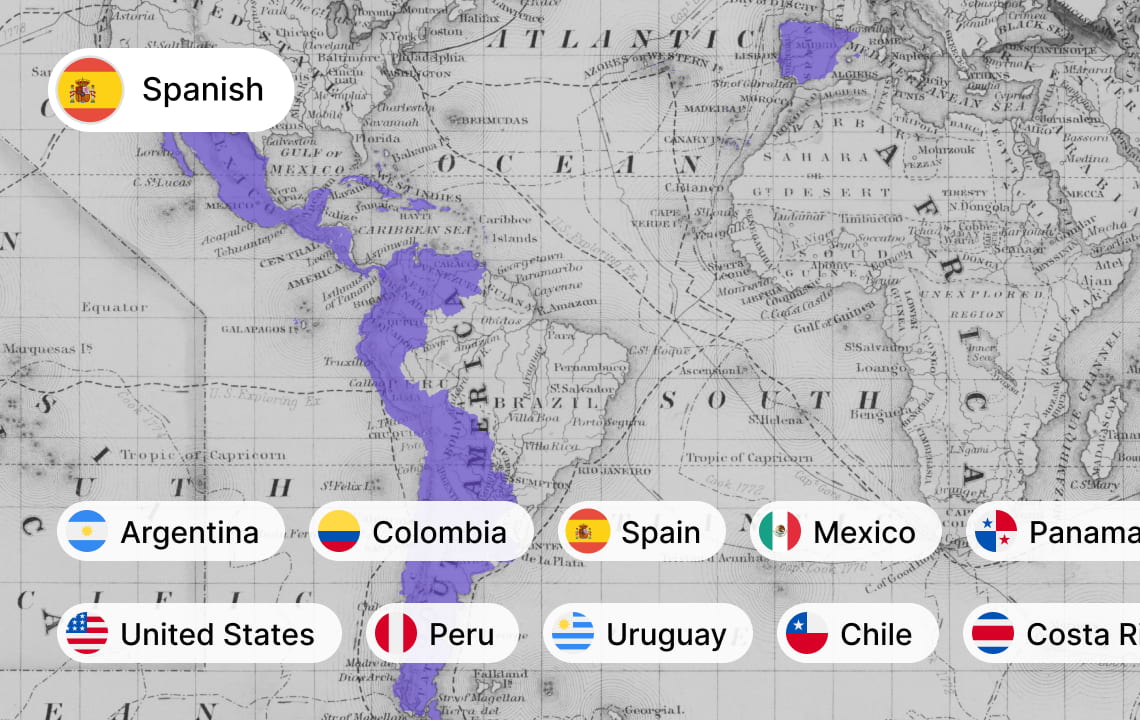
Spanish is in a different league from other non-English languages. With around 45 million speakers at home, the United States ranks among the world's largest Spanish-speaking countries.
Spanish is concentrated in California, Texas, Florida, New York, Arizona, New Mexico, and Illinois, but it appears in every state. For many brands, Spanish is the first localization priority after English, especially for customer support, product packaging, social video, and ads.
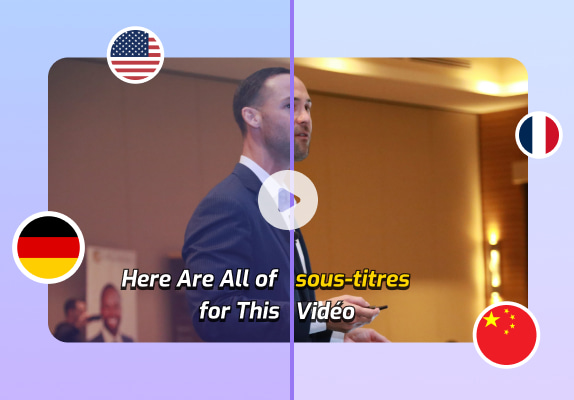
If you publish video mainly in English, Spanish versions (subtitles or dubbed audio) are often the highest-ROI next step for U.S. reach. A practical workflow is to translate and localize the same clip rather than reshoot it; tools such as an online video language translator can turn an English original into Spanish (or the reverse) with subtitles and AI voiceover when speed matters more than a full studio re-record.
3. Chinese (Mandarin, Cantonese, and other varieties)
"Chinese" in Census tables usually groups Mandarin, Cantonese, and other Sinitic varieties. Together they form the third-largest home-language category in the US, with roughly 3.7 million speakers. Communities are concentrated in California, New York, and parts of Texas and Washington.
For marketing and education content, Mandarin often leads digital demand, but Cantonese remains important in long-established Chinatowns and older immigrant communities. Treat "Chinese" as a family of languages when you plan voiceovers and on-screen text.
4. Tagalog (including Filipino)
Tagalog, often reported together with Filipino, has about 1.9 million speakers at home. Filipino American communities are concentrated in California, Hawaii, Nevada, and parts of the Northeast and Pacific Northwest. Tagalog content performs well for family-oriented media, faith communities, healthcare explainers, and workforce training.
5. Vietnamese
Vietnamese ranks among the top five non-English languages, with about 1.6 million speakers at home. Large communities in California, Texas, and Washington make Vietnamese a priority for regional campaigns even when it is not a top national keyword in your analytics.
6. Arabic
Arabic has grown quickly in recent ACS periods and now sits near 1.5 million speakers at home. Because Arabic covers many national-origin communities, dialect and Modern Standard Arabic choices matter for news, religion, education, and public-service media.
7. French
French remains in the top tier (~1.3 million), with Louisiana heritage speakers, New England communities with Canadian roots, African and Caribbean Francophone immigrants, and learners who use French at home in bilingual households. French Creole varieties are often tabulated separately (notably Haitian Creole).
8. Korean
Korean (~1.2 million) is prominent in California, New York, New Jersey, Virginia, Georgia, and Texas metro areas. Korean-language YouTube, church media, and small-business marketing are dense enough that Korean often punches above its national share online.
9. Portuguese
Portuguese (~1.1 million) reflects Brazilian and Portuguese communities, with clusters in Massachusetts, New Jersey, Florida, and California. Brazilian Portuguese dominates newer digital content demand.
10-12. Hindi, Haitian Creole, and Russian
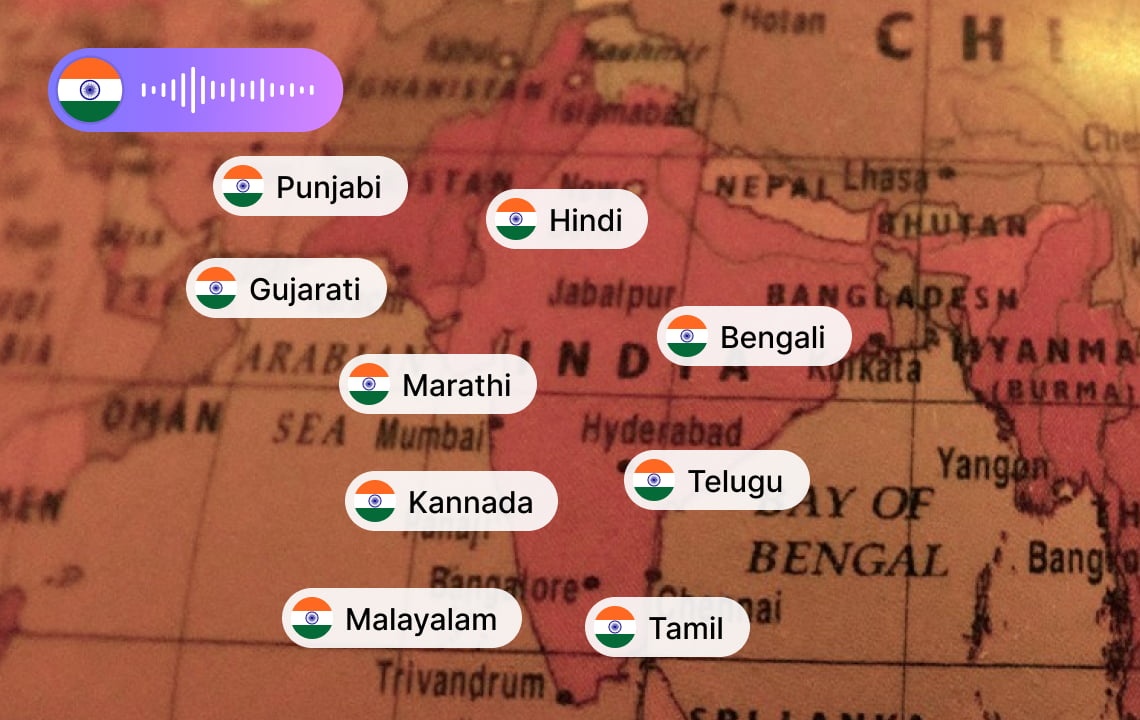
Hindi, Haitian Creole, and Russian each cross or approach the 1 million mark. Hindi connects to broader South Asian language networks (alongside Urdu, Gujarati, Telugu, Tamil, Bengali, and Punjabi). Haitian Creole matters most in Florida and parts of the Northeast. Russian remains significant in New York, California, and several Sun Belt metros.
Below this tier, German, Polish, Italian, Japanese, Persian, and many South Asian and African languages still matter locally, even when they fall outside a national "Top 10" headline.
How many people speak a language other than English?
According to recent ACS framing, about 22% of U.S. residents age 5+ speak a language other than English at home, while a smaller share report speaking English less than "very well." Multilingual homes are widespread, but limited English proficiency is a narrower and more actionable segment for government services, healthcare, banking, and customer support.
The Census Bureau's 2018-2022 release also found that among non-English speakers, most Spanish and Tagalog speakers reported speaking English "very well," while Chinese speakers were less likely to do so. That gap affects everything from ballot access to whether your product videos need dubbed audio versus captions alone. (Census Bureau press release CB23-208)
Where the Most Common Languages Spoken in the US Concentrate
National rankings hide state-level reality. A few patterns show up repeatedly in ACS state tables:

- California: English is still the plurality, but Spanish and Chinese are massive; Tagalog and Vietnamese are also among the largest communities in the country.
- Texas: Spanish share is exceptionally high (around the high-20% range of home speakers in recent ACS state snapshots), with Vietnamese, Chinese, Hindi, and Arabic as notable secondary languages.
- Florida: Spanish dominates non-English use; Haitian Creole and Portuguese also matter in several metros.
- New York: Highly diversified Spanish leads, with Chinese, Russian, and Bengali among the standout secondary languages in recent state snapshots.
- New Jersey / Massachusetts: Dense immigrant corridors; Portuguese is especially visible in Massachusetts.
If you are choosing languages for a U.S. campaign, start with English + Spanish nationally, then add Chinese, Tagalog, Vietnamese, Arabic, Korean, or Haitian Creole based on your DMA (designated market area), store footprint, or ad geo-targeting. Not only the national Top 10.
Why These Rankings Matter for Creators, Schools, and Brands
1) Content demand follows speakers—and bilingual behavior
People looking up the most spoken languages in the US are often sizing an audience. The follow-on question is usually: Which languages should we publish in next? Spanish is the default after English. Chinese, Tagalog, Vietnamese, Arabic, Korean, and Haitian Creole are common “tier two” choices by city and vertical.
2) Video travels farther when language friction drops
When a clip only exists in English, Spanish-dominant and bilingual households may scroll past. Captions are the baseline; natural-sounding second-language audio is often what makes content feel native. Teams that already shoot in English can localize the same asset with an AI video translator workflow (transcript → translation → voiceover/subtitles), then spot-check terminology—usually faster than a full re-shoot.
3) Home language ≠ internet language
Younger bilingual speakers may use English online while speaking another language with family. Older speakers may prefer native-language YouTube, WhatsApp, or Facebook. Age mix should shape captions vs. dubbing as much as raw speaker counts.
4) Public services still track limited-English speakers
Hospitals, schools, courts, and agencies use ACS data to plan interpreters and translated materials. Prioritize languages with both high speaker counts and higher rates of speaking English less than “very well” in your service area.
Practical Ways to Use This Language Map
- Pick a U.S. primary + secondary pair. Most national brands: English + Spanish. Add a third language only when analytics or geo-targeting justify it.
- Localize highest-intent assets first. Demo videos, onboarding, safety explainers, and pricing usually beat blog posts for conversion impact.
- Choose captions vs. dubbing by audience. Captions help bilingual and accessibility use cases; dubbing helps when sound-on viewing or reading speed is a barrier.
- Keep terminology consistent. Glossaries matter for product names and regulated terms—especially across Mandarin/Cantonese or Brazilian vs. European Portuguese.
- Measure language like a channel. Track watch time, CTR, and support tickets by language version. Speaker counts show where demand can exist; metrics show where it does.
For social clips, tutorials, or training videos, generate a second-language cut with a video translator instead of rebuilding the edit from scratch. Keep human review for brand voice; use AI for transcription, translation, timing, and first-pass audio.
Data Notes and Limitations (Read Before You Cite)
- ACS figures are survey estimates, not a full census enumeration. Margins of error matter for small languages and small geographies.
- “Chinese,” “Arabic,” and some other labels bundle multiple varieties.
- Home-language questions exclude children under 5 and do not measure American Sign Language the same way as spoken languages.
- Historical comparisons are imperfect because Census language questions changed over decades.
- Speaker counts are not the same as consumer spending power, search volume, or social engagement—use them as a starting map, then validate with your own data.
Primary references for this article include the U.S. Census Bureau language-use data hub, the December 7, 2023 Census press release on language spoken at home (2018–2022 ACS), and ACS detailed tables such as B16001 / S1601 on data.census.gov.
FAQs
What is the most spoken language in the US?
English. About three-quarters of people age 5 and older speak only English at home. Spanish is the most spoken language other than English.
What are the most commonly spoken languages in the US after English?
Spanish by a wide margin, then Chinese, Tagalog (including Filipino), Vietnamese, Arabic, French, Korean, Portuguese, Hindi, Haitian Creole, and Russian—each with roughly a million or more speakers at home in recent ACS estimates.
How many people speak Spanish in the United States?
On the order of 45 million people speak Spanish at home (ACS 2024 estimates, ~14% of the population age 5+). Broader estimates of Spanish ability can run higher because ACS measures home use, not all speakers.
Is English the official language of the United States?
English is the de facto national language and, as of 2025, has been designated the official language of the United States by executive order for federal purposes. Congress has not historically passed a comprehensive statutory official-language law in the same way some countries do, and many states have their own official-language rules. Multilingual service requirements can still apply under federal and state law.
Which U.S. states are the most multilingual?
California, Texas, Florida, New York, and New Jersey consistently show high shares of residents who speak a language other than English at home. Exact rankings shift with ACS vintages and whether you measure share or absolute counts.
Does “Chinese” mean Mandarin?
Not always. Census “Chinese” typically includes Mandarin, Cantonese, and other Chinese varieties reported by respondents. For content and customer support, confirm which variety your audience actually uses.
What is the fastest-growing major language in the US?
Growth rates change by ACS period. In Census analyses of earlier ACS windows, Arabic was among the fastest-growing languages in the top tier, while some European heritage languages declined. Always check the latest ACS table for the period you cite.
How should businesses choose which languages to translate into?
Start with English + Spanish for national U.S. coverage. Add languages based on (1) customer or student geography, (2) support ticket language, (3) site/app locale settings, and (4) video watch data—not vanity Top-10 lists alone.
Conclusion
The most spoken languages in the US still begin with English—and then the story becomes Spanish, followed by a long tail of Chinese, Tagalog, Vietnamese, Arabic, and other communities that shape cities, classrooms, and commerce. If your job is to inform, sell, teach, or entertain, treat this ranking as an audience map: English for breadth, Spanish for scale, and selected additional languages for the places and segments where your users actually live.
When your next step is turning an English (or Spanish) video into another priority language, keep the workflow simple—translate, subtitle, and dub the asset you already have, review the result, then publish. That is how language data stops being a trivia chart and starts becoming reach.