AI dubbing tools vary widely in what they offer. Some focus on automatic video translation, while others provide professional production services for film, television, and streaming content.
Deepdub falls into the latter category, combining expressive AI voice technology with professional localization workflows. But depending on your project, you may prefer a self-service dubbing editor, a specialized voice AI platform, or another managed localization provider.
This guide compares six Deepdub alternatives, focusing on their production workflows, capabilities, and practical differences.
What Is Deepdub?
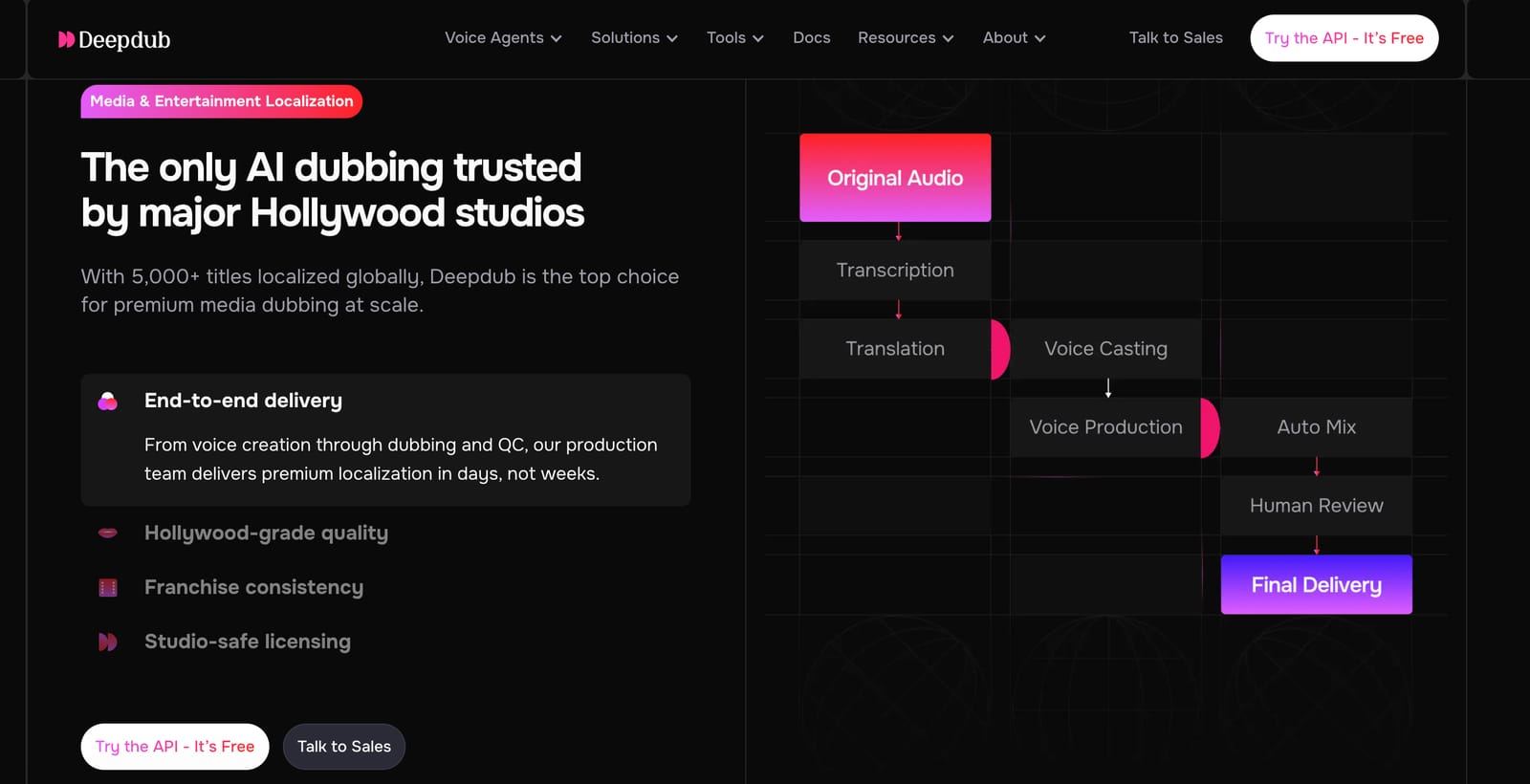
Deepdub is an AI dubbing and voice technology company focused on media localization and enterprise applications.
Its professional localization services combine AI-generated voices with human expertise in translation, voice direction, and audio production. Deepdub's emotional text-to-speech (eTTS) technology supports expressive speech, voice referencing, and accent control.
Beyond managed localization, Deepdub offers Deepdub GO, a virtual studio for dubbing professionals, as well as voice APIs and live dubbing technology.
Why Consider a Deepdub Alternative?
Deepdub offers a broad range of dubbing capabilities, but its production model may not suit every project.
Teams with their own translators or editors may prefer software that gives them direct control over dialogue and voice adjustments. Others may prioritize self-service access, transparent usage-based pricing, or integration with existing production systems.
Deepdub's professional localization services generally require a custom quote, while access to Deepdub GO is currently limited.
The alternatives below cover different approaches, from studio-directed AI dubbing and managed localization to self-service video translation.
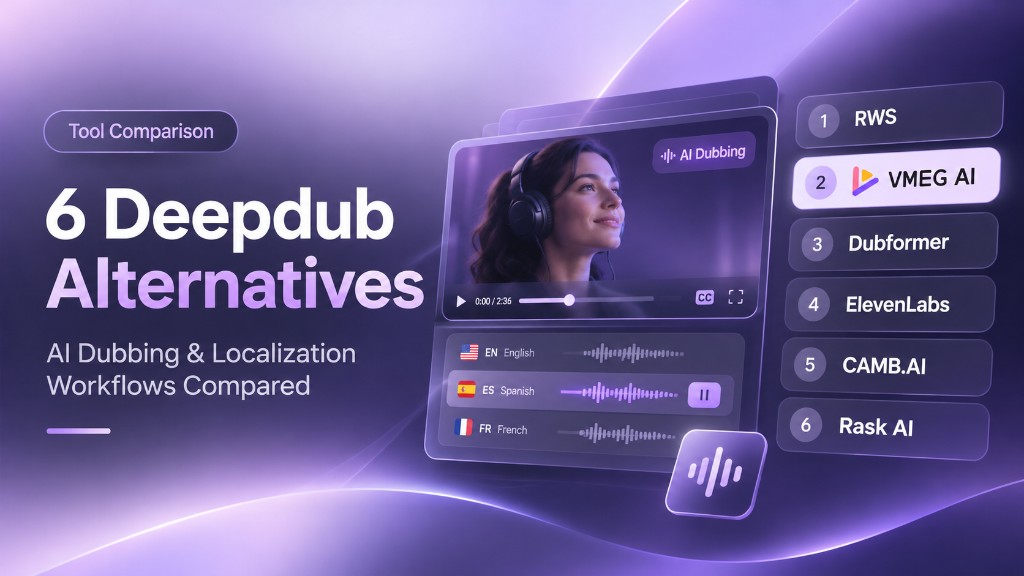
6 Deepdub Alternatives Worth Considering
These are not six interchangeable dubbing platforms. They represent different approaches to generating, directing, reviewing, and delivering multilingual audio.
| Alternative | Main Focus | Most Relevant When |
|---|---|---|
| RWS | Managed media localization | A company needs a service provider to organize localization and review |
| VMEG AI | Self-service dubbing and editing | A team wants to generate and correct dubbing in its own workflow |
| Dubformer | Directed AI dubbing | A studio needs control over each character's performance |
| ElevenLabs | Voice generation and dubbing | Preserving or recreating vocal performance is a priority |
| CAMB.AI | Live and scalable localization | Content needs translation during a broadcast or live stream |
| Rask AI | Repeatable video localization | A publisher regularly translates videos into several languages |
The alternatives below cover different parts of the dubbing process, from managed localization and studio production to self-service editing and live translation.
RWS — AI Dubbing with Human Localization
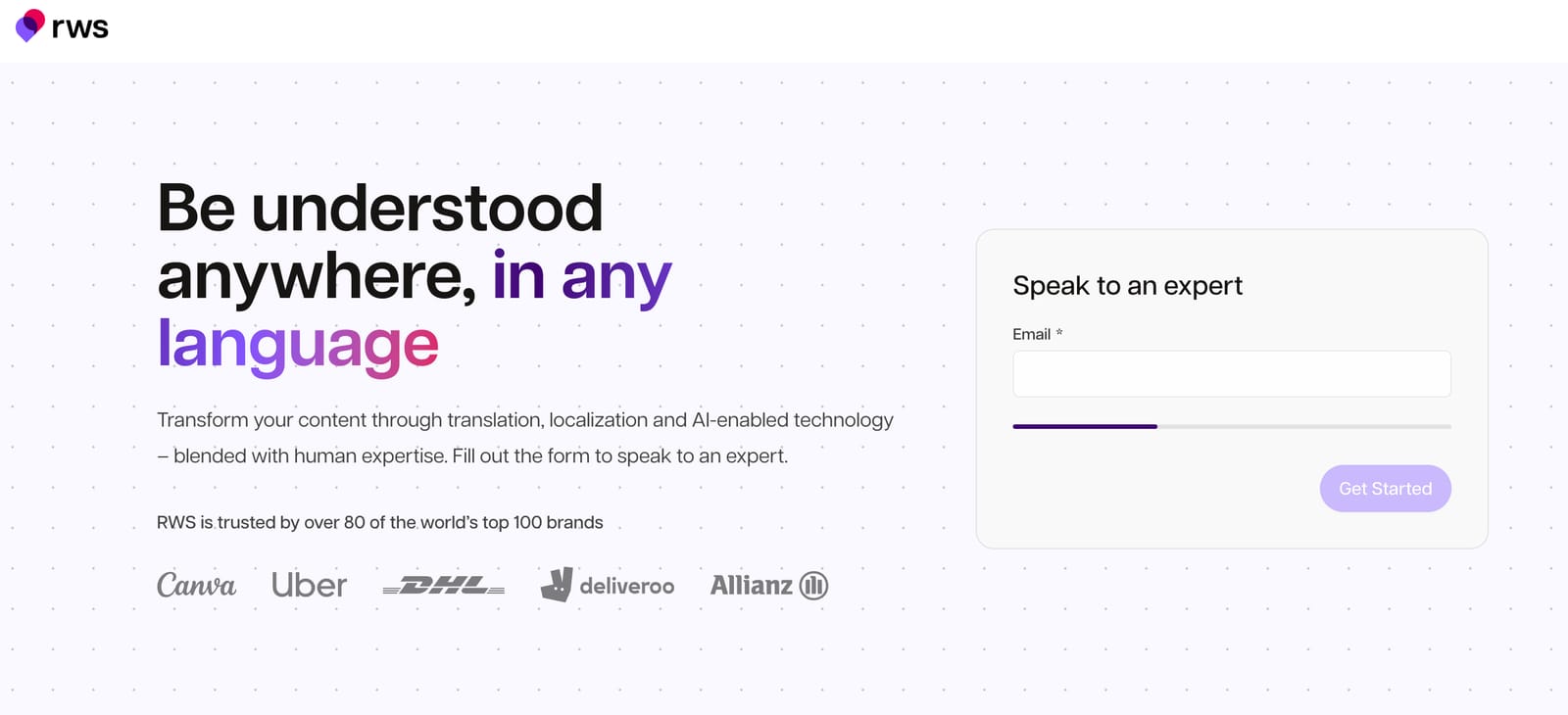
RWS is a language services company providing translation, subtitling, dubbing, and media localization. In June 2025, it acquired Papercup's AI dubbing technology, which is now integrated into its localization services.
Papercup's technology generates synthetic voices while allowing language specialists to adjust translation, timing, and delivery. RWS combines this with its existing network of linguists and production services. It also supports different levels of localization, from more automated workflows for large content libraries to more extensively reviewed productions.
RWS is a closer alternative to Deepdub's managed localization business than to its voice API products. Customers generally work with RWS on project requirements and delivery rather than purchasing a fixed number of self-service dubbing minutes. Pricing is quotation-based, so the scope of human review, audio production, and revisions should be confirmed before comparing costs.
VMEG AI — Self-Service Dubbing with Post-Generation Editing
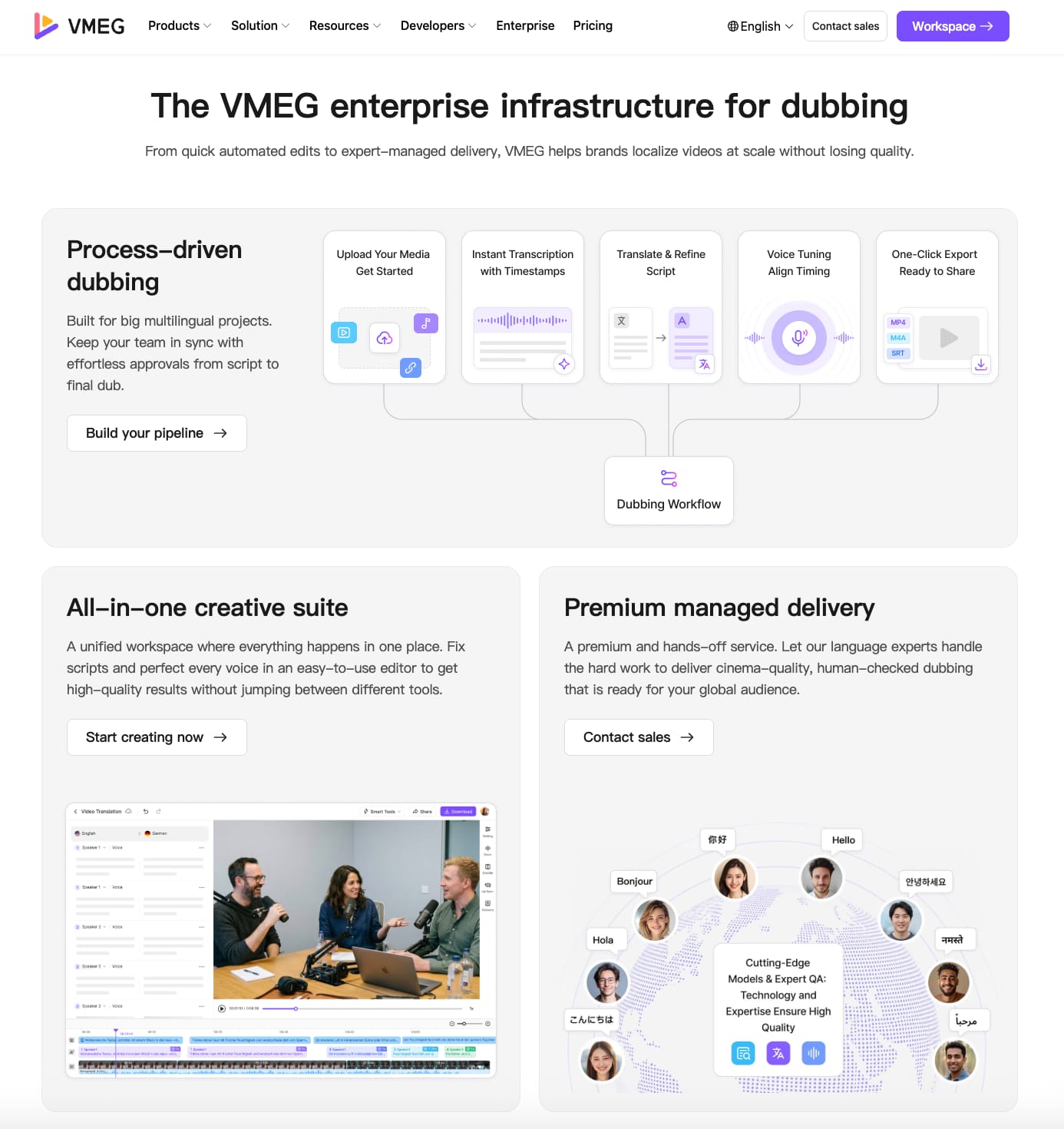
VMEG AI supports video and audio dubbing in over 170 languages, with voice cloning, multi-speaker detection, and subtitle translation. Its workflow is built around generating a first version and correcting the parts that need attention.
Users can edit individual translations, change speaker voices, adjust timing and speech speed, and regenerate selected lines without processing the entire video again. Glossaries and pronunciation dictionaries help with recurring names and terminology. The editor also provides audio separation controls for handling background music and sound effects.
VMEG differs from Deepdub's managed localization model by leaving the editing process largely in the user's hands. For paid users, editing and regenerating audio within the same dubbing task does not consume additional editing credits, although features such as lip synchronization are charged separately.
Files can be up to three hours long. Complex scenes with overlapping dialogue or strong sound effects may still need manual audio work, and multi-person lip synchronization remains less reliable than single-face footage.
Dubformer — Phrase-Level Control for Professional Dubbing
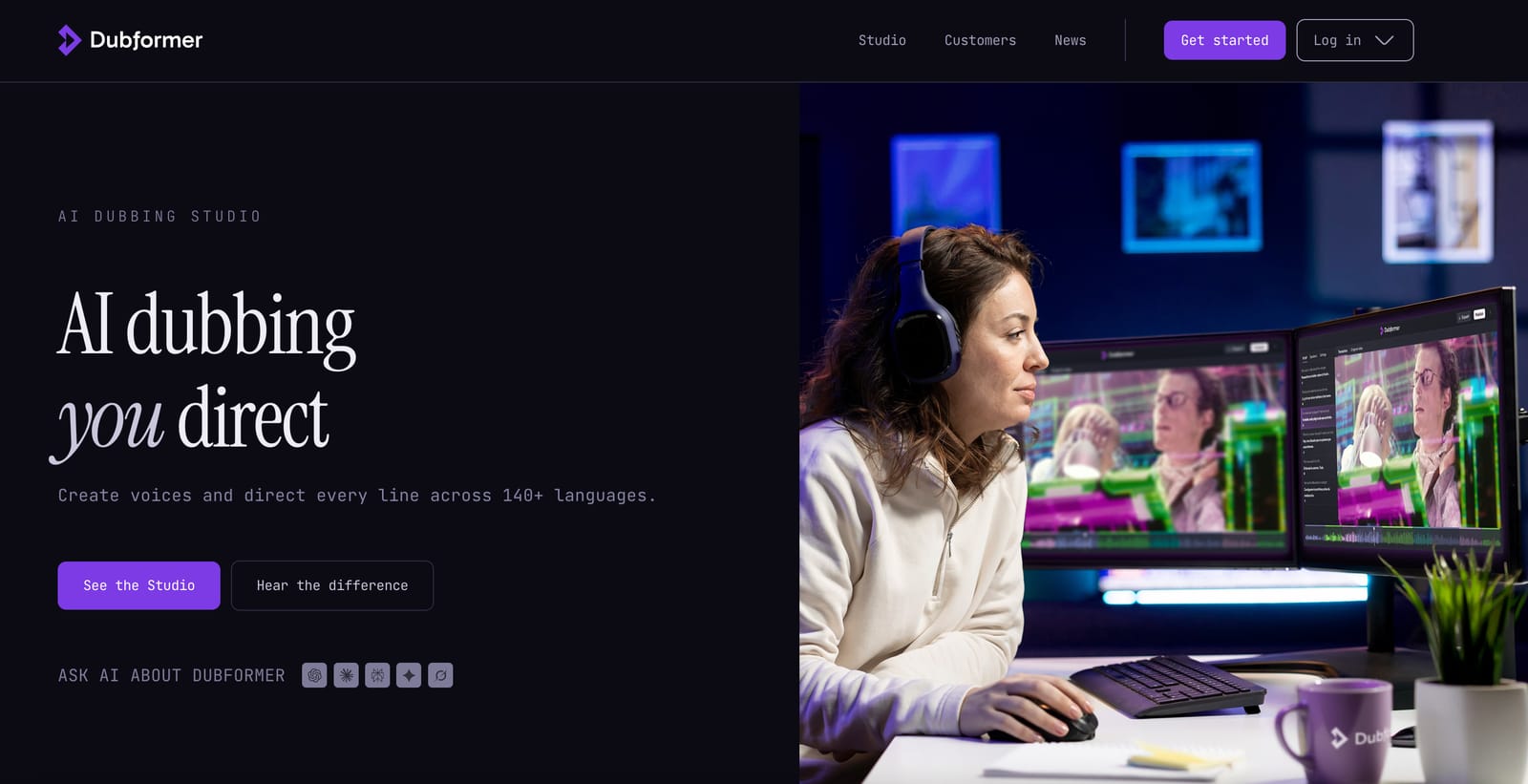
Dubformer provides AI dubbing technology for media localization, with an editor designed around individual dialogue segments.
Its Emotion Transfer feature uses the original speech as a reference for intonation, intensity, rhythm, and timing. Studios can either recreate the original speaker's voice or transfer the performance to another selected voice. Multiple generated takes can be saved and compared before selecting the final version.
One important limitation is that Emotion Transfer is not available for every language or voice type. It also cannot be combined with manual voice-acting controls or prompts in the same segment. Studios need to choose which method of performance control to use.
Compared with Deepdub's broader localization services, Dubformer places more emphasis on directing and approving AI-generated dialogue within a studio workflow.
ElevenLabs — Voice Cloning and AI Dubbing
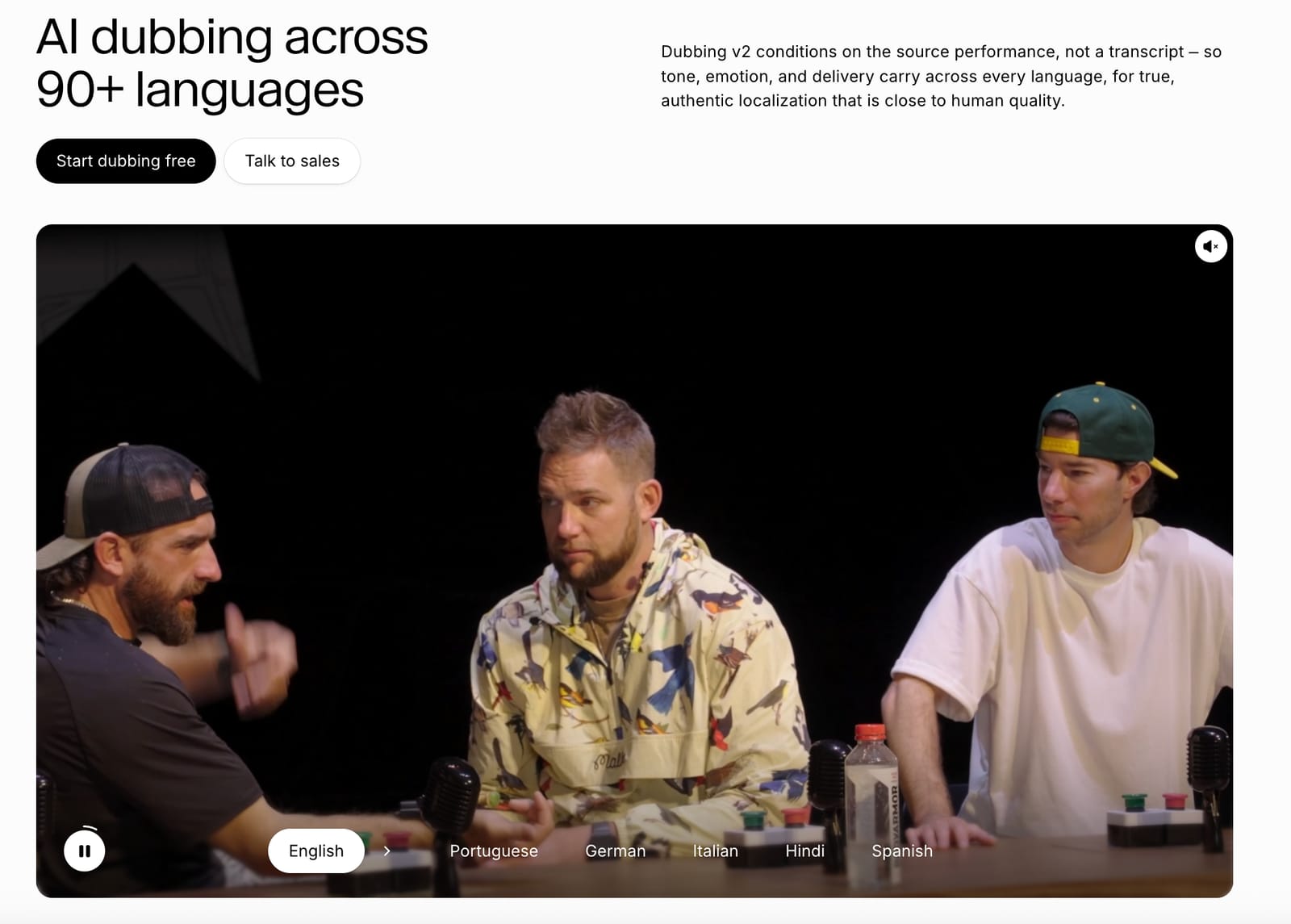
ElevenLabs offers AI dubbing alongside its text-to-speech and voice cloning products. Dubbing v2 supports over 90 languages and is designed to retain the original speaker's voice characteristics, pacing, and emotional delivery.
Unlike Deepdub's managed media localization services, ElevenLabs' self-service workflow leaves translation review and final quality control largely to the user. It also offers human-assisted production through ElevenProductions, although this is a separate service.
The editing workflow is worth checking. The legacy Dubbing Studio is in maintenance mode, while Dubbing v2 uses a newer system. Users can edit Dubbing v2 projects in the web interface, but transcript editing and audio regeneration through the API require Enterprise access.
Another production consideration is export quality: ElevenLabs recommends using the generated audio with the original video for final production, as the dubbed video export may not preserve the source resolution or multichannel audio.
CAMB.AI — Real-Time Dubbing for Live Broadcasts
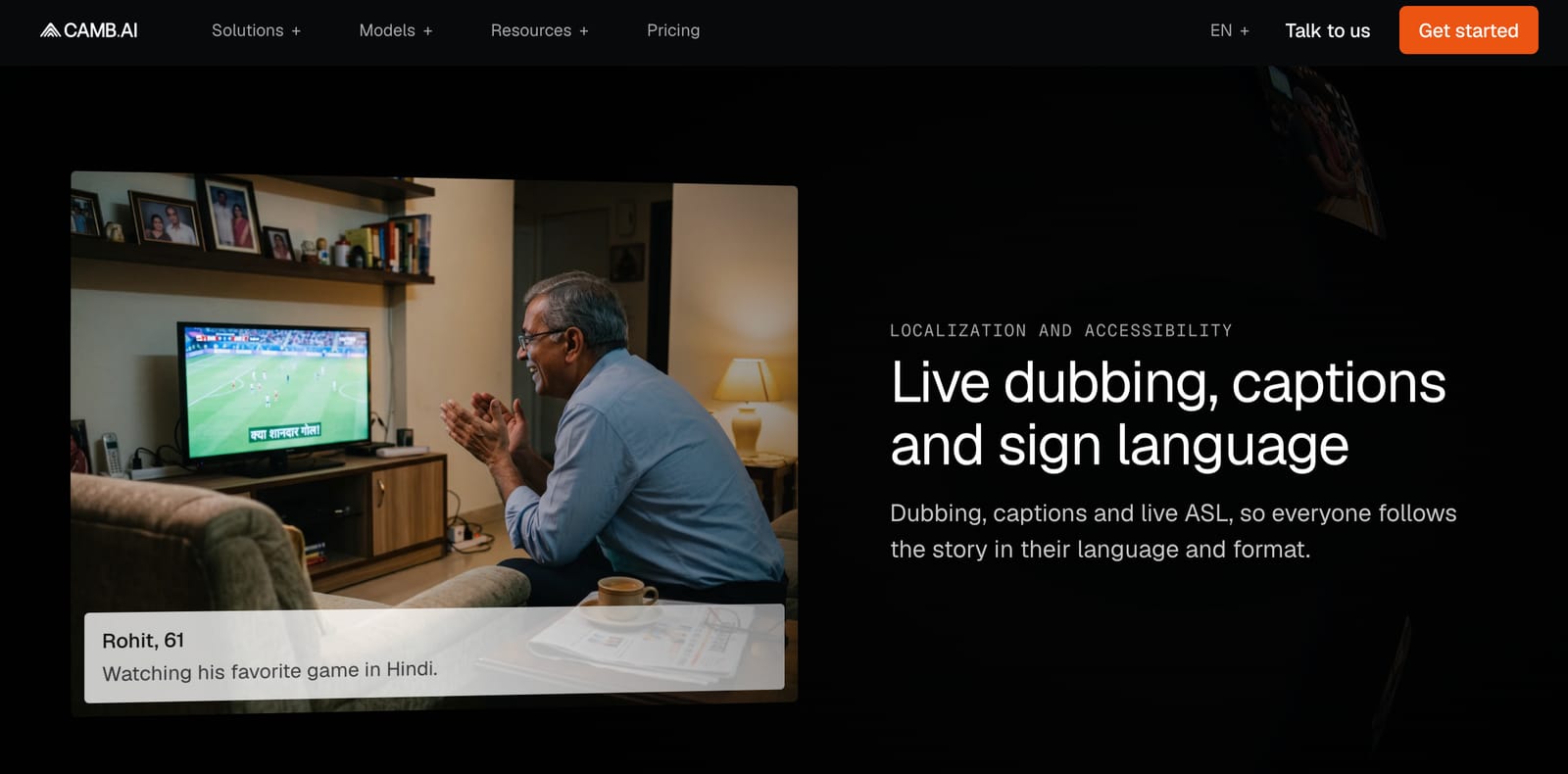
CAMB.AI develops multilingual speech technology for video, broadcasting, and live events. Its live dubbing system accepts streams through SRT, RTMP, or HLS and produces translated audio feeds for distribution through the same protocols.
This overlaps with Deepdub's live dubbing business, but it is a different workflow from translating pre-recorded content. A live broadcast cannot wait for translators to review every sentence, so latency, stream stability, and speaker handling become particularly important.
CAMB.AI advertises support for more than 150 languages in its live dubbing offering. However, language support alone does not establish performance in a live production. Broadcasters should test actual feeds with rapid dialogue, interruptions, and multiple speakers, then evaluate latency and reliability under their own streaming conditions.
Rask AI — Recurring Video Translation and Dubbing
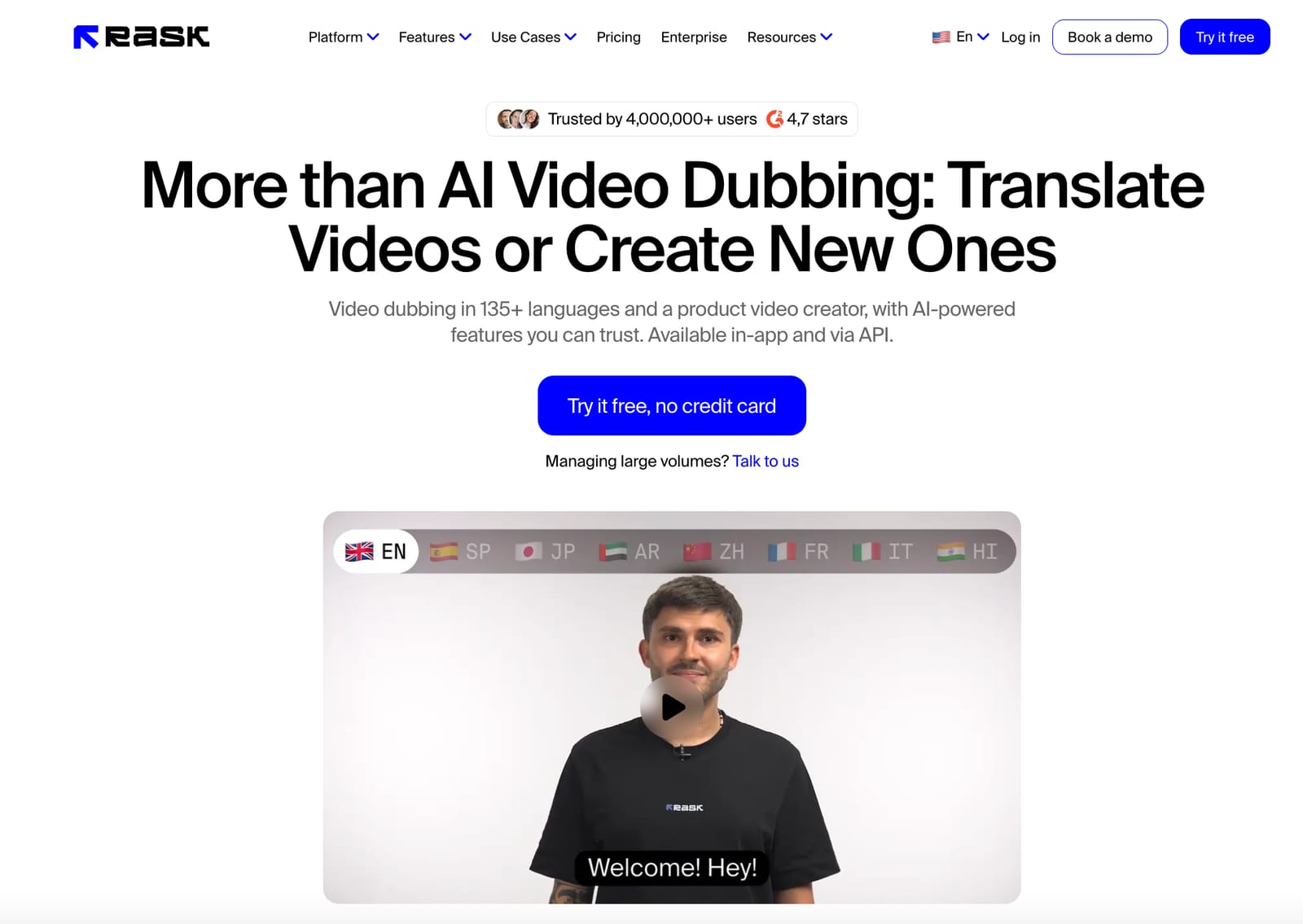
Rask AI provides automated video translation, voice cloning, and transcript editing. Its workflow allows users to upload a video, generate translated audio, review the script, and make corrections before export.
Unlike Deepdub's project-based professional localization services, Rask uses published subscription plans with included processing minutes. Its Creator plan starts at $39 per month for 25 minutes under monthly billing, with larger plans for recurring production.
Rask is more directly comparable to self-service video dubbing platforms than to a managed studio service. It supports voice cloning in selected languages and provides editing tools, but users remain responsible for checking translations, speaker assignments, and the final audio.
For projects involving multiple target languages or optional features such as lip synchronization, check the plan's usage rules before estimating total production costs.
The Bigger Difference: Who Is Responsible for the Finished Dub?
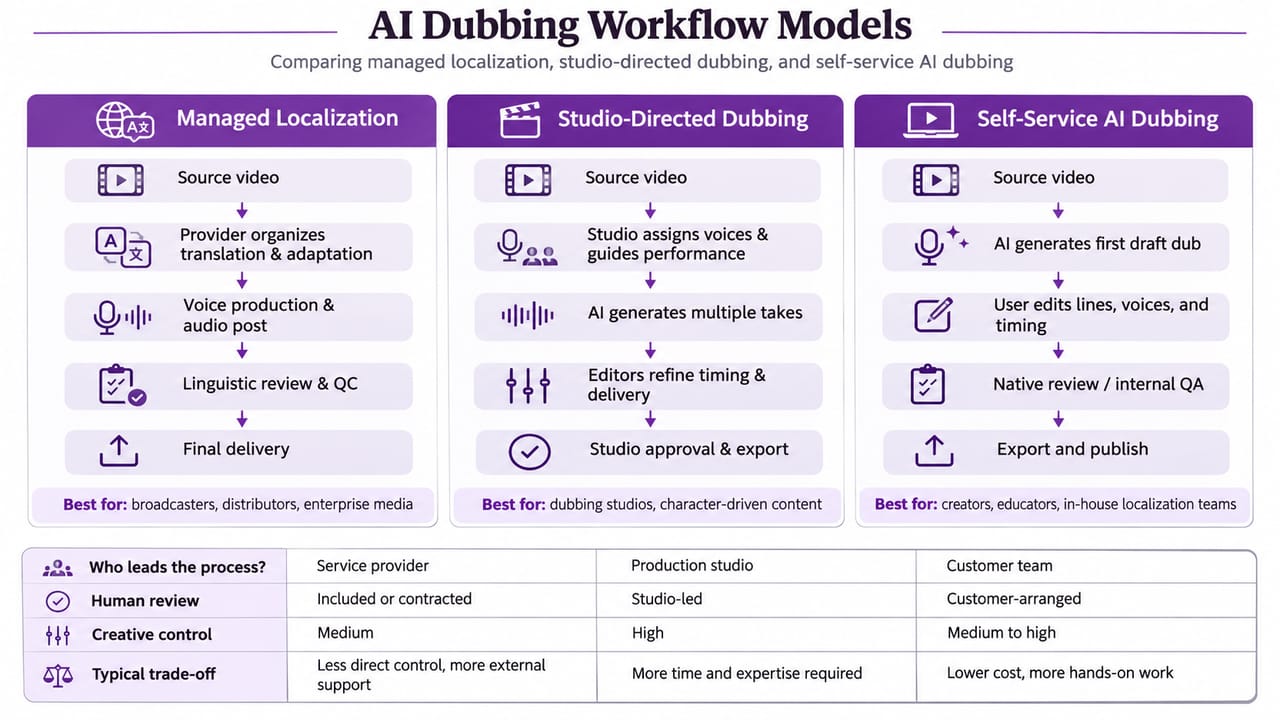
AI dubbing tools differ not only in how they generate voices, but also in who handles translation review, performance adjustments, and final quality control.
There are three common approaches.
Managed Localization
Providers such as Deepdub and RWS can manage translation, voice production, mixing, and quality control as part of a contracted service.
This suits production companies and distributors that prefer to outsource localization rather than manage the process themselves.
Studio-Directed AI Dubbing
Studios with their own translators, directors, and engineers may prefer AI tools that fit into their existing workflows.
Dubformer offers phrase-level direction and performance selection. Deepdub GO, VMEG and ElevenLabs may also be worth evaluating, depending on production requirements.
The studio remains responsible for creative decisions and final approval.
Self-Service AI Dubbing with Human Review
Platforms such as VMEG and Rask allow teams to generate translated audio, review the results, and make corrections in an editor.
This approach can work for educational videos, documentaries, interviews, and scripted content where the customer has the resources to review the output.
Quality control generally remains with the customer unless additional review services are arranged.
Which Deepdub Alternative Makes Sense for Your Project?
A few practical scenarios help narrow the choice.
If you're a professional dubbing studio: Start with Dubformer and Deepdub's studio-oriented offerings. Evaluate how well their tools support casting, performance direction, revisions, and approvals.
If your team wants to generate and correct its own dubs: Consider VMEG. Test their editors with the kind of corrections your reviewers make most often.
If you're producing live multilingual content: Compare CAMB.AI and Deepdub's live technologies using your actual broadcast infrastructure. Latency, continuity, and support matter more than a polished demonstration.
If voice identity is central to the project: Evaluate ElevenLabs, VMEG alongside Deepdub. Listen for both speaker similarity and whether the translated performance makes sense in context.
If you want a provider to manage localization: Compare Deepdub and RWS using detailed production briefs rather than headline AI capabilities.
These categories overlap. The right choice depends less on the product's feature count than on the production process surrounding it.
Frequently Asked Questions
What is the closest alternative to Deepdub for professional dubbing?
Dubformer is worth considering for professional teams that want to direct AI-generated dialogue at the phrase level. RWS is another relevant alternative when the requirement is a managed localization service.
The closest choice depends on whether you need dubbing software, professional production services, or both.
Are there self-service alternatives to Deepdub?
Yes. VMEG AI, Rask AI, and ElevenLabs provide self-service dubbing workflows with different editing capabilities and usage models.
Deepdub also has its own studio-oriented technology, so it is not exclusively a managed service provider.
Can AI dubbing preserve the original actor's emotion?
Some systems attempt to preserve characteristics of the original performance through voice conversion, performance transfer, or expressive speech generation.
Deepdub, Dubformer, VMEG and ElevenLabs offer relevant technologies, but results vary by source material, language, and scene. Emotion preservation should be evaluated through listening and human review rather than assumed from product descriptions.
What is the difference between AI dubbing and human-reviewed AI dubbing?
AI dubbing generates translated speech using automated technology. Human-reviewed AI dubbing adds a review process in which people check or adjust translation, voice delivery, timing, pronunciation, and other aspects of the result. The amount of human involvement varies considerably between providers and projects.
Which Deepdub alternative is best for localizing short dramas?
For dialogue-heavy short dramas, look at Dubformer, VMEG, ElevenLabs, and professional managed services such as Deepdub or RWS.
The deciding factors should include character voice consistency, emotional performance, translation adaptation, background audio handling, and the availability of qualified reviewers.
No single platform can be assumed to deliver the best results across all dramas and language pairs.
Final Thoughts
Deepdub sits at the intersection of AI voice technology and professional media localization. Its alternatives do not all compete on the same terms.
The useful question is not which company has the longest list of AI dubbing features.
It is what your team needs to produce, which parts of the process you want to control, and who will be responsible for reviewing and delivering the result.