Drie bevindingen die de kansen definiëren
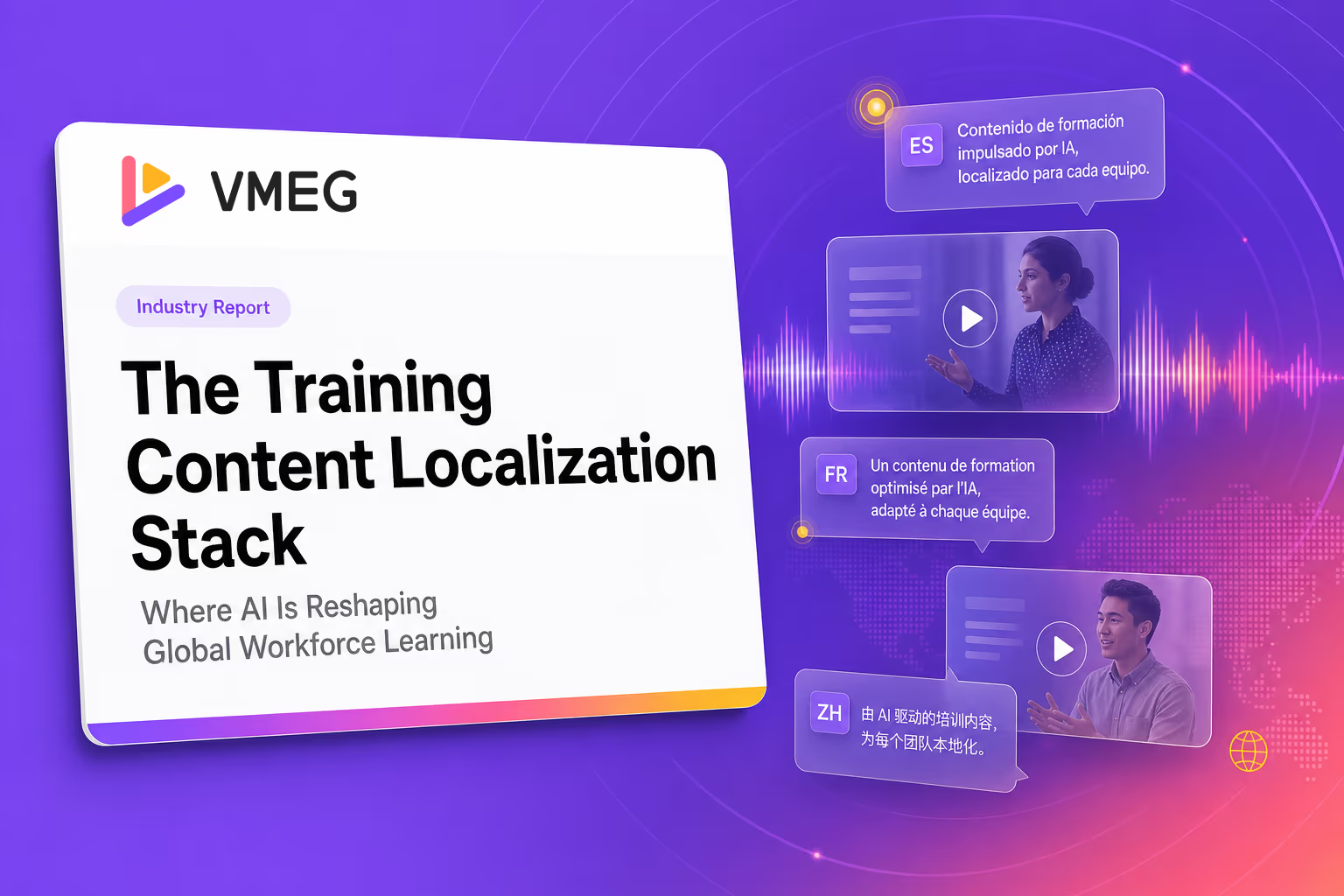
Dit rapport analyseert de wereldwijde productie- en distributieketen van trainingsinhoud, met de nadruk op de manier waarop op video gebaseerde leerinhoud wordt gecreëerd, beheerd en geleverd aan een meertalig publiek. Ons onderzoek brengt drie primaire bevindingen naar voren:
Hoe trainingsvideo wordt gemaakt: een productiestapel met vijf lagen
Het trainen van videoproductie is niet monolithisch. Afhankelijk van het type organisatie – ondernemings-L&D-team, softwarebedrijf, professionele certificeringsinstantie of onafhankelijke cursusmaker – verschillen de tools, workflows en inhoudsformaten aanzienlijk. Maar in alle categorieën volgt de keten een consistente structuur in vijf fasen.
Wie maakt de training inhoud, en waarmee?
Het productieprofiel verschilt sterk per sector. In de onderstaande tabel worden de zes primaire archetypen voor producenten van trainingsinhoud in kaart gebracht, hun gereedschapsketen en de lokalisatiedruk waarmee ze worden geconfronteerd.
| Producenttype | Primaire hulpmiddelen | Lokalisatiebehoefte | Druk bestuurder |
|---|---|---|---|
| Enterprise L&D (HR/compliance) Multinationale ondernemingen |
Articulate, PowerPoint, Loom, Synthesia | Extreem | Wettelijke naleving, regionale uitrolmandaten |
| SaaS-/softwaretraining Klantensucces, productacademies |
Loom, ScreenFlow, Synthesia, HelpHero | Zeer hoog | Wereldwijde productlanceringen, frequente updates |
| Beroepsonderwijs / Certificering Veiligheid, medisch, luchtvaart, financiën |
Professional cameras + LMS + specialist tools | Zeer hoog | Regelgevingsvereisten schrijven de lokale taal voor |
| Onafhankelijke docenten/makers Udemy, Teachable, Kajabi-makers |
Camtasia, ScreenFlow, Canva, OBS | Medium | Uitbreiding van het publiek, diversificatie van de inkomsten |
| Religieus / non-profit Ministeries, missiegedreven onderwijs |
Basic video gear + YouTube + sermon tools | Gemiddeld-hoog | Missiebereik, diasporagemeenschappen |
| Academisch / Universiteit MOOC's, opgenomen lezingen, programma's |
Lecture capture systems, Zoom, Panopto | Medium | Internationale studenteninschrijving, toegankelijkheid |
Het dominante ecosysteem van auteurstools – geleid door Articulate 360 met meer dan 120.000 L&D-professionals wereldwijd – is uitsluitend ontworpen rond het maken van inhoud die in het Engels voorop staat. Lokalisatie wordt als een bijzaak beschouwd: exporteer de cursus, stuur bestanden naar vertalers, importeer vertaalde tekenreeksen opnieuw. Video-nasynchronisatie komt helemaal niet aan bod. Deze workflow is al ruim tien jaar structureel onveranderd.
Lokalisatie is de duurste, langzaamste en meest gebroken stap in de keten van trainingsinhoud
Voor een doorsnee onderneming met 200 uur Engelstalige trainingsvideo die in drie nieuwe markten wordt ingezet, gaat de lokalisatie-uitdaging niet in de eerste plaats over de vertaalkwaliteit, maar over tijd, kosten, versiechaos en doorlopend onderhoud.
De acht pijnpunten hieronder zijn ontleend aan praktijkonderzoek met L&D-teams bij multinationale ondernemingen, aanbieders van certificeringsopleidingen en SaaS-bedrijven met internationale productsuites.
Het trainingslokalisatieprobleem is geen vertaalprobleem. Het is een probleem met de workflowinfrastructuur. Het gat in de tooling is niet dat AI beter moet vertalen. Het gaat erom dat geen enkel product de volledige levenscyclus van lokalisatie (vertalen → kopiëren → dia's synchroniseren → versies beheren → exporteren naar LMS) behandelt als één enkele geïntegreerde workflow. Dat is de kloof die dit rapport identificeert als de productmogelijkheid met de hoogste waarde in de ruimte.
Het landschap van trainingslokalisatietools: gefragmenteerd, met een duidelijke AI-vormige kloof
De onderstaande concurrentiekaart omvat de belangrijkste categorieën tools die te maken hebben met trainingslokalisatie, hun positionering en hun belangrijkste beperkingen bij het aanpakken van de volledige workflow.
| Bedrijf | Categorie | Wat ze goed doen | Lokalisatiekloof | Relatie met VMEG |
|---|---|---|---|---|
| Articulate 360 | Cursus schrijven | Industriestandaard interactief cursusontwerp; 120.000+ L&D-gebruikers; sterke gemeenschap | De lokalisatiemodule omvat alleen tekstvertaling - geen AI-nasynchronisatie, geen vervanging van videovertelling | Integratie / Partner |
| Synthesia | AI-avatar / videogeneratie | Genereer AI-presentatorvideo's op basis van scripts; $100 miljoen+ omzet; adoptie door bedrijven | Creëert nieuwe inhoud, lokaliseert geen bestaande videobibliotheken; beperkte vertaalworkflow | Complementair |
| Camtasia | Schermopname / bewerking | Dominant in de productie van softwaretutorials; sterke SaaS-trainingstoepassing | Geen lokalisatiefuncties; exporteren naar vertaalpijplijn is volledig handmatig | Integratiemogelijkheid |
| Descript | AI-videobewerking | Scriptgebaseerde bewerking; overdub-functie voor stemcorrectie | Engels gericht; geen meertalige nasynchronisatieworkflow of LMS-integratie | Gedeeltelijke overlap |
| SDL / Lionbridge / RWS | Traditionele lokalisatie | Kwaliteit van menselijke vertalingen; ondernemingscontracten; vertrouwd voor juridische/medische inhoud | Langzaam (weken), duur ($200-$500/uur voice-over), geen AI-native workflow | Verplaatsbaar |
| Docebo / TalentLMS / Moodle | LMS-platforms | Cursusopslag, opdracht, analyse, bijhouden van voltooiingen | Lokalisatie valt buiten het bereik; ze verwachten dat voorvertaalde inhoud wordt geüpload | Distributiepartner |
| HeyGen / ElevenLabs | AI-dubben / stem | Hoogwaardige AI-spraaksynthese; sterke API; mogelijkheid voor het klonen van stemmen | Geen trainingsspecifieke workflow; geen versiebeheer, geen LMS-integratie, geen PPT/dia-synchronisatie | Gedeeltelijke overlap |
Een spotlight op articulatielokalisatie
In 2025 lanceerde Articulate – het dominante schrijfplatform voor trainingscursussen – een speciaal lokalisatieproduct binnen zijn Articulate 360-suite. Dit is een betekenisvol signaal: zelfs de marktleider erkent dat lokalisatie een onvervulde kernbehoefte van zijn gebruikers is.
Articulate Localization biedt AI-aangedreven directe tekstvertaling in meer dan 80 talen, aangepast woordenlijstbeheer, in-context beoordelingsworkflows en meertalig versiebeheer - allemaal geïntegreerd in de Articulate 360-auteuromgeving. Volgens de eigen casestudygegevens van Articulate melden klanten dat ze hun end-to-end lokalisatietijdlijn hebben teruggebracht van zeven naar drie weken.[4]
Articulate Localization verwerkt alleen op tekst gebaseerde inhoud. Het vertaalt geschreven tekst: tekst op het scherm, quizitems, diakopie, ondertitels. De gesproken tekst in trainingsvideo's wordt niet vervangen, opnieuw gegenereerd of door AI nagesynchroniseerd. Bij een cursus die via Articulate Localization is vertaald, wordt de tekst op het scherm weergegeven, maar blijft de originele Engelse gesproken tekst behouden. Voor veel leercontexten – vooral waar gesproken begrip centraal staat, of waar wettelijke vereisten moedertaalaudio voorschrijven – is dit onvoldoende. Het probleem van voice-oververvanging blijft voor de huidige marktleider geheel onopgelost.
Waar gaan trainingsvideo’s eigenlijk naartoe? Analyse van distributiekanalen
Begrijpen waar de trainingsinhoud terechtkomt – en op welke schaal – is essentieel voor het inschatten van de lokalisatiemogelijkheden. Vier primaire distributiekanalen stimuleren de vraag naar meertalige trainingsvideo:
| Kanaal | Schaal | Lokalisatietrigger | Huidige oplossing |
|---|---|---|---|
| Zakelijk LMS Docebo, Moodle, SAP, Cornerstone |
Grootste segment; miljarden aan jaarlijkse uitgaven | Nieuwe toegang tot de markt, naleving van de regelgeving, wereldwijde onboarding van personeel | Handmatige vertaling + nasynchronisatiestudio's van derden |
| Cursusplatforms voor consumenten Udemy, Coursera, Teachable |
Alleen al 240.000 cursussen over Udemy; $10 miljard+ markt | Uitbreiding van het makerspubliek naar niet-Engelse markten | Automatisch gegenereerde ondertitels (lage kwaliteit) of geen lokalisatie |
| SaaS-productacademies Helpcentra, videodocumenten, in-app-training |
Elk wereldwijd SaaS-bedrijf; duizenden uren video | Internationale go-to-market, ondersteuning voor ticketreductie | Alleen Engels of selectieve handmatige vertaling voor topmarkten |
| Maker-/coachkanalen YouTube, Kajabi, privégemeenschappen |
Lange staart maar hoge groei; Overlap van de makerseconomie met een waarde van meer dan $5 miljard | Uitbreiding van platformalgoritmen, groei van de gemeenschap | Ad-hoc ondertiteling; zelden nagesynchroniseerd |
De AI-vormige kloof: wat de markt nodig heeft, maar niet heeft
Als we de huidige toolketen in kaart brengen aan de hand van de pijnpunten die zijn geïdentificeerd in bevinding 02, ontstaat er een consistente witte ruimte: geen enkel product in het trainingsecosysteem kan de volledige lokalisatielevenscyclus voor op video gebaseerde inhoud afhandelen.
Het verschil zit hem niet in de kwaliteit van de vertaling; machinevertaling heeft voor de meeste talen voor trainingsinhoud een kwaliteit bereikt die levensvatbaar is voor productie. De kloof is de workflow-integratie: wie zorgt voor de combinatie van audio-nasynchronisatie, synchronisatie van ondertitels, vervanging van in-videotekst, vertaling van slidedecks, versiebeheer en LMS-levering als één enkele, samenhangende productervaring?
De sectoroverschrijdende use case-kaart
De onderstaande heatmap illustreert de dichtheid van de vraag naar videolokalisatie voor training per branchebranche en doeltaal – van laag (licht) tot hoog (donker). Dit is een richtinggevende synthese gebaseerd op de omvang van de industrie, globaliseringspatronen en lokalisatievereisten van de regelgeving.
| Industrie / Taal → | Spaans | Mandarijn | Duits | Frans | Japanse | Arabisch | Portugees | Koreaans | Hindi | Italiaans |
|---|---|---|---|---|---|---|---|---|---|---|
| Bedrijfscompliance / HR | Zeer hoog | Hoog | Hoog | Middelhoog | Middelhoog | Middelhoog | Middelhoog | Medium | Medium | Medium |
| SaaS-/softwaretraining | Hoog | Hoog | Hoog | Middelhoog | Hoog | Medium | Middelhoog | Middelhoog | Medium | Middelhoog |
| Veiligheids-/beroepscertificaat. | Zeer hoog | Middelhoog | Middelhoog | Middelhoog | Medium | Hoog | Hoog | Medium | Middelhoog | Medium |
| Medisch / Gezondheidszorg | Hoog | Middelhoog | Middelhoog | Middelhoog | Middelhoog | Middelhoog | Middelhoog | Medium | Medium | Medium |
| Online onderwijs / cursussen | Zeer hoog | Middelhoog | Middelhoog | Middelhoog | Medium | Middelhoog | Hoog | Medium | Middelhoog | Medium |
| Financieel / Naleving | Middelhoog | Hoog | Middelhoog | Middelhoog | Hoog | Middelhoog | Medium | Medium | Medium | Medium |
| Religieus / op geloof gebaseerd | Hoog | Laag | Laag | Middelhoog | Laag | Hoog | Hoog | Laag | Medium | Laag |
| Coaching / Persoonlijke ontwikkelaar | Hoog | Medium | Medium | Middelhoog | Laag | Medium | Middelhoog | Laag | Medium | Medium |
De positie van VMEG.AI in de inhoudsketen van trainingen
Op basis van de analyse in dit rapport bezet VMEG.AI de lokalisatielaag — laag 3 in de vijfdelige productiestapel voor trainingsinhoud, geïllustreerd in bevinding 01. Dit is geen kleine ondersteunende rol; het is de knelpuntlaag die is geïdentificeerd in bevinding 02, en de laag met de minst volwassen AI-native tooling (bevinding 03).
voor trainingsinhoud."
Wat maakt de lokalisatielaag strategisch waardevol?
Het bevindt zich op het kruispunt van alle inhoudsstromen. Elk stukje trainingsinhoud passeert deze laag voordat het een leerling in een niet-brontaal bereikt. Hierdoor ontstaan natuurlijke integratiepunten stroomopwaarts (authoringtools, schermrecorders) en stroomafwaarts (LMS-platforms, distributiekanalen).
Het wordt gecombineerd met het inhoudsvolume. De waarde van een lokalisatieplatform schaalt mee met de inhoudsbibliotheek van de klant: hoe meer trainingsinhoud een onderneming heeft, hoe pijnlijker handmatige lokalisatie wordt en hoe waardevoller een geautomatiseerde workflowlaag is. Dit creëert een natuurlijke groei-inkomstendynamiek.
Het zorgt voor workflow-lock-in via woordenlijsten en versiegeschiedenis. Zodra een onderneming productterminologie, merkrichtlijnen en historische vertalingen uploadt, brengt het overstappen naar een ander lokalisatieplatform reële kosten met zich mee – niet in contractvoorwaarden, maar in institutionele kennis ingebed in de tooling. Dit is een duurzame gracht die puur op API gebaseerde alternatieven niet kunnen worden gerepliceerd.
Wat VMEG doet, doet Articulate Localization niet
| Vermogen | Articulate Localization | VMEG.AI |
|---|---|---|
| Vertaling van tekst / ondertitels | Ja – 80+ talen | Ja |
| AI-nasynchronisatie (vervanging van gesproken commentaar) | Niet inbegrepen | Kerncapaciteit |
| Stemklonen (behoud van de instructeurtoon) | Niet inbegrepen | Ondersteund |
| PPT / slidedeck-vertaling | Gedeeltelijk (alleen cursustekstreeksen) | Volledige zelfstandige PPT-vertaling |
| In-video tekstdetectie & vertaling | Niet ondersteund | Ondersteund |
| Werkt met niet-Articulate videobestanden | Alleen articulatieformaat | Elk videoformaat |
| AI-avatar / digitale presentator | Niet inbegrepen | Ondersteund |
| LMS-agnostische levering | Strak geformuleerde ecosysteemafhankelijkheid | Werkt met elk LMS |
| Prijsmodel | Add-on voor een ondernemingsabonnement | Op gebruik gebaseerde, flexibele lagen |
Wat dit betekent voor L&D-teams, producenten van trainingscontent en platformbouwers
Voor zakelijke L&D- en HR-teams
Het lokalisatieknelpunt is een budget- en snelheidsprobleem, en is nu oplosbaar. AI-nasynchronisatie- en vertaalworkflows kunnen de kosten voor het vertalen van een trainingsmodule van een uur verlagen van €300 – €500 naar minder dan €30, terwijl de tijdlijnen worden gecomprimeerd van weken naar uren. De organisaties die als eerste stappen zetten om AI-native lokalisatieworkflows op te zetten, zullen in staat zijn om wereldwijde trainingsprogramma’s in te zetten in een tempo dat voorheen onmogelijk was.
De belangrijkste evaluatiecriteria voor elke lokalisatietool: (1) Kan het audiovervanging verwerken, niet alleen ondertitels? (2) Kan het woordenlijsten en versiegeschiedenis op schaal beheren? (3) Kan het worden geïntegreerd met uw bestaande LMS?
Voor SaaS-bedrijven met producttrainingsbibliotheken
Elke productupdate die de UI-tekst of workflows verandert, creëert een lokalisatieschuld: elke opgenomen tutorial raakt in elke taal tegelijkertijd verouderd. De meest waardevolle lokalisatie-infrastructuur voor SaaS-trainingsteams is er een die de kosten van verandering minimaliseert, en niet alleen de kosten van de initiële vertaling. API-first lokalisatietools die kunnen worden geactiveerd bij contentupdates zijn het meest strategisch afgestemd op SaaS-ontwikkelingscycli.
Voor het trainen van contentproducenten en cursusmakers
Spaans is de meest gevraagde doeltaal in bijna elke opleidingssector (zie Tabel 4). Voor Engelssprekende cursusmakers op Udemy of Teachable is een Spaanstalige versie van een bestaande cursus de meest toegankelijke manier om het bereikbare publiek te verdubbelen of te verdrievoudigen – en AI-lokalisatie heeft dit voor het eerst economisch haalbaar gemaakt voor individuele makers.
Voor LMS- en auteurstoolplatforms
De trainingslokalisatielaag is een mogelijkheid voor uitbreiding van de inkomsten die platformspelers niet mogen negeren. Articulate heeft dit onderkend met de lancering van zijn lokalisatiemodule. LMS-platforms die AI-nasynchronisatie rechtstreeks in hun upload- en distributieworkflows bouwen of integreren, zullen op een betekenisvolle markt gedifferentieerd worden.
Methodologie & domein
Dit rapport is een kwalitatieve synthese gebaseerd op bureauonderzoek, literatuuronderzoek uit de praktijk en marktanalyse. Cijfers over de marktomvang zijn afkomstig uit publiekelijk geciteerde analistenrapporten (Global Market Insights, MarketsandMarkets, HolonIQ). Beoordelingen van de gereedschapscapaciteiten zijn gebaseerd op gepubliceerde functiedocumentatie vanaf medio 2026. De hittekaart in Tabel 4 is richtinggevend en gesynthetiseerd op basis van patronen van de mondialisering van de industrie; deze is niet gebaseerd op empirische transactiegegevens. Concurrentieanalyse weerspiegelt openbaar beschikbare productinformatie; routekaarten voor particuliere producten worden niet in aanmerking genomen. Dit rapport is bedoeld voor informatieve doeleinden en weerspiegelt het perspectief van VMEG.AI op de markt voor lokalisatie van trainingsinhoud.


